Transcript
Announcer:
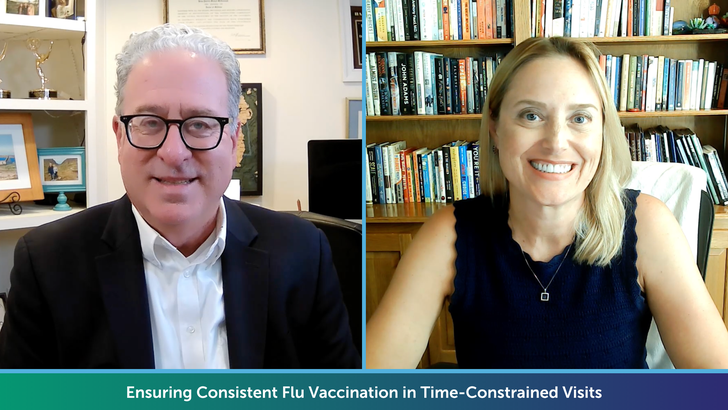
You’re listening VacciNation on ReachMD, and this episode is sponsored by CSL Seqirus. Your host today is Dr. Brian McDonough.
Dr. McDonough:
This is VacciNation on ReachMD, and I'm Dr. Brian McDonough. Today, we'll explore how clinicians can strengthen influenza vaccination recommendations in everyday practice with Dr. Angela Myers. She's a Professor of Pediatrics at the University of Missouri-Kansas City School of Medicine. Dr. Myers, welcome to the program.
Dr. Myers:
Thank you.
Dr. McDonough:
Let's start, Dr. Myers, with what clinicians experience every flu season. Even when vaccination is part of routine preventive care, there are still missed opportunities during busy clinic days. From your perspective, where do those conversations most often fall through the cracks, and what tends to get in the way?
Dr. Myers:
I think a variety of things get in the way. One of the things is when a child comes in for a minor illness and there's an opportunity to provide influenza vaccine at that visit, but the practitioner either hesitates because the patient does have a minor illness, or the parent feels uncomfortable. We know from years and years and years of data that as long as a child isn't having high fevers and only has a mild illness, it's okay to give influenza vaccine at that visit. So that's one missed opportunity.
Another missed opportunity are those folks who hold off giving the vaccine until later. If you have vaccine in your office and you have a child come in, even if it's late August or early September, give the vaccine then. Don't wait. Don't expect them to come back in October or November, because it probably won't happen.
Dr. McDonough:
That's a great point. You know, as visits become increasingly packed with chronic disease management, preventive care, and patient questions, clinicians are constantly making decisions about what needs to happen today versus what can wait. With that being said, how do you approach flu vaccination within those competing priorities? I think I have an idea. And when does deferring that conversation create the greatest risk of missed opportunity?
Dr. Myers:
I believe in a presumptive approach, where we say, "We've got our flu vaccine in. We are giving it to kids now. We would like to give you your vaccine today and get you prepared for this season before it hits." Just make that a standard part of every visit.
I think that what happens is, like you mentioned, so many things need to be discussed, right? Especially when they're coming in for a well-child visit during that time, that can maybe fall to the back burner. So the more we can do to have it presumptively approached and to have it ready to go—so that they're also not spending more time waiting—we’ll really go a long way to helping people get that vaccine.
Dr. McDonough:
Many practices have adopted team-based approaches to help make flu vaccination part of routine care. What workflow strategies have you found most effective for making vaccination discussions more consistent without adding to visit burden?
Dr. Myers:
Yeah, that's a great question. One of the things we've done is portal messaging. So before a patient even comes in, they get messages sent to them so they know that we have the vaccine and that we will be recommending the vaccine. And they can see that before they even come in. And that can be sent out from, like you said, a team-based approach. The nurses can send it out. The MAs can send it out. And that really helps. It kind of primes the patient before they even come in.
Another thing that you can do is have a standing order for it, so that it can be ordered by somebody other than the physician. And it can be given, and you can go that way as well. And we've done that in our organization as well, and that really helps.
Dr. McDonough:
For those just tuning in, you're listening to VacciNation on ReachMD. I'm Dr. Brian McDonough, and I'm speaking with Dr. Angela Myers about ways to make flu vaccination a consistent part of routine patient care, even in time-constrained visits.
So, Dr. Myers, as recommendations continue to evolve, what's your approach to translating updated guidelines into day-to-day clinical practice while keeping your messaging consistent for patients and the rest of your care team?
Dr. Myers:
So the vaccine recommendations for influenza have been for all those children six months and above for years now. And continuing to emphasize that in every avenue is really important. Certainly, children under five are at highest risk for severe influenza if they become infected. But in reality, all children need to be immunized. And in fact, really, all adults should be immunized as well. And so continuing that consistent message is really important.
Dr. McDonough:
Even in practices with strong vaccination workflows, clinicians still encounter patients who are hesitant or unsure. When you're running low on time, how do you quickly identify what's driving that hesitation and tailor your response without derailing the rest of the visit?
Dr. Myers.
That's a really good question. I think the first thing you need to do is ask them what their biggest concern is, because it may not be what you think it is. It may just be, "I don't really think it works, because so and so got the vaccine—you know, my neighbor—but they still got influenza." That then leads you down a completely different road of, "Well, let me talk to you about what the vaccine is for. The vaccine is to prevent hospitalization and prevent death, and it does that very, very well. It doesn't keep all people from getting influenza. We know this. But if you do get influenza after vaccination, you don't get as sick as you would have without vaccination.” So it takes care of that.
If the concern is something different, like, "I don't like that vaccine. I just don't trust it”—whatever the kind of du jour thing is that people are going with—then I think that gives you an opportunity to talk about risk factors.
So, for example, a child with type one diabetes. I had a patient just a few months back, and the mom tells me, "Well, after my daughter was diagnosed with diabetes, I stopped giving vaccinations." And I said, "I'm going to tell you something. People with diabetes have a much higher risk of severe disease related to influenza if they get infected. That is one vaccine that I strongly recommend that your child get every year and that the whole family gets to protect your child."
And you can do that for any number of chronic diseases that we are seeing more and more and more. We know that obesity is a risk factor for having severe influenza. So that then allows you to go down that road if the family brings up a different concern.
Dr. McDonough:
Yeah, I think what you're saying, Dr. Myers, is sometimes obviously you can't rush it. It requires a longer conversation. And I know your background also is infectious disease. You probably see some horrific outcomes as well. Do you sometimes have to address those issues as well, if the conversation heads in that direction?
Dr. Myers:
I have had to address those issues. I've seen completely healthy children die from influenza or secondary bacterial infections after having had influenza. And the vast majority of those children were not immunized against influenza, and sometimes that was just because the family hadn't gotten around to it. It wasn't purposeful: "I didn't want to get the vaccine." It was just, "Well, we hadn't gotten to it yet."
And so I have any number of stories around that, and I talk to families about those risk factors and talk to families about how devastating that is when it happens.
Dr. McDonough:
Finally, Dr. Myers, if there was one workflow change that every practice could implement before flu season to support more consistent vaccination recommendations, what do you think that would be?
Dr. Myers:
Oh my goodness. I can't just say one, but I love sending out messages in advance. I think sending out messages in advance via text, portals, whatever, is really, really helpful to prime people that when they come in, they're going to get a vaccine. I think having vaccine days where there are nurse-only visits are really great to allow people to just come in, get it, and leave. I think having standing orders is really, really helpful, so that it takes some burden off the doctor, because that's already in the system and ready to go, and it can just be given. And then lastly, the presumptive messaging, which you mentioned earlier, is super helpful, because it just presumes that the patient is there, they're willing, they want to get the vaccine, and it allows you to only really spend time discussing vaccines with those people who really do have a concern. And they deserve their concerns to be heard. So conserving your time to go that way is really helpful.
Dr. McDonough:
With that important takeaway in mind, I want to thank my guest, Dr. Angela Myers, for sharing strategies to promote annual influenza vaccination in busy clinical settings. Dr. Myers, it was great having you with us today.
Dr. Myers:
Thank you so much. I enjoyed being here.
Announcer:
This episode of VacciNation was sponsored by CSL Seqirus. To access this and other episodes in our series, visit VacciNation on ReachMD.com, where you can Be Part of the Knowledge. Thanks for listening!