
Transcript
Announcer:
You're listening to GLC on ReachMD. This activity, titled “Talking Through Treatment: Patient–Clinician Dialogue on Perioperative Immunotherapy in Locally Advanced head and neck squamous cell carcinoma” is provided by Global Learning Collaborative.
Prior to beginning the activity, please be sure to review the faculty and commercial support disclosure statements as well as the learning objectives.
Dr. Johnson:
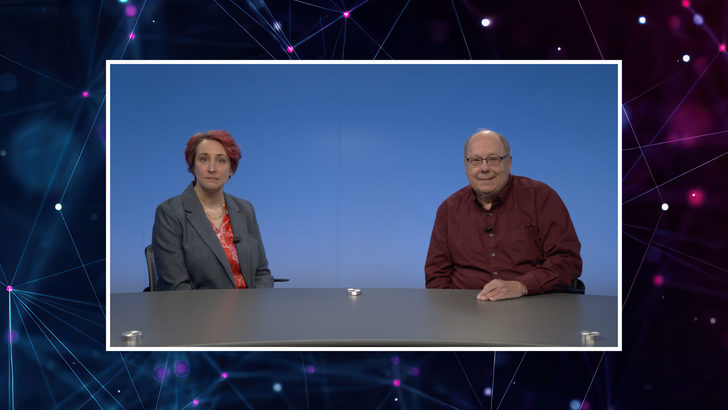
This is CE on ReachMD. I'm Dr. Jennifer Johnson. Here with me today is Stephen Heckman, a patient of mine with resectable locally advanced and neck cancer, who is considering perioperative immunotherapy. Welcome to the program, Stephen.
Heckman:
Thank you Dr. Johnson. Nice to be here. First of all, can you explain how immunotherapy differs from chemotherapy?
Dr. Johnson:
Absolutely. Because these are both classes of drugs that are used to treat cancer, but they work completely differently. What you are gonna expect is completely different, and that's in terms of the way you feel when you're getting it and what kind of side effects we can talk about for one another.
So chemotherapy is a whole series of drugs that are all based upon killing your cancer, using some sort of advantage that we've understood about cancer biology, like it's fast growth rate, it's reliance on replicating its DNA, it’s need to divide the cells in order to multiply and to grow. But immune therapy doesn't work like that. Immune therapy is about using your own immune system to attack the cancer for us, which you really would've hoped would've happened before now.
Heckman:
Yeah.
Dr. Johnson:
But unfortunately, cancer's tricky and it actively evades your immune system.
So I'm gonna take it a little bit on faith that your immune system at some point recognizes that there is a problem here, that it really would've loved to go over there and kill those cancer cells that have been giving you that hoarse voice. But unfortunately, whatever is allowing that cancer to evade the immune system, let it sneak by to the point where it created a tumor. Now immune therapy is gonna get in there and it's gonna take the breaks off of the immune system, it's going to unmask those cancer cells so that evasion is no longer possible. Your T-cells, little assassin cells, are gonna get in there and they're gonna kill that cancer the way that they should have been doing from the beginning.
Heckman:
Dr. Johnson, how is immunotherapy administered?
Dr. Johnson:
For the KEYNOTE-689 clinical trial, patients were given IV doses of pembrolizumab, and this was done every three weeks and before surgery, patients got two doses, a single dose, three weeks later, another dose, and then after the surgery, patients got 15 additional doses through an IV. Now when it comes to getting this, patients get an IV that can be started in their hand, their arm, wherever there's a good flow, and you'll be sitting there and there'll be a clear colorless bag of fluid attached to the IV pole. It'll take you about an hour.
Now, there has been a bit of an evolution. We can do this once every six weeks instead of once every three weeks with an extended dosing, which means that you won't have to come in quite so often when we're doing those 15 additional doses. If I know that you're doing well, I can save you some trips in to see us. And there's also these new subcutaneous formulations. Instead of having an IV started and sitting there with an IV pump that's giving this drug to you slowly over an hour, it's almost like coming in and getting a flu shot. You can come in and get the subcutaneous injection, and those two are gonna last about six weeks and save us a lot of time.
Heckman:
What kind of side effects can immunotherapy cause?
Dr. Johnson:
Pneumonitis, colitis, dermatitis, those are all on the list for what immune therapy can cause. But I also wanna say that for KEYNOTE-689, the clinical trial that we use to guide what we're doing together and what I'm proposing that we do together today, it was less than 10% of patients that had any serious side effects that are those immune-related adverse events.
Heckman:
How are the side effects managed?
Dr. Johnson:
First things first, we gotta talk. Whenever you feel anything, please call in because the sooner that we identify that something you're feeling is an immune-related side effect, the sooner I can start treating it for you.
Sometimes treatment just means, you know what? I don't know if we're gonna do that next dose. I need everything to cool down in there. Sometimes it's gonna take steroids. Now if that's dermatitis, it's gonna be topical steroids.
If it's something internal, it might mean oral steroids. And if something is really serious, there are times when I'll ask a patient to come into the hospital and even give them IV steroids or more powerful medications, but that's quite rare.
And our time is up. Thank you, Stephen, for this great discussion and thanks to our audience for your attention.
Announcer:
You have been listening to GLC on ReachMD. This activity is provided by Global Learning Collaborative.
To receive your free CE credit, or to download this activity, go to ReachMD.com/CME. Thank you for listening.

 Global Learning Collaborative designates this activity for 0.50 contact hour(s)/0.050 CEUs of pharmacy contact hour(s).
  Global Learning Collaborative has been authorized by the American Academy of PAs (AAPA) to award AAPA Category 1 CME credit(s) for activities planned in accordance with AAPA CME Criteria. This activity is designated for 0.50 AAPA Category 1 CME credit(s). Approval is valid until 05/28/2027. PAs should claim only the credit commensurate with the extent of their participation in the activity.

