
Transcript
Announcer:
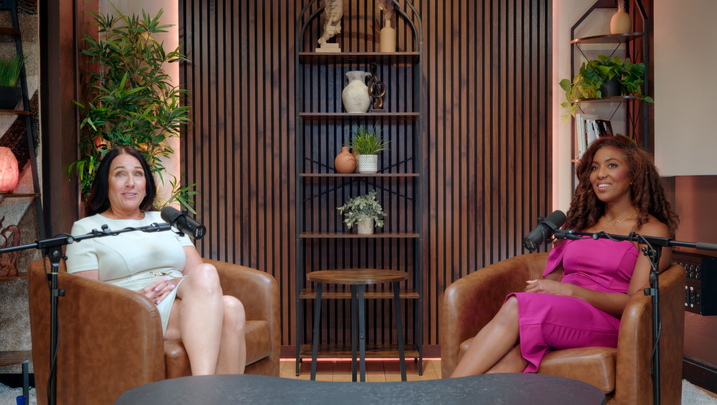
Welcome to ReachMD. This medical industry feature, titled “Time Matters in Severe Alopecia Areata: A Patient’s Journey to Fast Hair Regrowth” is sponsored by Sun Pharma. And now, here’s Dr. Meena Singh.
Meena:
Important safety information. Indications and usage. LEQSELVI® (deuruxolitinib) is a Janus kinase (JAK) inhibitor indicated for the treatment of adults with severe alopecia areata. Limitations of use. LEQSELVI is not recommended for use in combination with other JAK inhibitors, biologic immunomodulators, cyclosporine, or other potent immunosuppressants.
Brandi:
It's not just cosmetic. It has taken away my self-being, who I feel as a woman.
Meena:
With LEQSELVI, I have been seeing really fast results. Look at that. Your hair was growing back really quickly.
Brandi:
I always joke, I'm like, this is the hair of LEQSELVI.
Meena:
And this is the hair you were supposed to have this whole time.
Hi, I'm doctor Meena Singh. I'm a dermatologist that specializes in hair loss, and I have had the opportunity over the years to really understand how much it impacts our patients lives and our patients with alopecia areata.
It's not just hair. It's really affecting who they are, how they present themselves to the world, especially with the unpredictability and the nature of that condition. And I'm really excited to be here with Brandi.
Brandi:
I'm Brandi Jones. I have battled moderate to severe alopecia off and on my entire life since I was 18 months old. And with being on LEQSELVI for five years, no one would ever believe that I ever had alopecia.
I've seen every dermatologist under the sun and tried everything. The history about how many thousands of injections, how many topicals, different prescription medications, every shampoo, conditioner. So, I had taken a job in Louisville, Kentucky. I was convinced that going to this big city, perfect, they're going to have what I need. And like most patients, I had rehearsed in my mind how this appointment was going to go.
I was prepared to have 200 to 300 injections in my head. Was hoping that maybe they'd have something new. The hardest part of that appointment was taking my topper off, because nobody and I mean nobody, not my husband, not my kids, not my mom would ever see me in that stage.
Meena:
I have so many patients that, like you said, their children have never seen their alopecia because they don't want their kids to think that they're sick.
And or their husbands have never seen it. And it's almost like internalizing your trauma. Because you can't even, you know, expose your reality to your loved ones. And I'll notice in the exam room, we have them remove their toppers, their wigs to take pictures. It'll be right back on by the time I get back in that room.
And I'm like, well, you know, I still have to look at it, but I'll be right back on because if we like, open the door a little bit, they don't want anyone to be able to just visualize the, you know, the loss of hair that they have. As a dermatologist, like I was mentioning, we just don't have a ton of time to spend with our patients, unfortunately.
If we want to see the number of patients that have hair loss quickly and not have them wait 6 to 8 months to see us, and it's really hard if we have to spend a lot of time going into the emotional side of it. So, one way that I kind of approach it and you can help me with this, I often will just start by saying, hey, how do you choose to wear your hair?
And that usually helps me know how they are surviving in the real world with their hair loss.
Brandi:
Yeah, and I think probably the best question that someone could ask is how is this impacting your quality of life? You go your whole life thinking that you're causing this condition yourself. I don't have depression. I'm depressed over my situation.
Meena:
You have a condition that's causing you distress.
Brandi:
I had never discussed that with any of my providers before. Patients recognize that providers are limited on time. The last thing we want to do is spend our time in front of you crying about our condition, trying to compose ourselves. This has impacted me, right? I think back to childhood or high school, like, oh, I can't go swimming with my friends because I've got spots.
Heck, I think about all the professional opportunities I've missed out on. It's not just cosmetic, it has taken away my self-being who I feel as a woman, as an individual.
Meena:
So what I try to do is address the things that I can fix. Okay, what are we doing every day so that we feel okay and then try to give reasonable expectations.
Okay, you have a full head of hair. It's doing well. You know, you may lose more in the future or okay. We have not seen any growth in the last 6 to 9 months. It's going to be harder to see regrowth.
Brandi:
It isn't until we regain our self-confidence and feel that we fit into the constructs of society again, and can have those conversations.
We may not even be transparent with you how we're feeling because it's hard. So, doctor, Singh, one thing I wanted to ask you about your practice. In order for me to qualify for the clinical trial, I had to be at 50% hair loss. By that point in time, that person is like a broken shell of themselves.
But I see so many members of some social media support groups report that, oh, my doctor says I'm only at 30 or 40%. I have to wait. Look at me. I'm shedding fast. How do you score all of that, per se?
Meena:
Yes. So I'm glad you asked that specific question, because the clinical trials, they have very specific criteria about who's eligible to fit into that clinical trial.
And it had to be someone that had 50% hair loss. Now you touched on something else, right? Hair loss that's alopecia areata or alopecia totalis presents completely differently. There are certain patterns that are more challenging to treat. So what you touched on the hairline, the back of the hair, that is called the ophiasis pattern. Basically, when it's around the rim, it's very, very hard to treat.
And historically inadequate response to our other treatments like we'll do the, you know, like you talk about painful injections, topicals. It's just very, very hard to treat. There's different scales that you can do to kind of grade severity. So what we were discussing is the SALT score. SALT score is just percentage hair loss salt 50, 50% hair loss.
There's another scale. It's called the AASc score and it's the alopecia areata scale. It helps you tailor to the actual patient. So are they having a negative psychosocial response? So, how much is it affecting them? You know, have they had this episode for six months and they haven't had any regrowth with the standard treatments that you're doing.
So negative psychosocial response. And then like I was alluding to, inadequate response. So, for me, even if they only have one big patch and it's one solo and it's not multifocal, it's just one patch. And it has not responded to standard therapy in six months. I'm going to increase that grade of severity, because they're not responders, right?
Then the eyebrows and eyelashes, it's so hard. I have patients that have no scalp hair loss, but they have no eyebrows or eyelashes. And it is very hard functionally.
Brandi:
Sweat running into your eyes and burning-
Meena:
Yes, we consider eyebrows eyelashes to be cosmetic, right? We think it's like, oh, you know you can just draw them on. They actually have function.
You need your eyelashes, you need eyebrows. And in our male patients, you know, it's not always socially acceptable to wear lashes or brows. You know, women at least we can do some coverages even though we don't get the functional response. So that makes a big difference. And in my patients I have tried painful injections into the eyebrows, which can have side effects.
I've tried topicals. I've tried all kinds of things. Not great response. The best response I've seen are with JAK inhibitors. And so that's something that will push me to increase the severity. But some people it's like they have a lot of hair, but their hair is coming out in clumps. When I'm doing exam, it's coming out of my hands.
They are someone with a very high risk for having severe alopecia areata. They just don't have it yet. So they may not have 50% hair loss, but they have those other features we described. I'm pushing that severity scale up because I am wanting them to get onto a JAK inhibitor, because then they can get results faster. So, we've been talking about the severity, everything you've had to go through, that dermatologists have been doing to try to get your hair back over all these years, and the severity that you ended up with, what are the most kind of extreme things that you had to do to kind of live with your hair loss?
Brandi:
Oh, gosh. I think as it was getting to its worst phase, some of the things I was still able to wear extensions. I hadn't gone to the point where I was going to go full wig or topper, but going to the salon and having those extensions moved up was mortifying. People staring at you. So, it got to the point where I would pay my hairdresser extra to basically have the salon to myself late at night.
I remember one day at work, I came out of a director's meeting, and I was walking down the hallway at work and one of the directors came up from behind me, tapped me on my shoulder and said, hey here, Brandi, you lost some of your hair. They thought it was joke and funny. I went back to my office and just sobbed.
Heck, I think about all the professional opportunities I've missed out on. It's called the lost cost opportunity, which is not something that ever, as a provider you would recognize-
Meena:
I would have never asked a patient that. That's something really interesting.
Brandi:
You saw my pictures, right? Who's going to want to take that person seriously? Or, you know, if I yell like, hey, I have my MBA in healthcare administration, I know what I can do.It doesn't matter. Nobody will be able to get past that look. So, you stop even trying to advance yourself or to grow yourself professionally, because my hair doesn't define me. But without it, I lose who I am.
Meena:
So how did you get into the clinical trial?
Brandi:
I had mentioned I was working in Louisville, Kentucky, I went to see a new dermatologist.
She looked at me and gave me the oh my gosh, your hair so far gone. There's nothing I can do for you. Doctor Singh, that's the first time I've ever cried in front of a provider. She took the time to write down on a post-it note a phone number for me, came back in, and handed it to me.
It's another place. I hear they're doing a clinical trial.
Meena:
Wow.
Brandi:
I'm not sure what the medication is, but I think you would qualify for it.
Meena:
That's amazing that she did that.
Brandi:
So, I started the clinical trial in January 2021. Doctor Singh by the end of the first week, my shedding had stopped completely.
Meena:
That's amazing. So, I do tell my patients with LEQSELVI, I have been seeing really fast results.
I want to hear more about-
Brandi:
When I would drive back and forth, I'd always run my hand up under my topper and feel like shiny bald spots. It was around week six, seven, eight that I put my hands up under there on the way home one day and I'm like, oh, I have stubble.
Meena:
That’s the best part, the fuzz.
Brandi:
Yeah. I'm like, that's when I call it my chia head experience beginning because I had like stubble everywhere. And I'm telling you, from that moment on it has not stopped growing.
Meena:
And look at you now. You know it's interesting too, you had results really fast.
Brandi:
Yeah. Look at that.
Meena:
Your hair was growing back really quickly.
Brandi:
Right? I know who would believe it.
And what's crazy is I've spent 50 years of my life hiding from this condition, and here I am talking about it.
Meena:
With LEQSELVI I had a patient recently that had 85 to 90% scalp hair loss. Eyebrows, beard. And he had near a full head of hair within two months. I just I was like, I started seeing you in March.
It is now May. You have almost all your hair back. Having those fast results really is a big deal for patients and us as providers.
Brandi:
So Doctor Singh, you asked me about the start of the trial and if I was nervous or worried about any side effects, the only thing I can think of is I had a little bit of increase in weight gain and cholesterol.
Meena:
The most common that I see in my patients are headaches, upper respiratory tract infections, sometimes some stomach upset. Like you mentioned, you can get a little bit of weight gain. There is a blood test that can become elevated and it can cause muscle aches.
Brandi:
Yeah, even if I had had a few of those things, it it wouldn't have been enough to deter me from the growth that I was seeing and the hope I had on the horizon.
By age 50, I had almost given up hope that there would ever be anything for me. I'm so excited for your current patients and your future patients and other providers’ future patients, because they don't have to endure months, even years of what I did.
Meena:
Really years. And that's how it was. And I think just given that you were in that clinical trial with the LEQSELVI, it was around 1200 patients and they had to have severe alopecia areata, and they looked for near-complete growth.
So you had to have 80% coverage, and you could only have what we call a SALT score of less than 20. So only 20% hair loss to meet that endpoint at 24 weeks. You guys actually represented our most challenging patients to treat. And I think that's what's so big about the LEQSELVI clinical trials. The patients had on average 87% scalp hair loss.
Again, very, very challenging. And 70% of those patients had eyebrow and eyelash involvement. And some of them, their duration of the alopecia was almost ten years.
Brandi:
Yes.
Meena:
And we know the longer you have had hair loss, the harder it is to actually get regrowth.
And there is an urgency to it when we have patients like that. And again, you were part of the group that is the most difficult to treat. So, the fact that you had any efficacy with the LEQSELVI is huge. But there is urgency. They actually saw a change in efficacy and regrowth within 8 weeks in the clinical trial.
So that's data on just that medication alone. So you were put on LEQSELVI 8 milligrams twice a day. And they watched you guys for 24 weeks for any kind of regrowth. And then if you were able to meet the endpoint of less than 20% hair loss, then you were considered to be a responder. And then a third of patients did reach that primary endpoint by 24 weeks.
And so that's huge.
Brandi:
You just mentioned where people have to be at week 24, but I'm sure there were others like me by like weeks 8, 12, 16 seeing significant results. You just saw my pictures of baseline and 8 weeks. And I had like so much back by week 8.
Meena:
Yes. And so they looked at that primary endpoint of reaching a SALT score of less than 20.
So 80% coverage of the scalp, which is huge for someone that started off with total hair loss, but they had to reach that by 24 weeks for the primary endpoint. But they also looked at 8 weeks, 12 weeks, 16 weeks, and 24 weeks. So, you saw on your own pictures how by 8 weeks you actually started to see some regrowth, but you didn't have 80% coverage, so you would have been considered a partial responder.
But they did see by eight weeks statistically significant change between patients on the medication versus placebo. And so, it was around 3%, but it was still statistically significant. And it was huge because it's very, very fast. That's patients that got 80% coverage in 8 weeks. That's huge.
LEQSELVI may cause serious side effects including serious infections, malignancies, thrombosis, gastrointestinal perforations and certain laboratory abnormalities.
There also may be an increased risk of mortality in major cardiovascular events. LEQSELVI should not be used in patients who are poor CYP2C9 metabolism, or who are using moderate or strong CYP2C9 inhibitors.
I think that's the beauty of the clinical trial data. When you look at just the numbers, you can say, oh, it's only 3% percent, but that's someone that basically has, you know, most of their scalp coverage.
If you're looking at patients who are partial responders, these are patients in the real world who are still high fiving you, even though they don't have a full head of hair, they're getting a response. That's amazing. What a huge relief for you. But I think as dermatologists, because we're all about how much hair do they have, okay, they have this much hair loss, they have this much coverage.
And we're so focused on efficacy and responses that we don't think about your life and how it's affecting your life and how hair does equate to lifestyle.
Brandi:
Yes.
Meena:
And look how much you have changed. And like I said, I've had the honor to meet you with this full head of hair. I mean, my gosh, your ponytail is insane.
The density is insane. It's hard for me to even see your pictures and not get emotional because I got to meet you on the other side of it.
Brandi:
Well, and for you to get to see the person who they are. Because who I am today is who I'm supposed to be, right? I'm not any different. But I feel bad for who I had become when I lost so much because that wasn't me, you know?
It robbed me of my identity, my self-esteem, my self-confidence. From the voice of the patient, I just want to thank you. Because really, if it wasn't for the dermatologist, we wouldn't have access or ability to even source this medication. I'm not sure that you guys, even appreciate how important-
Meena:
It’s our honor. That's what we're supposed to be doing. That's our entire job, is helping you get better.
I think as dermatologists, we could just do a better job with all of it. The psychosocial impact part of it, treating the full patient and not just their scalp, not just throwing one medication and jumping out of the room. Like all those things we could do a much better job with.
Brandi:
You don’t have to try to get to a certain severity level. You don't have to be ashamed. One, this isn't your fault. You didn't do or not do anything that caused this. There is help out there. Find who you're supposed to be. Get to a good dermatologist that knows what's going on and someone that will help you regain yourself.
Meena:
Contraindications. LEQSELVI is contraindicated in patients who are CYP2C9 or metabolized, or who are using moderate or strong CYP2C9 inhibitors.
Warnings. Serious infections, increased risk of serious bacterial, fungal, viral, and opportunistic infections, including tuberculosis TB that may lead to hospitalization or death. Interrupt treatment with LEQSELVI if a serious infection occurs until the infection is controlled. Test for latent TB before and during therapy. Treat latent TB prior to use. Monitor all patients for active TB during treatment, even patients with initial negative latent TB test mortality.
Higher rate of all-cause mortality, including sudden cardiovascular death with another Janus kinase inhibitor or JAK versus TNF blockers and rheumatoid arthritis RA patients. LEQSELVI is not approved for use in RA patients. Malignancy. Malignancies have occurred in patients treated with LEQSELVI, higher rates of lymphomas and lung cancers with another JAK inhibitor versus TNF blockers in RA patients.
Major adverse cardiovascular events. Higher rate of MACE defined as cardiovascular death, myocardial infarction, and stroke with another Janus kinase inhibitor JAK versus TNF blockers in rheumatoid arthritis RA patients. Thrombosis. Thrombosis, including PE, DVT, and CVT has occurred in patients treated with LEQSELVI. Increased incidence of pulmonary embolism, venous, and arterial thrombosis with another Jack inhibitor versus TNF blockers.
Increased risk of serious adverse reactions in CYP2C9 poor metabolizes, or with concomitant use of moderate or strong CYP2C9 inhibitors. Do not treat patients who are CYP2C9 poor metabolizers or patients taking a moderate or strong CYP2C9 inhibitor with LEQSELVI. Gastrointestinal perforations. GI perforations have occurred in patients treated with LEQSELVI. Monitor patients who may be at increased risk for gastrointestinal perforation.
Evaluate promptly patients presenting with new onset abdominal symptoms. Lipid elevations, anemia, neutropenia, and lymphoma. Perform a blood test prior to and periodically during treatment. LEQSELVI treatment has been associated with increases in triglycerides and total cholesterol. Monitor for changes in lipids, hemoglobin, neutrophils, and lymphocytes. Immunizations. Avoid use of live vaccines during or immediately prior to LEQSELVI treatment. Prior to initiating LEQSELVI, it is recommended that patients be brought up to date with all immunizations.
Dosage. The recommended dosage of LEQSELVI for the treatment of severe alopecia areata is 8 milligrams orally, twice daily, with or without food. Before treatment with LEQSELVI, perform the following evaluations. CYP2C9 genotype and use of moderate or strong CYP2C9 inhibitors. Active and latent tuberculosis evaluation. Viral hepatitis screening. Complete blood count. LEQSELVI treatment is not recommended in patients with an absolute lymphocyte count.
ALK less than 500 cells per millimeter cubed, absolute neutrophil count A and C less than 1000 cells per millimeter cubed, or hemoglobin level less than eight grams per deciliter. Complete any necessary immunizations, including herpes zoster, prior to treatment. Adverse reactions. Most common adverse reactions less than 1% are. Headache. Acne. Nasopharyngitis. Blood creatine phosphokinase. Increased hyperlipidemia, fatigue, weight, increased lymph thrombocytopenia, anemia, skin and soft tissue infections, neutropenia, and herpes.
Use in specific populations based on animal studies, LEQSELVI may cause fetal harm during pregnancy. Pregnant women should be advised of a risk to the fetus. Consider pregnancy planning and prevention for women of reproductive potential. LEQSELVI should not be used by women who are breastfeeding until one day after the last dose. LEQSELVI should not be used by patients with severe renal impairment or severe hepatic impairment.
To report SUSPECTED ADVERSE REACTIONS, contact Sun
Pharmaceutical Industries, Inc. at 1-800-818-4555 or FDA at 1-800-FDA-1088
Announcer:
This medical industry feature was sponsored by Sun Pharma. If you missed any part of this discussion, visit Industry Features on ReachMD.com, where you can Be Part of the Knowledge.
LEQSELVI is a registered trademark of Sun Pharmaceutical Industries, Inc. All other trademarks are the property of their respective owners.
©2026 Sun Pharmaceutical Industries, Inc. All rights reserved. PM-US-LEQ-0454 09/11