
Transcript
Opening:
You’re listening to GLC on ReachMD. This activity, titled ‘What the Evidence Demands: A Clinician’s Decision Framework for LR-MDS Anemia Management,’ is provided by Global Learning Collaborative.
Prior to beginning the activity, please be sure to review the faculty and commercial support disclosure statements, as well as the learning objectives.
Chapter 1
Dr. Garcia-Manero:
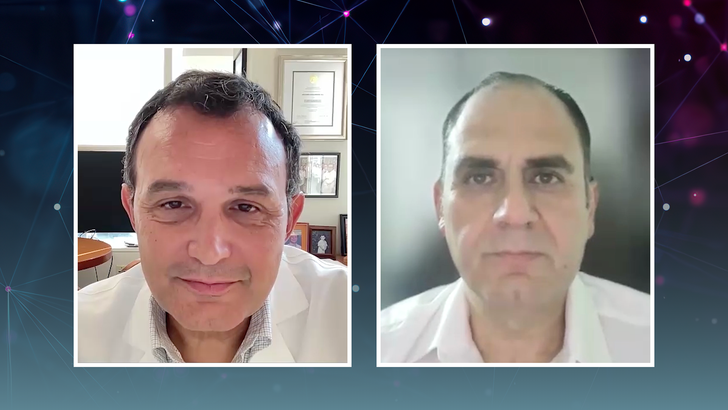
Welcome to this educational activity on managing patients with low-risk myelodysplastic syndrome, or MDS, with transfusion-dependent anemia. In the first chapter, we'll discuss how to sequence anemia therapies based on clinical and molecular factors. This is CE with GLC, and I'm Dr. Guillermo Garcia-Manero from the MD Anderson Cancer Center.
Nice to talk to you, Amer. Dr. Zeidan, can you briefly review the current treatment landscape for transfusion-dependent anemia in lower-risk MDS, please?
Dr. Zeidan:
Yeah. So I think this is an area that has seen significant changes in the last few years. For a very long time, erythropoiesis-stimulating agents were the frontline treatment in the vast majority of patients with lower-risk MDS. This status quo has been challenged by the COMMANDS trial, which I think really established the use of luspatercept as the frontline agent for the vast majority of patients with lower-risk MDS.
There continues to be some debate on some patients with very low EPO level and patients with very mild anemia, about whether ESA or luspatercept should be the frontline agent. But I think based on the long-term follow-up from the COMMANDS data, focusing on survival data as well as data related to the ability of transfusions and what I call super responders, the patients who have the longest periods of transfusion dependence, I think luspatercept has really become the frontline treatment.
Remains to be decided in terms of use of combinations. This is something that's being studied. And then of course, there are other, the second-line agents, which I'm sure we'll be talking about later, such as imetelstat and hypomethylating agents. And the last thing I would conclude with is that in the small minority of patients with deletion 5q, which is 5%-10% of patients, at most, lenalidomide continues to be the standard of care for almost 20 years now.
It was approved in 2006. So I think that area continues without significant change. So Dr. Garcia-Manero, given the complex treatment landscape, how do you approach the issue of sequencing decisions when frontline therapy fails?
Dr. Garcia-Manero:
Thank you, Amer. This is a difficult question right now. It, of course, will depend on whether you use luspatercept or ESA as your frontline therapy. So if we use luspatercept as our frontline therapy, then the next question will be, what is the value of either imetelstat or an ESA in luspa failure patients?
This is actually not well-established, and I think the decision will be made on whether the patient is RS positive or negative on the EPO level. In my practice, I see patients referred to me where the sequence is maybe luspa, ESA, perhaps because it's a little bit easier drug to give, followed by imetelstat or hypomethylating agent.
If the patient has started with an ESA, that let's say 5, 6 years ago will be the majority of the patients, then this question is easier to answer. We have data from the MEDALIST trial for RS-positive disease that clearly indicates that luspatercept will be the second-line agent for that group of patients.
And then in the RS-negative subset, that will be the data that actually you led the study, this IMerge trial with the imetelstat for second-line ESA failure. So that's a little bit of an easier sequence if you started with an ESA upfront. And then you have, like, third and fourth line that could be the hypomethylating agents or, lenalidomide in some very specific group of patients.
That said, today, probably the answer is number one, because at least in our practice, luspatercept is becoming the most popular agent for frontline, transfusion-dependent patients. So we need to understand a little bit better the natural history of this luspatercept failure patients.
This is also becoming a very active area or area of research. People are developing NEK7 inhibitors. We saw that at the SOHO meeting a couple of weeks ago. But in particular, there is an agent called R289. This is a very specific IRAK-1 and -4 inhibitor oral compound that blocks this innate immunity pathway that is mediated by this enzyme called IRAK, that, it's showing a significant activity in a group of patients with lower-risk disease, transfusion-dependent, that have received multiple lines of therapy.
So there is quite significant interest on this particular agent. There are also second-generation TGF-beta inhibitors and actually momelotinib, a drug that is approved for patients with myelofibrosis, is also being investigated in a number of phase 2 trials here. So all of a sudden, we see 4 or 5 agents that are either into phase 2 or almost phase 3 trials that could be of value for our patients.
And you mentioned earlier combinations, and I think these drugs, actually, some of them could be, combined. And that's why it's so important to have this clinical trial so we can really answer these questions.
Dr. Zeidan:
This is a very nice summary. I think this is an area that is really seeing a lot of research. You know, in addition to these IRAK inhibitors, there's also inflammasome inhibitors that are showing good data. There is hypoxia inducible factor pathway inhibitors as well that are being studied and second-generation transforming growth factor pathways and JAK inhibitors, including momelotinib.
So I think it's clear that the new direction in lower-risk MDS will involve additional oral agents, probably moving earlier in lines of therapy, like to transfusion independent patients, being more ambitious with the endpoints by trying to modify the natural history of the disease, prolong survival, reduce progression to acute myeloid leukemia, and maybe become more ambitious and try to normalize the hemoglobin, not just improve the anemia.
So I think all of this is probably going to evolve very nicely with all of these new agents over the next 10 years.
Dr. Garcia-Manero:
Thank you. This has been really, great. So before we wrap up this first chapter, Dr. Zeidan, what would be one key takeaway from this last few minutes?
Dr. Zeidan:
Yeah, I think the era of treating lower-risk MDS patients with just transfusions or ESAs is really largely gone. Luspatercept is probably the frontline, recommended treatment for the vast majority of patients, with some niches, such as del(5q) with lenalidomide, EPO more than 500 probably with imetelstat, and some patients with very low EPO level and very low transfusion burden could be considered for ESAs.
After frontline therapy, again, I think there are a lot of options. That depends on what the patient started with and whether the patient was RS positive or RS negative. But I think active therapy with drugs should be really considered, and patients should not be getting just transfusion support anymore
Dr. Garcia-Manero:
Thank you. In chapter 2, we'll discuss monitoring and managing adverse events associated with anemia therapies for lower-risk MDS. Stay tuned.
Chapter 2
Dr. Garcia-Manero:
Welcome back. In the first chapter, we discussed sequencing anemia therapies for lower-risk MDS. In chapter 2, we'll discuss monitoring and management strategies for adverse events associated with anemia therapy.
Let's get started. Dr. Zeidan, what do our listeners need to know about class-specific adverse events that we see in patients undergoing anemia therapy for lower-risk MDS?
Dr. Zeidan:
Yeah, thank you so much, Guillermo. I think this is an important subject. I would start by saying that the side effects for most of these drugs that we use for lower-risk MDS and anemia are generally mild. They are rarely associated with rates of discontinuation of drugs, but there are still important side effects that we have to be aware of so they can be monitored, they can be managed so that patients can stay on therapy as long as possible.
And some of these side effects can be thought of, in terms of the class of the drugs that are being used. For luspatercept and potentially all the transforming growth factor pathway drugs, I think the most common side effects circle around fatigue and hypertension. So fatigue is commonly seen.
It can be sometimes difficult to fully kind of understand, but I believe a component of it is probably inflammation-related, probably some cytokine release, so it's not always associated with anemia. But most of the time it's mild, it tends to improve with continued treatment and, beyond 3 cycles, especially as the hemoglobin, goes up.
I think it's very rare that it leads to discontinuation, and it's important to mention that to the patients so that they are not surprised if some degree of fatigue happens. The other side effect we commonly watch for is hypertension. Again, this is generally mild. I often will ask the patients to check their blood pressure and record it for me on weekly basis so that when they come to the clinic, we'll review if they need adjustments of their hypertension meds.
But generally, this does not also lead to discontinuation. Outside of that, this group of drugs have really minimal side effects, focusing on some mild GI upset or some muscle aches or asthenia, things like that. Maybe some leg edema, but generally very benign. When we go to, the second class of drugs that are also new, which are the telomerase inhibitors, including imetelstat, the side effects are more significant when it comes to cytopenias, in particular thrombocytopenia and neutropenia.
So this is important to monitor because those patients certainly require closer monitoring than luspatercept. Those patients should get a weekly CBC, and again, they should be counseled about the risks of thrombocytopenia and neutropenia and the risk of infection and bleeding. And in some patients, their thrombocytopenia can be severe, and they might need transfusions, although again, this happens in less than 20% of patients.
Some patients will need growth factor support if their neutropenia is severe, and some patients will need prophylactic antibiotics. If the monitoring and management is done appropriately, there is no increased risk of severe infections or life-threatening complications. Now, some of the new agents, that we mentioned in the prior chapter also have some specific toxicities.
IRAK inhibitors, which are still in the investigational phase, have caused also some cytopenias and some liver enzyme abnormalities, so those should be monitored. Some of them rarely have also caused rhabdomyolysis, but, again, the rates generally have been low. And then there are other drugs, you know, that come with other side effects, that are important to monitor, but importantly, talking to the patients and managing them and monitoring them is very important.
So Dr. Garcia-Manero, how do you monitor and manage the adverse events in your practice?
Dr. Garcia-Manero:
I think very similar to what you do. So let's go one by one maybe to recap what you said. So it's correct that for luspatercept, that sometimes we refer to as an erythroid-maturating agent, there is this fatigue. What is interesting is that we tend to see that fatigue that is kind of asthenia, and as you said, kind of an inflammatory type of process.
We tend to see this more in high transfusion burden second-line patients. Actually, in an early patient with not so many need of transfusions, this fatigue is not such an important issue. We see that, you know, in what I call MEDALIST-like patients, you know, more advanced second-line patients. That's actually very interesting.
I don't know if there's a good approach to that. Sometimes you have to, like, stop therapy. This is not that frequent, but it can be significant. And of course, hypertension and so forth. The very important one is the cytopenias with the imetelstat is actually, they're significant. I mean, they are safe.
We have done this with the hypomethylating agents for many years. But I think the colleagues that are listening to this need to think about this drug almost like if you were using a hypomethylating agent, meaning like you will see degree of neutropenia, thrombocytopenia. This could actually be a marker of response, but still, you need to follow that because you don't want to be in a situation where a patient has a bleed or some type of complication.
And there are good guidelines in terms of how to dose adjust or initiate the next cycle of the imetelstat. I think that's quite important, like if you're going to treat a patient with this agent. You mentioned the IRAK toxicities. Of course, these are in clinical trials. We don't really have the full detail of the toxicity profile of this drug as they are not really approved.
This particular agent, the R289, it's actually quite safe in terms of cytopenias. It's very specific, so you don't see the cytopenias that we have seen with some other IRAK4 inhibitors. But you are correct that at the higher dose levels, there is some liver toxicity. I don't know if that will be the dose that we use in the future phase 2 trial, so we need to wait for that.
You mentioned something that is very important, that is patient education. I really explain to the patients, of course, they don't come to MD Anderson to do luspatercept all the time, right? So you depend on your colleague in the community and so forth. I believe that is very important to educate the patient in the 3-week administration, the levels of hemoglobin, etc.
And then we work as teams with, APPs, etc, that many times probably will see the patient in between our visits. So this is a true multidisciplinary team approach. Amer?
Dr. Zeidan:
Yeah, no, I think you summarized it very well. I think the bottom line in my mind is being aware of these class-specific adverse events, doing a very good, counseling of the patient education, because most of those side effects are generally mild. They don't lead to discontinuation, but the patient has to be aware, and there should be a good monitoring and management plan, and also typically multidisciplinary that involves nurses, local oncologists, APP, and sometimes even the pharmacist and maybe specialists such as cardiologists or other kind of doctors who are involved in the care of patients.
When you do this, I think generally the use of these drugs is quite safe and a good experience for most patients
Dr. Garcia-Manero:
I totally agree. I think we covered it. Before we wrap this chapter, what is your key takeaway from this second chapter?
Dr. Zeidan:
I think the main message is that doctors and prescribers should be aware of the disease, or the class, kind of specific side effects, and what to monitor for and to counsel and educate patients. But none of these, in my opinion, should preclude the use of these drugs because they tend to be generally quite effective, and anemia is very important to be managed in those patients
Dr. Garcia-Manero:
Thank you, Amer. In chapter 3, we will be discussing the benefits of earlier therapeutic intervention for anemia in lower-risk MDS. Stay tuned.
Chapter 3
Dr. Garcia-Manero:
Welcome back. In the second chapter, we discussed monitoring and management strategies for adverse events associated with anemia therapies. Now, in chapter 3, we'll discuss the benefit from early, therapeutic intervention for anemia in lower-risk MDS. Let's get started. Dr. Zeidan, what are some of the benefits from early treatment of anemia?
Dr. Zeidan:
Yeah, I think this is a very important subject. We historically have thought of treatment of lower-risk MDS as focusing on transfusion independence and quality of life, rather than substantially modifying the disease course and improving what I would call hardcore kind of endpoints, such as reducing the progression to acute myeloid leukemia, or cardiac modulation, which I think is an underappreciated significant complication of anemia and MDS that probably contributes significantly to morbidity and mortality in those patients, and eventually the most important endpoint, which is overall survival.
I think some of the additional improvement in outcomes will probably depend on us trying to get to higher hemoglobins. We have some data also from the COMMANDS trial that not only achieving transfusion independence, but trying to go for a hemoglobin higher than 10 g/dL probably is associated with some of those clinical benefits, but also in terms of the patients feeling better and their quality of life improving.
In some patients, especially those with very high transfusion burden, sometimes achieving full transfusion independence is not feasible. But if you go from 10 units of blood every 8 weeks to 1 or 2 units, and still that's a significant win in my mind. Of course from the patient perspective, but also from the healthcare utilization as well as how much time the patient spends in the clinic, etc.
So I think the subject of the endpoints is really a very dynamic kind of subject, and we are taking a closer look in the field about how should we approach lower-risk MDS and becoming more ambitious. So for you, Dr. Garcia-Manero, what are some of the key triggers to initiate earlier intervention in your practice?
Dr. Garcia-Manero:
This is, again, a very fundamental question that, as you very well said, is now being challenged by this COMMANDS trial.
And now we know that these patients can be in a response more than 2 years and a half later. So this is actually quite important. And then the survival data from that COMMANDS trial is starting to tell us that maybe there is something more to just the fact of mitigating transfusion. So, in the first couple of chapters, you've been talking about treating hemoglobin, not transfusions.
I think you're making a really, really important point, here. And I think this is going to, if we start doing this in a systematic way, this is really going to shift the natural history of this disease because, and I think you alluded to this, in one of the chapters earlier, that not only there was an improvement in survival, you know, with all the caveats of a secondary endpoint in a study that is not really powered for survival.
But there was a clear delay as well in transformation from the low-risk MDS to high-risk MDS, is that somehow this approach is delaying somehow the evolution of this disease. So we are going to go into, very, hopefully based also on the ELEMENT-MDS trial, earlier intervention in these patients, as you were saying, maybe treating patients with 9, 10 grams of hemoglobin.
Dr. Zeidan:
Yeah, I fully agree, and I think it's really a very interesting era, very exciting, I think, for patients, because fundamentally the outcomes could change over time. We are seeing hints in terms of survival prolongation. I think eventually we need to look carefully at cardiovascular outcomes because I think, in my opinion, this probably contributes to why we are seeing some of those survival improvements and being more ambitious, as you were just saying, maybe trying to shoot for normalization of hemoglobin rather than just improvement of anemia.
And now we have the tools to do that effectively and safely. So I think treating patients with lower-risk MDS with drug therapy is very important
Dr. Garcia-Manero:
I think you brought a point, and we can expand on the prior question that is quite important, that is that of the comorbidities and how this works, these drugs work. So when I started working in this disease, I also saw the anemia as a secondary kind of an aftermath of the disease, right?
And, this concept of improving survival with some drugs is not new. And you say, well, it's because they're making the disease better, but there may be more to this. So for instance, these TGF-beta modulators, they probably affect other tissues in a positive way, right? There are similar drugs that are very powerful drugs for pulmonary hypertension.
We know TGF-beta is quite important for heart function, and so forth. So it's possible that we are experiencing systemic effects of these drugs that we are not really measuring in our MDS clinical trials. Then you will go into all the story of iron deposition, etc, that we know in the long run will cause liver disease, heart disease, and so forth, that is now really improved by this early intervention and probably avoiding some of the worsening of the comorbidities.
And the fact that these patients now maintain these hemoglobins for a long period of time, I think it just makes common sense that physiologically this would be a much better way to go. That said, I don't think that we fully understand this, and we need to do better in our clinical trials to investigate this.
This could be some type of endpoint for approval of some of these drugs if we understood kind of the systemic effects of these drugs.
So we want to have safer drugs and approaches, and we don't want to have 20 grams of hemoglobin. But if we were able to, like, push this a little bit higher, I think our patients will do much better. I think we're now almost getting at the end. I think if we were able to break down what goes on into these decisions, thanks to the discussion, we probably will do better.
But before we say goodbye, Dr. Zeidan, can you provide, like, one last key takeaway from this last chapter?
Dr. Zeidan:
Yeah, I think if the audience can kind of walk away from with one, kind of key message is the importance of treating patients with lower-risk MDS with anemia, with the right drugs. I still see patients in my clinic for second and third opinion who get started on hypermethylating agents in the frontline setting.
There could be some patients who could use HMAs, but the vast majority of patients in whom anemia is the main problem should really be going on, luspatercept or ESAs, and the main thing to remember is that those patients generally are going to live on some kind of drug therapy for the rest of their lives.
They are going to need to be continuously treated for years because generally they live multiple years, and some of them can live even 10 years. And I think we have to not only think about what I'm going to give the patient today, but also have some advanced thinking about, okay, what is going to be my second line, third line.
So you don't want to burn bridges. You want to try to make the patient as transfusion independent for as long as possible in their life, and we have increasing number of agents to do that. And ultimately, we should really not depend on transfusions in this era for the vast majority of patients.
Dr. Garcia-Manero:
I totally agree with you on that, and I think that's going to be our standard of care for the years to come. I think that's all the time we have today. So I want to thank our audience for listening, and thank you, Dr. Amer Zeidan for joining me and for sharing all your incredible knowledge and valuable insights.
It was great speaking with you, today. Thank you.
Dr. Zeidan:
Yeah, thank you so much. This was a great discussion.
Closing:
You have been listening to GLC on ReachMD. This activity is provided by Global Learning Collaborative.
To receive your free CE credit or to download this activity, visit ReachMD.com/CME. Thank you for listening.

 Global Learning Collaborative (GLC) has been authorized by the American Academy of Physician Associates (AAPA) to award AAPA Category 1 CME credit for activities planned in accordance with AAPA CME Criteria. This activity is designated for 0.50 AAPA Category 1 CME credit(s). PAs should claim only the credit commensurate with the extent of their participation in the activity.
 Global Learning Collaborative (GLC) designates this activity for a maximum of 0.50 contact hour(s)/ 0.05 CEUs of pharmacy continuing education credit.

