
Transcript
Announcer:
Welcome to CME on ReachMD. This activity is provided by Prova Education. This episode is part of our MinuteCE curriculum.
Prior to beginning the activity, please be sure to review the faculty and commercial support disclosure statements as well as the learning objectives.
Dr. Bril:
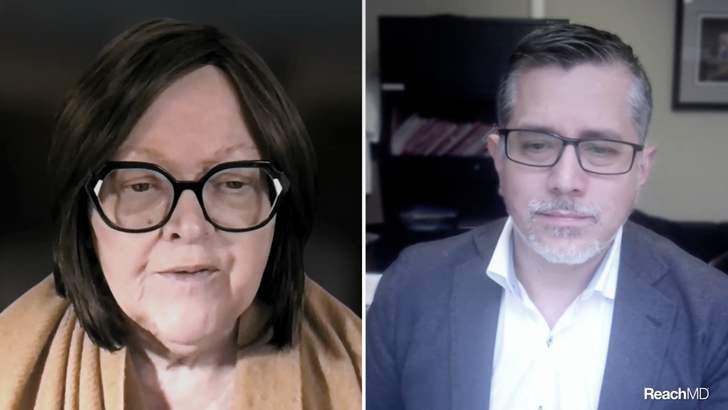
This is CME on ReachMD, and I'm Dr. Vera Bril. Here with me today is Dr. Hans Katzberg. Let's talk data. Dr. Katzberg, what are the traditional treatment approaches for generalized MG? Further, when assessing the advantages and disadvantages, what are the current unmet needs in treating gMG?
Dr. Katzberg:
Thank you very much, Dr. Bril. So firstly, we have what we call symptomatic therapy in myasthenia gravis, and this essentially is the acetylcholinesterase inhibitors. These are medicines with a very short half-life that work for about 4 to 6 hours and usually will give patients a brief episode of increased strength by improving the connection between the presynaptic and postsynaptic membrane. And these can often also be used diagnostically, but often patients find that they are very helpful, and they continue these therapies, in addition to the more daily immunosuppressive medicines.
And that is the other category, immunosuppressive and immunomodulatory therapies. The most common one that's used is corticosteroids or prednisone. And these can help to lower the immune system enough that patients are able to improve in their symptoms with myasthenia gravis.
There can be significant side effects to corticosteroids, however, and it's often helpful, if someone is requiring long treatment for this over time, that other steroid-sparing agents are used. And these can be things like azathioprine or mycophenolate, methotrexate, tacrolimus. So these immunosuppressive agents can often help lower the doses of steroids and have the same effect.
In the acute setting, immunomodulatory therapies like intravenous immunoglobulin can be helpful to mitigate some of the more serious symptoms of myasthenia and prevent a crisis or an exacerbation, similar to plasmapheresis, which can essentially filter out some of the pathogenic antibodies in MG and help with symptoms, particularly if they're severe or progressing.
Other immunosuppressive agents, such as rituximab, can lower antibody levels in the blood, and can also be helpful in myasthenia gravis. However, this can be helpful more commonly for MuSK myasthenia or refractory myasthenia; it’s not a first-line agent commonly. So the main side effects to these, the challenges, I think the main ones, are corticosteroids. They can have immediate adverse events, such as problems with sleep, urination, anxiety, psychiatric effects early on and acutely. And over the long term, there can be effects on bone, blood sugar, weight gain, and other effects that makes it difficult to sustain high doses of these medications.
The other immunosuppressive agents, the steroid-sparing agents, I think one has to be mindful of the immunosuppressive effects, prone to infections, and some of them can be difficult as they are metabolized through the liver, and things like liver enzymes have to be monitored as well as the blood counts. So this is some of the limits to some of these medicines. Problems can accumulate over time, and so this leads to some opportunity for some of the new immunotherapies that can actually be helpful for management, which may have less burden of side effects.
Dr. Bril:
Thank you, Dr. Katzberg. I think it's important to note that we still use corticosteroids quite frequently because they're so effective in gMG, but they are associated with a long list of side effects and are not tolerated by all patients and many patients, especially those with comorbid disease, such as preexisting diabetes or hypertension.
The immunosuppressive agents work well, but there's a long delay to onset of action that makes them problematic and sometimes leads to a need for bridging therapy with immunomodulation and perhaps the new FcRn inhibitors. And rituximab, actually, we have to wait for a good 3 months to determine whether that's going to be effective.
And I think it's always important for us to know that none of the therapies has a 100% response rate.
Well, this was brief, but I'm glad we had the opportunity to share this information with you. Thanks for listening.
Announcer:
You have been listening to CME on ReachMD. This activity is provided by Prova Education and is part of our MinuteCE curriculum.
To receive your free CME credit, or to download this activity, go to ReachMD.com/CME. Thank you for listening.

