
Transcript
Announcer:
Welcome to CME on ReachMD. This activity is provided by Medcon International. This episode is part of our MinuteCE curriculum.
Prior to beginning the activity, please be sure to review the faculty and commercial support disclosure statements as well as the learning objectives.
Dr. Taub:
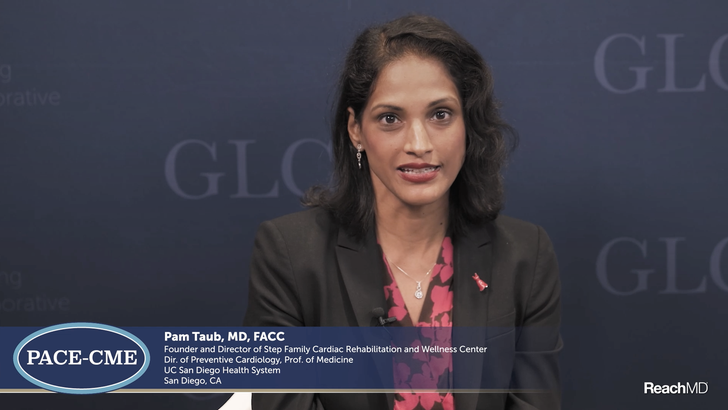
This is CME on PACE-CME and ReachMD, and I'm Dr. Pam Taub. And here with me today is my good friend, Dr. Kosh Ray.
Dr. Ray:
Pleasure to be with you.
Dr. Taub:
It's always great to hear your perspectives on every aspect of lipid management, but let's talk about the latest clinical evidence with the novel treatment options for severe hypertriglyceridemia. And I know there's some really interesting open-label extension data.
Dr. Ray:
Thank you. So when we think about severe hypertriglyceridemia, we're talking about those people with triglyceride levels above 500, maybe well above 800, 1,000, etcetera range. And although pancreatitis risk increases just as triglyceride levels go up anyway, these are people at much, much higher risk. And there's a couple of scenarios that we need to consider. One is basically, what's more common than the genetic FCS-type patients are these patients who have other metabolic disturbances and really high levels, but maybe not that genetic background as well. So, it's very common. And so, what we've struggled with is to get those triglycerides over 800, 900, down to a range that's well below 500 with traditional approaches: fibrates, etcetera, and fish oils.
What has now emerged is a key protein, APOC3, which is an inhibitor of lipoprotein lipase. If we inhibit APOC3, then we can get marked reductions, in theory. And that was really tested in the SHASTA-2 trial. This is the usual dose-ranging study, and what was shown is that there was a marked reduction in triglyceride levels. But remember, over 24 weeks, if you’re dosing every 3 months, you haven’t actually had many doses. So, you need longer-term follow-up to see the effect is durable or not.
So, over 15 months in the SHASTA2 open-label extension, what was basically seen is that the treatment that was given, plozasiran, essentially reduced triglyceride levels by over 86%. As you would expect, remnant cholesterol goes down as well, non-HDL goes down as well, APOB goes down with no real changes in LDL and lipoprotein A, and there was no adverse signals, like worsening of diabetes or new onset diabetes, so that’s reassuring.
And the clinical implications are, yes, it’s a short follow-up, but we know over the course of a lifetime, beyond 15 months, many of these people are going to be at risk of pancreatitis. And we know that's related to triglyceride loss. So, the fact that most people came down into that below 500 range is really a good thing for our patients in the future going forward. And of course, these people might be at risk of atherosclerotic cardiovascular disease, but again, that is something that needs to be tested more formally.
Dr. Taub:
I think this is really great data. And there's actually a lot of patients that fall into this intermediate category where they have triglycerides over 500, and we do want to really work with them on lifestyle modification and also, we now have a great class of drugs, the GLP-1 receptor agonists, because these patients tend to be overweight or diabetic. So, we now have a lot more options and this is really exciting data.
And what's also really nice with siRNA technology is the ability to dose very infrequently, which is also good from a compliance perspective for these patients.
So, that has been a brief but great discussion. Before we wrap up, what's your final take-home message?
Dr. Ray:
So, I think there's a group of patients that had a clear unmet need, this extreme triglyceride phenotype, and one way was to really reduce their saturated fat, carbohydrate intake to minuscule levels. That's difficult to maintain. So, this now actually gives them that potential that's so important, but a respite as well, because they now get this coverage with this unique class of medication.
Dr. Taub:
Yeah, a lot of patients have commented how this very restrictive diet, it's like torture.
Dr. Ray:
Yeah.
Dr. Taub:
And it's really hard for them to adhere to long-term. So, it is really nice to have some pharmacology that can synergize with lifestyle.
Well, thank you for this very lively discussion.
Dr. Ray:
Thank you.
Announcer:
You have been listening to CME on ReachMD. This activity is provided by Medcon International and is part of our MinuteCE curriculum.
To receive your free CME credit, or to download this activity, go to ReachMD.com/CME. Thank you for listening.

