
Transcript
Announcer:
Welcome to CE on ReachMD. This activity is provided by Global Learning Collaborative and is part of our IBD Masterclass curriculum.
Prior to beginning the activity, please be sure to review the faculty and commercial support disclosure statements as well as the learning objectives.
Dr. Iroku:
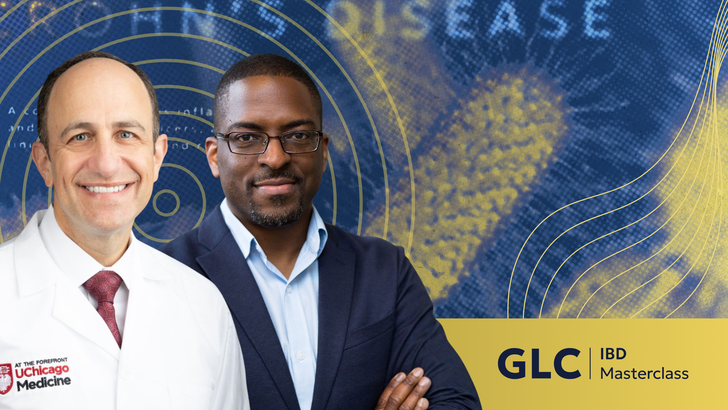
Hi, I'm Dr. Ugo Iroku.
Dr. Rubin:
And I'm Dr. David Rubin.
Dr. Iroku:
So Dr. Rubin, over the course of this module, we've taken a deep dive into the many factors that contribute to inflammatory bowel disease. We've explored the underlying pathophysiology of IBD, the immune pathways that drive intestinal inflammation. We've discussed the therapeutic targets, why they matter, and how different treatments intervene along the inflammatory cascade. And we examined the broader influences shaping disease development, from environmental exposures and the gut microbiome to genetic factors that influence susceptibility.
In this episode, we're going to bring all those pieces together. We'll highlight the key takeaways from each of these discussions and what they might mean for management of IBD in real-world clinical practice.
So to start off with, what's the take-home message for our clinical providers in IBD when it comes to genomics and IBD?
Dr. Rubin:
Well, we should recognize that despite 25 years of discoveries related to genetic variants associated with risks of IBD, it hasn't changed how we diagnose IBD and, for the most part, hasn't changed how we treat the diseases, with the exception of the monogenic IBDs in the very young patients and possibly some of our teenagers who may be living with those and not diagnosed earlier.
Having said that, we've learned a lot more about how to manage patients in general. And for our colleagues, of course, suspecting these diseases when we see patients is very important. And of course, by the time a patient works their way to a gastroenterologist, they've already seen somebody else who may or may not have realized that they have an inflammatory problem. So we need to continue to raise awareness among our colleagues who are not in our field about looking and thinking about IBD.
For us as gastroenterologists in the community and in academic practices, I think there are a number of important messages. First, we need to acknowledge that 30-40% of patients with IBD have extraintestinal manifestations, and the current approach to diagnosing IBD should include looking for those clues so that we can make thoughtful decisions about treatment.
The second thing we've covered and talked about here has been about the importance of getting patients with moderately to severely active disease on appropriate treatments for moderately to severely active disease. In other words, patients with more extensive disease, anemia, and more significant bowel involvement or symptoms should be treated with the available therapies that work for those problems early, and we should limit or avoid steroid exposure.
Now to that point, understanding some of the mechanisms of our treatments enables us to think clearly about how to choose some therapies for patients who have coexisting extraintestinal manifestations or in whom certain safety considerations or other factors might play a role. But it shouldn't delay using a therapy that you're comfortable using to get a patient treated early and get them into remission.
We've also talked about the importance of monitoring patients, not waiting for complications, not managing IBD as a reactive disease, but rather one that we should be proactive to gain control and keep people in remission over time.
Dr. Iroku:
And what about the age-old conversation of nature versus nurture? How does the role of the environment change the way that you talk to your patients about their IBD?
Dr. Rubin:
Yeah, I think this is really important. And I think we recognize that globally IBD is on the rise, as are many immune problems. And it's not because the human genome has changed. It's because our environment has changed. And by acknowledging that fact, number one, it helps us understand how to communicate to patients what they're experiencing and that this is happening in many places around the world and that we are trying to get our hands around this. But secondly, the importance of better work to study the epidemiology and the environmental factors that we might address to prevent IBD in the future.
Dr. Iroku:
They say that doing the same thing multiple times and expecting a different result is the definition of insanity. What's the rationale of trying yet another medication different from the first one you tried in the patient's failure initially with IBD?
Dr. Rubin:
Yeah, I think that the holy grail of IBD management is still elusive, and that is to have a predictive therapeutic biomarker or a companion diagnostic that will tell you which therapy you should use, or conversely which therapy you should not use in a specific patient. So it does make sense that if you use the therapy and it's not achieving the goal of stable remission off steroids, that you change mechanisms, because it may be in this patient that the second mechanism or the third one may be the right choice.
Don't forget to embrace surgery in some patients and not to cycle through all your medical therapies when a limited resection or surgical approach might be the right one.
I think you're right. We shouldn't be continuing to cycle. I thought you were going to bring up steroids again, because more than one course of steroids in a year, or the patient who's stuck on steroids despite other therapies, is not someone who's achieved the goals that we have set for our patients with IBD. And I think we all need to raise the bar of our expectations and work hard to continue managing them.
Dr. Iroku:
Fascinating. Well, this has been a fascinating conversation. Our time is up, but thanks for listening.
Dr. Rubin:
Thank you so much.
Announcer:
You have been listening to CE on ReachMD. This activity is provided by Global Learning Collaborative and is part of our IBD Masterclass curriculum.
To receive your free CE credit, or to download this activity, go to ReachMD.com/CME. Thank you for listening.
 In support of improving patient care, Global Learning Collaborative (GLC) and Crohn’s & Colitis Foundation is jointly accredited by the Accreditation Council for Continuing Medical Education (ACCME), the Accreditation Council for Pharmacy Education (ACPE), and the American Nurses Credentialing Center (ANCC) to provide continuing education for the healthcare team.
  Global Learning Collaborative designates this activity for 1.0 contact hour(s)/0.1 CEUs of pharmacy contact hour(s).
  Global Learning Collaborative has been authorized by the American Academy of PAs (AAPA) to award AAPA Category 1 CME credit(s) for activities planned in accordance with AAPA CME Criteria. This activity is designated for 1.0 AAPA Category 1 CME credit(s). Approval is valid until 05/01/27. PAs should claim only the credit commensurate with the extent of their participation in the activity.

