
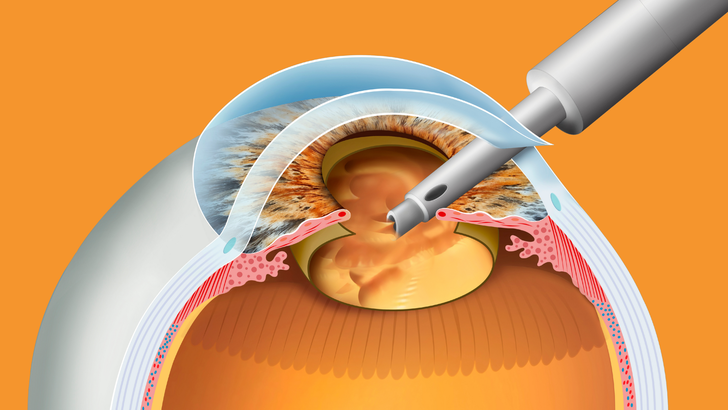
In this Inside the Cataract Studio segment, Dr. Wendell Scott shares detailed, case-based insights for optimizing Hi-Lo phaco settings across both Venturi and peristaltic systems. With step-by-step commentary, viewers explore how parameters like vacuum ramp, aspiration flow, and bottle height interact with surgical instruments, incisions, and tubing design to influence chamber dynamics and post-occlusion surge. Through narrated video footage of dense cataract cases, learners gain practical strategies for managing harder lenses, improving efficiency with pulsed vacuum, and refining incision architecture. This hands-on discussion offers surgeons actionable tips for improving control and consistency across routine and complex scenarios.
Hi-Lo Phaco: Settings and Details

Dr. Scott:
Welcome to a description of the settings and details for Hi-Lo phaco. So we're going to be talking about Venturi and peristaltic settings and also all the other aspects of surgery which affect that anterior chamber stability and your ability to basically remove the cataract in the most safe and efficient way.
So currently, the phacoemulsification unit, the platform that I use, it can be in either peristaltic or Venturi mode. When using the peristaltic settings, there are some things I want to point out. Okay, aspiration flow is the flow that's coming to the tip all the time, once you're in the position of aspiration. And you see it's at 50. So that tip has to occlude before the vacuum can build. So these settings are high settings, high aspiration, highest vacuum, and again with the lowest power.
Regarding the power at 1%, on different units, you may find that you need more power than that. And on this unit, depending on the density of the lens, you may need more power than that. You can start at one and you can go up. I think that a fairly dense lens is usually, you can go up to 10% power and be fine. But really, I very rarely go above 20% with these settings.
The bottle height, again, is something that is at a moderate level. I mean, it can be raised to like 135, but bear in mind that the higher you raise it, the more flow, because the more pressure and the more fluid that's egressing either out the main incision or the paracentesis, which we're going to talk about later as far as how we create those and make those consistent.
Now, the pump ramp is something that is significant and a little counterintuitive for the peristaltic system. When we talk about pump ramp with Venturi, we're talking about how quickly the vacuum builds. But when we're talking about pump ramp with the peristaltic, we're talking about how quickly the aspiration decreases when the vacuum increases. So basically to avoid that post-occlusion surge, when the vacuum tip is occluded, you want that aspiration to drop quickly because the tip will become un-occluded and we don't want that aspiration present to avoid potentially having a complication.
So this pump ramp, it's 75%. That’s a fairly quick release of the aspiration when the vacuum builds. And we're going to see an example of that in the next video.
Here's a fairly dense cataract with the peristaltic modes and variable white star settings, and you can see we're able to split it in half and get that back crack in place so that we can bring that lens forward. And the aspiration flow is facilitated by the second instrument bringing it forward. So you’ll notice this aspiration and vacuum, the fact that they toggle back and forth, it means that you're not always maintaining the kind of vacuum that's optimal, maximal, and so it can take a little longer to remove the lens because of the really suboptimal vacuum. But it also is helping protect against that post-occlusion surge.
So this lens, of course, I mean, it is a denser lens, and it takes a little bit longer to do it. I try to actually go along the femto lines of the lens and remove it in that way when it's denser. Now, you'll see there's some epinuclear lens. The aspiration flow in this case is not enough, so that is one place where if you were in Venturi mode, you probably would just be able to lift that up.
Now, at the Hi-Lo phaco, we want to discuss the Venturi settings. Again, on the unit you can choose either, and this is what the screen looks like when you go to the Venturi settings. So because aspiration flows is not part of the choice, then you really have a limited number of choices. This vacuum is at the high level, the power is at the lowest possible level, and the vacuum ramp is actually at the highest level. So in this case, vacuum ramp, it means how quickly the vacuum will be at the tip when you enter that phase on the foot pedal. Again, the bottle height is really a moderate height. It could be raised if you felt like you needed more chamber stability, but also the higher the pressure, the more egress of fluid.
So varying the vacuum is really under the surgeon control, and preventing post-occlusion surge is really under your control in understanding and anticipating what's happening with the removal of the lens. We have other settings, other, really, details about why stability is dependent on these other factors, like the tip and the implosion sleeve and even the paracentesis and second instrument, which we're going to discuss later. But let's take a look at a video with these vacuum levels and surgeon control in mind. And let's watch this next one now.
Here we have another example of a Venturi case. So introducing the phaco tip, using the instrument, second instrument, to facilitate that. And note where the tip of the phaco tip goes. It goes to the center of the lens, but not beyond that, okay. That helps give you leverage at the thickest part of the lens and helps you split it. And you can use both instruments to rotate it and also to back crack it so that you really free up the hemi-lens and get that first segment up.
So watch the vacuum and also the power. And this is a harder lens, and at times, some of the vacuum will stop and you'll notice me taking my foot off the phaco pedal and it dropping to like zero, okay? Remember, in Venturi, it's going to be the surgeon controlling that, and we're going to rotate this piece and apply the vacuum again using the chop to lift it into position. But again, if you become familiar with this Venturi system, you’ll find that going on and off the phaco pedal will allow you to more or less re-engage the nucleus in the tip.
So I included this video because there are a lot of little asteroid lens pieces flying around. Especially the harder the lens, sometimes you'll see more of that. And so when I'm going on and off the foot pedal, that does sometimes help bring in some of those. In this case, there is a little piece under the iris, okay? So you definitely want to make sure as you're doing it that you try to keep track of those, but also to be aware if you see anything at that edge that you need to pull that back in. And you can see this little lens mashing technique to get that fragment up and out with the INA.
So here are other specifics about exactly what I'm doing and what I'm using, because each detail actually does matter. So this is a 21-gauge phaco needle, 30 degree bevel tip. The inflow is a high-flow sleeve. It's an orange color. And that really is maximizing the inflow. So it's working in conjunction with your bottle height. The tubing matters. So this advanced infusion tubing is like stiffer internally, which improves the vacuum consistency. You could think of it as if you're sucking on a plastic straw that's not very strong and it just collapses, and that variation in the vacuum you're applying is changing, really, how much is flowing through. Whereas if you were using, say, a metal straw, it would be very consistent. You couldn't collapse it. And so by having that stiffer internal tubing, you are improving the vacuum consistency between the tip and that internal cassette. So I'm also using like an elliptical phaco tip motion, and this elliptical motion is improving the efficiency of the removal of the cataract.
Also, you want really consistent incisions. And for the studies I cited earlier, we actually did all blade incisions because we didn't want there to be any variance between the two groups. And at that time, we felt like that there was more variability with the femto incision. So the femto incision is also a little tighter because the nature of doing a femtosecond incision is that it's creating all the small little femto fractures, and then you're opening it up. So basically, to get an equivalent of a 2.4 blade incision, we use a 2.4 mm femto incision.
The paracentesis incision is made either with the laser or with the 25-gauge needle, and at approximately 1 mm for the second instrument.
One thing I developed with the chop instrument that I use is a constant shaft diameter. So it basically only starts tapering close to the end where it angles. And what I had noticed was just that movement of the second instrument in and out to position where you want was resulting in more outflow at various times and not in a really very predictable way because the shaft itself was tapered. So all these things I'm mentioning are really to try to keep the leakage to a minimum from both the main incision and from the paracentesis.
So with particularly hard cataracts, approach it in the same way initially and crack it in half. So part of applying maximal vacuum is that at some point, you sometimes have to decide to either increase the power or to apply the vacuum in a different way. And what you'll notice, if you look at the lower right-hand corner and follow the vacuum, is that the vacuum is going up and down. And mostly, the vacuum's on all the time. It's still 1% power. So to speed things up, you could go to like 10% power. But in this case, I'm just going to be patient and bring this nucleus in.
But as I'm doing that, then it's, also, you'll see me starting to actually pulse the vacuum, okay? So that's when you're going to see, especially with this last part, me going up and down on the foot pedal quickly, like just coming up and going back down and repeatedly doing that. That pulsed vacuum is really another way of improving the efficiency.
Well, thank you for your kind attention, and as always, I mean, details, they really matter in ophthalmology, and I hope that these will be helpful in any adjustments you might be considering making.
Ready to Claim Your Credits?
You have attempts to pass this post-test. Take your time and review carefully before submitting.
Good luck!
Overview
Disclosure of Relevant Financial Relationships
In accordance with the ACCME Standards for Integrity and Independence, it is the policy of Evolve Medical Education, LLC (Evolve) that faculty and other individuals who are in the position to control the content of this activity disclose any real or apparent financial relationships relating to the topics of this educational activity. Evolve Medical Education, LLC (Evolve) has full policies in place that have identified and mitigated financial relationships and conflicts of interest to ensure independence, objectivity, balance, and scientific accuracy prior to this educational activity.
The following faculty/staff members have reported financial relationships with ineligible companies within the last 24 months.
Faculty:
Wendell J. Scott, MD
Mercy Clinic Eye Specialists
Springfield, MO
Consultant: Johnson & Johnson Vision
Reviewers/Content Planners/Authors:- Cindy Davidson has no relevant relationships to disclose.
- Erika Langsfeld, PhD,has no relevant relationships to disclose.
- Mike Taggart, MD, has no relevant relationships to disclose.
Learning Objectives
Upon completion of this activity, learners should be better able to:
- Manage machine fluidics to enhance chamber stability and minimize complications during cataract surgery
- Discuss how key features such as foot pedals, handpieces and tips, visualization tools, and user interfaces contribute to the overall ergonomics and efficiency of performing cataract surgery.
Target Audience
This activity has been designed to meet the educational needs of ophthalmologists.
Accreditation and Credit Designation Statements
In support of improving patient care, Global Learning Collaborative (GLC) is jointly accredited by the Accreditation Council for Continuing Medical Education (ACCME), the Accreditation Council for Pharmacy Education (ACPE), and the American Nurses Credentialing Center (ANCC) to provide continuing education for the healthcare team.
Global Learning Collaborative (GLC) designates this enduring activity for a maximum of 0.25 AMA PRA Category 1 Credit(s)™. Physicians should claim only the credit commensurate with the extent of their participation in the activity.Provider(s)/Educational Partner(s)

Evolve Medical Education LLC (Evolve) is a leader in cultivating health care for patients by educating clinical competence of the health care team. Evolve achieves this by developing and distributing high-quality, evidence-based, valid, independent CME/CE activities in a variety of learning formats. These activities are designed to increase clinician’s knowledge, skills, competence and professional performance as well as to promote professional growth, maintenance of licensure, and support quality change in care of patients.Commercial Support
This activity is supported by an independent medical education grant from Johnson & Johnson Surgical Vision Inc.
Disclaimer
The views and opinions expressed in this educational activity are those of the faculty and do not necessarily represent the views of Evolve. This presentation is not intended to define an exclusive course of patient management; the participant should use his/her clinical judgment, knowledge, experience, and diagnostic skills in applying or adopting for professional use any of the information provided herein. Any procedures, medications, or other courses of diagnosis or treatment discussed or suggested in this activity should not be used by clinicians without evaluation of their patients’ conditions and contraindications or dangers in use, review of any applicable manufacturer’s product information, and comparison with recommendations of other authorities. Links to other sites may be provided as additional sources of information.
Reproduction Prohibited
Reproduction of this material is not permitted without written permission from the copyright owner.
The views and opinions expressed in this educational activity are those of the faculty and do not necessarily represent the views of Evolve or Johnson & Johnson Surgical Vision Inc.
This activity is designed for educational purposes. Participants have a responsibility to utilize this information to enhance their professional development to improve patient outcomes. Conclusions drawn by the participants should be derived from careful consideration of all available scientific information. The participant should use his/her clinical judgment, knowledge, experience, and diagnostic decision-making before applying any information, whether provided here or by others, for any professional use.System Requirements
- Supported Browsers (2 most recent versions):
- Google Chrome for Windows, Mac OS, iOS, and Android
- Apple Safari for Mac OS and iOS
- Mozilla Firefox for Windows, Mac OS, iOS, and Android
- Microsoft Edge for Windows
- Recommended Internet Speed: 5Mbps+
Publication Dates
Release Date:
Expiration Date:
Overview
In this Inside the Cataract Studio segment, Dr. Wendell Scott shares detailed, case-based insights for optimizing Hi-Lo phaco settings across both Venturi and peristaltic systems. With step-by-step commentary, viewers explore how parameters like vacuum ramp, aspiration flow, and bottle height interact with surgical instruments, incisions, and tubing design to influence chamber dynamics and post-occlusion surge. Through narrated video footage of dense cataract cases, learners gain practical strategies for managing harder lenses, improving efficiency with pulsed vacuum, and refining incision architecture. This hands-on discussion offers surgeons actionable tips for improving control and consistency across routine and complex scenarios.
Disclosure of Relevant Financial Relationships
In accordance with the ACCME Standards for Integrity and Independence, it is the policy of Evolve Medical Education, LLC (Evolve) that faculty and other individuals who are in the position to control the content of this activity disclose any real or apparent financial relationships relating to the topics of this educational activity. Evolve Medical Education, LLC (Evolve) has full policies in place that have identified and mitigated financial relationships and conflicts of interest to ensure independence, objectivity, balance, and scientific accuracy prior to this educational activity.
The following faculty/staff members have reported financial relationships with ineligible companies within the last 24 months.
Faculty:
Wendell J. Scott, MD
Mercy Clinic Eye Specialists
Springfield, MO
Consultant: Johnson & Johnson Vision
Reviewers/Content Planners/Authors:- Cindy Davidson has no relevant relationships to disclose.
- Erika Langsfeld, PhD,has no relevant relationships to disclose.
- Mike Taggart, MD, has no relevant relationships to disclose.
Learning Objectives
Upon completion of this activity, learners should be better able to:
- Manage machine fluidics to enhance chamber stability and minimize complications during cataract surgery
- Discuss how key features such as foot pedals, handpieces and tips, visualization tools, and user interfaces contribute to the overall ergonomics and efficiency of performing cataract surgery.
Target Audience
This activity has been designed to meet the educational needs of ophthalmologists.
Accreditation and Credit Designation Statements
In support of improving patient care, Global Learning Collaborative (GLC) is jointly accredited by the Accreditation Council for Continuing Medical Education (ACCME), the Accreditation Council for Pharmacy Education (ACPE), and the American Nurses Credentialing Center (ANCC) to provide continuing education for the healthcare team.
Global Learning Collaborative (GLC) designates this enduring activity for a maximum of 0.25 AMA PRA Category 1 Credit(s)™. Physicians should claim only the credit commensurate with the extent of their participation in the activity.Provider(s)/Educational Partner(s)

Evolve Medical Education LLC (Evolve) is a leader in cultivating health care for patients by educating clinical competence of the health care team. Evolve achieves this by developing and distributing high-quality, evidence-based, valid, independent CME/CE activities in a variety of learning formats. These activities are designed to increase clinician’s knowledge, skills, competence and professional performance as well as to promote professional growth, maintenance of licensure, and support quality change in care of patients.Commercial Support
This activity is supported by an independent medical education grant from Johnson & Johnson Surgical Vision Inc.
Disclaimer
The views and opinions expressed in this educational activity are those of the faculty and do not necessarily represent the views of Evolve. This presentation is not intended to define an exclusive course of patient management; the participant should use his/her clinical judgment, knowledge, experience, and diagnostic skills in applying or adopting for professional use any of the information provided herein. Any procedures, medications, or other courses of diagnosis or treatment discussed or suggested in this activity should not be used by clinicians without evaluation of their patients’ conditions and contraindications or dangers in use, review of any applicable manufacturer’s product information, and comparison with recommendations of other authorities. Links to other sites may be provided as additional sources of information.
Reproduction Prohibited
Reproduction of this material is not permitted without written permission from the copyright owner.
The views and opinions expressed in this educational activity are those of the faculty and do not necessarily represent the views of Evolve or Johnson & Johnson Surgical Vision Inc.
This activity is designed for educational purposes. Participants have a responsibility to utilize this information to enhance their professional development to improve patient outcomes. Conclusions drawn by the participants should be derived from careful consideration of all available scientific information. The participant should use his/her clinical judgment, knowledge, experience, and diagnostic decision-making before applying any information, whether provided here or by others, for any professional use.System Requirements
- Supported Browsers (2 most recent versions):
- Google Chrome for Windows, Mac OS, iOS, and Android
- Apple Safari for Mac OS and iOS
- Mozilla Firefox for Windows, Mac OS, iOS, and Android
- Microsoft Edge for Windows
- Recommended Internet Speed: 5Mbps+
Publication Dates
Release Date:
Expiration Date:
Title
Share on ReachMD
CloseProgram Chapters
Segment Chapters
Playlist:
Recommended
We’re glad to see you’re enjoying ReachMD…
but how about a more personalized experience?
