
Transcript
Announcer:
Welcome to CE on ReachMD. This activity is provided by Medtelligence and is part of our MinuteCE curriculum.
Prior to beginning the activity, please be sure to review the faculty and commercial support disclosure statements as well as the learning objectives.
Dr. Tesar:
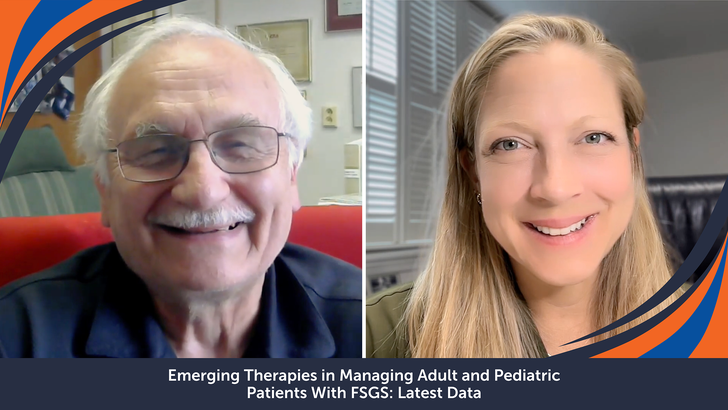
This is CE on ReachMD, and I'm Dr. Vladimir Tesar. Joining me is Dr. Meghan Sise. Today, we are going to be discussing some emerging therapies for managing patients with FSGS.
In the beginning, I would like to stress that we have no approved licensed therapy for FSGS. We use, of course, RAAS inhibition, and also there are some data on systemic corticosteroids or other immunosuppressants such as calcineurin inhibitors, but they have limited efficacy and the treatment is associated with sometimes severe adverse events. So there is a great unmet need for new treatment.
In the last year, there was a great progress in our understanding of the pathophysiology of FSGS, and it helped to develop many potential treatments for the disease, but most of them are only in early development and not yet can be delivered to the patients. So, for instance, there is a potential to use small molecules inhibiting APOL1. There are also TRPC5 inhibitors, SLIT2 antagonists, and, for instance, nitro fatty acids and Nrf2 modulators.
But we will speak mainly about endothelin antagonism and combined inhibitor of both endothelin A receptor and angiotensin 2 receptor, sparsentan.
And we have data from 2 studies. There’s a phase 2 study which was called DUET, and a much larger phase 3 trial which was called DUPLEX. They were promising data coming from phase 2 trial, showing that, really, sparsentan is more anti-proteinuric than ARB blocker, irbesartan.
And these were further developed in phase 3 trial, which published the data after the 2-year follow-up, 108-week final analysis. There was a geometric mean reduction in UPCR, which was around 50%, which was much more than with irbesartan, which was slightly above 30%, or 32%. And sparsentan resulted not only in greater but in sustained reduction of proteinuria, which, of course, should be translated into some long-term benefit in the patients.
Dr. Sise, what are your thoughts about the clinical implications and potential patients who may benefit from emerging treatment options, such as these?
Dr. Sise:
Well, this is a really exciting time for FSGS. There's clinical trials that are addressing immunologic and non-immunologic drivers of FSGS, and there's also clinical trials targeting APOL1 and genetic cause of FSGS.
In DUPLEX, we saw sparsentan generally well tolerated and with no greater incidence of side effects. Really comparable adverse events between sparsentan and irbesartan. There were no major liver injury events or fluid overload concerns identified when compared with irbesartan, and this is really important because fluid retention and increased risk of heart failure has been observed in agents that target just endothelin pathway. So with the dual blockade, we do not see this side effect and that's really exciting.
In DUPLEX, peripheral edema was seen in 19.6% of patients in the sparsentan arm and 21.9% of patients in the irbesartan. There are really important clinical implications here. If approved, sparsentan is going to offer an alternative to standard RAAS blockade, and this is going to be really important for patients with persistent proteinuria. The fact that it's safe, well tolerated, and non-immunosuppressive is also really important. We need therapies that patients can tolerate and take for a long time.
I think the patients that are most likely to benefit are going to be the ones who have persistent proteinuria or nephrotic-range proteinuria, where we see the greatest reduction in proteinuria, and these are our highest-risk patients as well.
Dr. Tesar:
Thank you very much for emphasizing the safety of this kind of treatment because we all know that the early development of endothelin antagonist was associated with fluid retention and this was mainly because of low selectivity for ETA receptor and this very low rate and comparable rate of this fluid retention in our patients treated with irbesartan and sparsentan shows that sparsentan is a highly ETA-selective endothelin antagonist, and that it can be safely used even in those patients which probably could suffer from fluid retention with the use of older ones, such as irbesartan, for instance.
So it was a nice discussion. Thank you very much. Thank you, Dr. Sise, for joining me.
Announcer:
You have been listening to CE on ReachMD. This activity is provided by Medtelligence and is part of our MinuteCE curriculum.
To receive your free CE credit, or to download this activity, go to ReachMD.com/CME. Thank you for listening.

