
Transcript
Announcer:
You’re listening to GLC on ReachMD. This activity is provided by Global Learning Collaborativeand is part of our MinuteCE curriculum.
Prior to beginning the activity, please be sure to review the faculty and commercial support disclosure statements as well as the learning objectives.
Craig Beavers, PharmD:
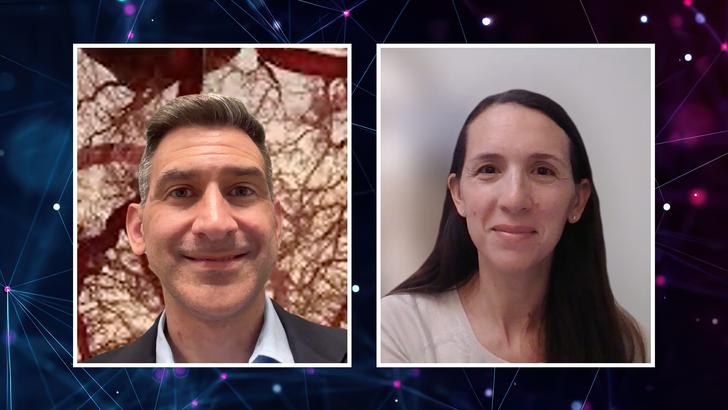
Hello, this is CE with GLC, and I'm Dr. Craig Beavers. And joining me is Stephanie Barnes. And I'm excited to talk to you about a topic near and dear to our heart, Stephanie, which is team-based care.
So, Stephanie, I'm going to pose a question to you. Successful outpatient decongestion depends on more than selecting just the right therapy. It requires coordinated teamwork. How do different members of the heart failure team collaborate to ensure subcutaneous furosemide is prescribed, administered, documented, and monitored safely?
Stephanie Barnes,DNP:
And I think that's such an important question because successful ambulatory decongestion strategy, like general heart failure management, is really not about a single medication, a single therapy, or even a single clinician. It's really about having coordinated heart failure team-based care and a clear process that's used.
So I want to start with a question, Craig, not for you, but for everybody that's listening. Who on your team identifies that patient who is starting to become congested, and how early is your team able to intervene?
So it often begins with a nurse, an APP, or even a physician who's evaluating the patient, evaluating their symptoms, really thinking through their physical exam finding, their weight trends, oftentimes their labs, their blood pressure, and then their recent response to diuretics, which is a really crucial component of ambulatory decongestion strategy.
The goal is to identify congestion early and identify a patient who is not responding to escalation of oral diuretics and then determine whether or not subQ furosemide is an appropriate strategy, ideally before the patient needs to come to the hospital.
So I want to kind of talk through some other team-based partners that may be helpful in either developing programs or with patient care. So like yourself, pharmacy or pharmacy technicians are oftentimes really important partners in policy development. In some hospitals, clinics, or some states, pharmacists may have collaborative practice where they can prescribe diuretic therapies.
But at minimum, pharmacy technicians may be very helpful in doing a lot of that most important work behind the scenes, which is helping with prescription processing, insurance authorization, assessing whether or not there's additional patient support programs that may be in place to offset the cost of this therapy, and then medication availability and delivery. Then here's another kind of question to consider, which is if the therapy is clinically appropriate, which let's say that it is, but medication can't get into the hands of the patient quickly, have we really created an effective pathway?
Nurses are often the glue of the process, and as mentioned prior, they may be part of the team who are identifying patients who are failing to respond to oral diuretic therapy and are experiencing worsening congestion. And that could be through telephone triage, through remote monitoring pathways that were explored in other episodes, or even through patients' own weights, daily weights in particular.
But once therapy is prescribed, nurses can really help make sure that patients and their care partners understand how to administer the therapy, what to expect in response to the therapy, and what should trigger a call back. They also are very helpful in assessing whether or not the patient and their care partner have dexterity, vision, support, and medical literacy needed to be able to administer this treatment at home safely, which is really, really important component of this. I would be remiss if I didn't acknowledge the importance of documentation related to this.
We as a team really have to have a standardized approach, and if using an electronic health record or any medical record so that everybody can see the same plan. So documenting why subcutaneous furosemide was chosen as the therapy, what the dosing plan is, what the baseline vital signs labs are that were before the patient was administered the therapy, what education was provided to the patient, what the follow-up expectations are, and then perhaps most importantly, who is responsible for reviewing the patient's response to therapy.
And then what happens if the patient does not continue to improve? So another kind of question for our listeners here that I want to ask is if a patient calls tonight, can any member of our team who's responding to that patient determine what was given, why, and what response was expected, and then what next steps should be potentially to avoid hospitalization?
That's where that closed-loop communication really comes into play and becomes important. So like I said, whether that is through the electronic health record, through a phone call, or through that standardized pathway that's set forward in clinics, the teams need to be able to communicate what was prescribed, what was administered, how the patient responded, and then next steps.
And that safety element of closed-loop communication to those team members are very, very important. Without getting too far into the weeds on follow-up care, from a safety profile, Craig, because you gave a nod to how do we make sure that we document the safety profile or safety response to these therapies, is ensuring that after the patient has received the therapy, that there's a standardized follow-up. That could be a phone call, that could be another clinic visit, whatever works best for your program. But also follow up on whether or not there's additional electrolytes that need to be drawn. Does renal function need to be evaluated? Does blood pressure need to be assessed? And is the patient responding to this therapy?
Ultimately, the use of this therapy can be very helpful when it's team-based care for a lot of those team members that I just mentioned. And it's another tool that can help, but ultimately, the idea being that you have to have those team-based care and you have to have that wraparound documentation and safety profile to make this successful.
Craig Beavers, PharmD:
So I think you really did an outstanding job kind of summarizing what the nuance of this whole process is and how we manage our patients. And so with that, I really thank everybody for joining our discussion.
Stephanie Barnes,DNP:
Thanks, Craig
Announcer:
You have been listening to GLC on ReachMD. This activity is provided by Global Learning Collaborativeand is part of our MinuteCE curriculum.
To receive your free CE credit, or to download this activity, go to ReachMD.com/CME. Thank you for listening.
 In support of improving patient care, Global Learning Collaborative (GLC) is jointly accredited by the Accreditation Council for Continuing Medical Education (ACCME), the Accreditation Council for Pharmacy Education (ACPE), and the American Nurses Credentialing Center (ANCC) to provide continuing education for the healthcare team.
 Global Learning Collaborative (GLC) has been authorized by the American Academy of Physician Associates (AAPA) to award AAPA Category 1 CME credit for activities planned in accordance with AAPA CME Criteria. This activity is designated for 1.00 AAPA Category 1 CME credit(s). PAs should claim only the credit commensurate with the extent of their participation in the activity.
 Global Learning Collaborative (GLC) designates this activity for a maximum of 1.00 contact hour(s)/0.10 CEUs of pharmacy continuing education credit.

