
Transcript
Announcer:
Welcome to CME on ReachMD. This activity is provided by Prova Education. This episode is part of our MinuteCE curriculum.
Prior to beginning the activity, please be sure to review the faculty and commercial support disclosure statements as well as the learning objectives.
Dr. Bril:
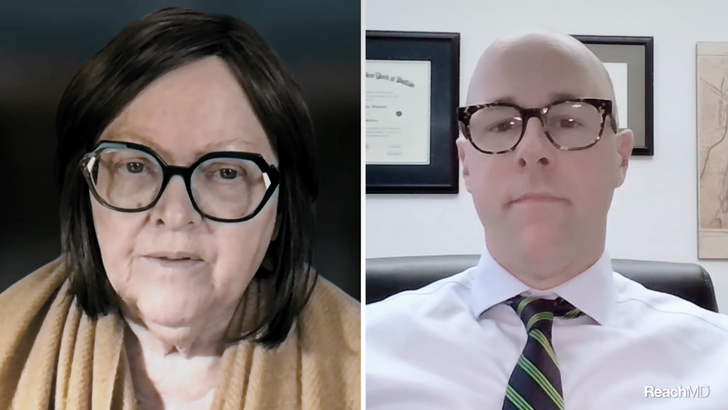
This is CME on ReachMD, and I'm Dr. Vera Bril. Here with me today is Dr. Nicholas Silvestri.
Let's move to a discussion of the autoantibodies associated with myasthenia gravis. What role do they play in diagnosis, and how do they point to a particular diagnosis and/or treatment approach?
Dr. Silvestri:
Thanks very much, Dr. Bril. Happy to answer that question. So the most common antibody associated with myasthenia gravis is the acetylcholine receptor antibody, and this is present in about 85% of people with generalized myasthenia gravis. The next most common antibody in generalized disease is the MuSK antibody, and this affects probably about 7% or 8% of patients with myasthenia gravis. It's important to know that there is a significant geographical distribution of MuSK myasthenia. It tends to be more common in the southern latitudes, and this is true both in North America as well as in Europe. Another antibody that's been more recently discovered associated with myasthenia gravis is the LRP4 antibody. And this tends to occur in about 1% of the population of patients with myasthenia gravis.
Now, those numbers don't add up to 100%, and that's because about maybe 5% to 7% of patients with myasthenia gravis don't have any of those antibodies. They're what we call triple seronegative patients. And in these patients, they often have a very, very longer diagnostic delay, because we can check these other antibodies in serum when we suspect the diagnosis of myasthenia. And when those antibodies are positive, we can be very firm in our diagnosis.
However, when we don't find the antibodies and we suspect myasthenia, that's when we have to go on to more sophisticated testing, doing our electrophysiological testing, such as repetitive nerve stimulation and single-fiber EMG, which can then make the diagnosis electrophysiologically rather than serologically.
But I will point out that with patients that are initially seronegative, it's usually a good idea to retest those antibodies about maybe 6 months later after the initial testing, because sometimes you'll get patients that actually convert from seronegative to seropositive, and that can be very helpful to know.
And the real reason I think it's important, not only to confirm the diagnosis to have a patient's antibody status, is that antibody status actually plays a big role in terms of how we treat patients. So for example, with acetylcholine receptor-positive disease, we have therapies that are available to treat those patients, such as, for example, complement inhibitors and fetal neonatal receptor antagonists, in addition to traditional therapies that are not indicated necessarily for the other forms of the disease.
Similarly, with MuSK myasthenia gravis, we know those patients respond quite well to B cell therapies with medications such as rituximab, for example, and the FcRn antagonist rozanolixizumab is also approved for this form of myasthenia. So it's important to understand, from a diagnostic standpoint, what the patient's antibody status is, as it does, again, directly play a role in the treatments that we tend to choose for our patients or those treatments that patients are amenable to based on their serotype.
Dr. Bril:
Thank you very much, Dr. Silvestri. I think it's interesting that we should retest the antibodies several months after the initial test if they're negative, but also it's important to be aware of what tests the lab can do. So some of the routine tests can be negative, but a cell-based assay that is more sensitive may pick up cluster antibodies in acetylcholine receptor in MuSK-positive patients that aren't there with the traditional methods of testing but would indicate the presence of antibody and the possibility of response to therapy.
The seronegative, I think, are the most challenging that we have, in that we always wonder about our diagnosis if we never find an antibody; however, response to treatment may answer that question.
Well, this has been a great micro discussion. Our time is up. Thanks for listening.
Announcer:
You have been listening to CME on ReachMD. This activity is provided by Prova Education and is part of our MinuteCE curriculum.
To receive your free CME credit, or to download this activity, go to ReachMD.com/CME. Thank you for listening.


