
Smartphone Steps Linked to Knee Outcomes After ACL Reconstruction
Key Takeaways
- Among adults recovering from primary ACL reconstruction at a single outpatient clinic, higher phone-recorded steps were associated with better reported knee function and quality of life and less pain.
- The low-activity mobility profile had more pain, poorer function and quality of life, and greater pain catastrophizing than the high-activity profile.
- Fear of movement differed significantly across mobility profiles, while depression and anxiety symptom differences were not statistically significant.
- Unmet rehabilitation needs were reported by 56.8% of the low-activity profile versus 5.3% of the high-activity profile; physiotherapy use was also more frequent in the low-activity profile.
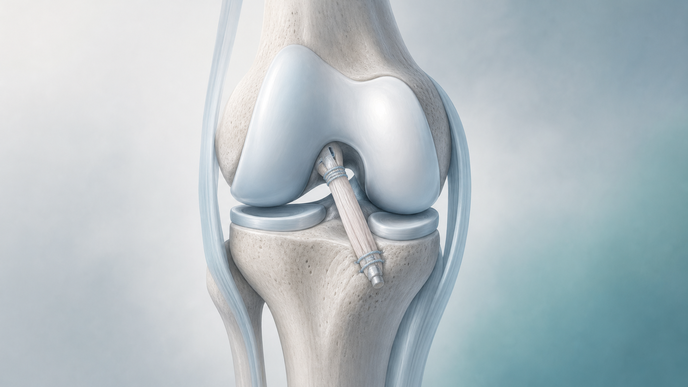
At a single outpatient orthopedic and sports rehabilitation clinic, investigators consecutively recruited 120 adults 3–12 months after primary unilateral anterior cruciate ligament (ACL) reconstruction. In this cross-sectional assessment, participants provided retrospective, smartphone-only mobility data from at least 14 consecutive valid days in the preceding month; identifiable wearable-sourced contributions were excluded. Measures included daily steps, step variability, active minutes, walking-bout measures, ambulatory distance, the longest inactive bout and the proportion of days reaching a step threshold. Assessments covered knee pain; Knee injury and Osteoarthritis Outcome Score (KOOS) subscales; the ACL Quality of Life questionnaire (ACL-QoL); catastrophizing; fear of movement; depressive and anxiety symptoms; and single-item, exploratory return-to-activity concern. Investigators used correlations and regressions adjusted for age, sex, body mass index, graft, surgeon and postoperative time. Standardized phone-mobility variables underwent Ward hierarchical assessment followed by k-means assignment to exploratory profiles; postoperative month was not a clustering input.
For each additional 1000 smartphone-recorded daily steps, adjusted KOOS activities-of-daily-living (KOOS-ADL) scores were 2.38 points higher, ACL-QoL scores were 3.06 points higher and pain intensity was 0.31 points lower. The authors cautioned that these individual increments were unlikely to be clinically meaningful in isolation. These estimates describe outcome-point differences per 1000-step increment. The paper reports β=0.48 for KOOS-ADL, β=0.45 for ACL-QoL and β=−0.39 for pain.
All three main-text per-step associations and both abstract function and quality-of-life associations were reported with p<0.001; the abstract pain association had p=0.001. Pain ratings were 5.01 in the low-activity profile versus 1.72 in the high-activity profile. The low-activity profile also had significantly poorer KOOS pain and daily-function scores and ACL-QoL scores, alongside greater pain catastrophizing; an intermediate-mobility profile was also identified.
Fear of movement differed significantly across profiles, but depressive and anxiety symptoms did not. Physiotherapy use and unmet rehabilitation need were more frequent in the low-activity profile. Longer inactivity bouts and greater step variability showed weaker correlations with outcomes (r = 0.26–0.33), and the authors describe prolonged inactivity as associated with poorer outcomes in adjusted models, with daily steps the strongest correlate.
Because the assessments were cross-sectional, they cannot establish whether movement caused better outcomes, predict later recovery or show a response to profile-guided treatment. Variation in postoperative timing, graft and surgical factors, and associated pathology complicates interpretation. Enrollment required compatible phones and adequate monitoring; platforms differed, and shorter phone carry time in the low-activity profile could have affected its classification. The profiles lack external validation, and added clinical value beyond patient-reported measures was not established. The authors proposed passive monitoring as a possible complement to clinical assessments, not an established decision tool.
The authors concluded that smartphone mobility coincided with differences in reported knee recovery and exploratory patterns of symptoms and rehabilitation needs. They called for standardized prospective follow-up to assess longitudinal and clinical usefulness.
Clinician Questions
Which ACL reconstruction patients were excluded from smartphone-based mobility profiling?
Smartphone-based mobility profiling after primary unilateral ACL reconstruction included adults aged 18–45 with a compatible iOS or Android phone and adequate phone-derived data, including at least 12 hours of daily phone carriage. Revision reconstructions, complex multiligament injuries, bilateral lower-limb surgery and major mobility-affecting conditions were excluded; the profiles were not evaluated as predictors for those excluded groups.
Does the longest smartphone-recorded sedentary bout after ACL reconstruction measure total sedentary time?
No. In smartphone monitoring after ACL reconstruction, the longest daily sedentary bout was the longest uninterrupted inactivity interval detected by the phone, not the day's accumulated sedentary time. Time without the phone could also affect what was captured.
Is 6,000 daily steps an established recovery target after ACL reconstruction?
No. Investigators used the proportion of monitoring days with at least 6000 smartphone-recorded steps as a pragmatic marker of relative activity within their postoperative ACL reconstruction cohort, not an optimal or prescriptive recovery goal.