
Pulmonary-Artery Denervation Cut Worsening in PH-HF Trial
Key Takeaways
- In patients in China with pulmonary hypertension associated with left heart disease and heart failure who were receiving guideline-directed medical therapy, pulmonary-artery denervation plus medical therapy was associated with a significantly lower estimated 2-year incidence of clinical worsening than medical therapy alone, 25.7% versus 51.5%.
- Access-site hematomas occurred in 2 patients who underwent pulmonary-artery denervation and 1 patient assigned to medical therapy alone, and no other procedural complications were reported.
- Adverse events during follow-up occurred with similar frequency in the two groups.
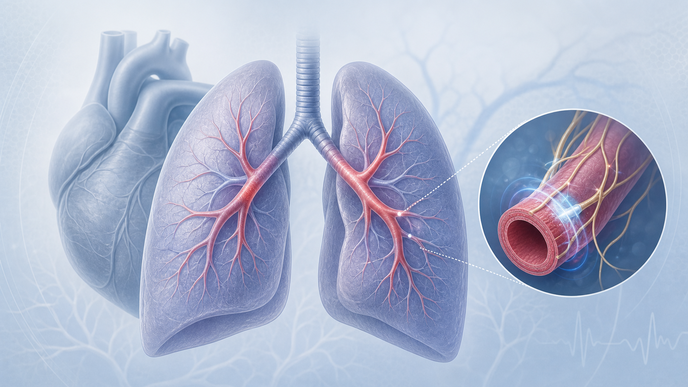
In a multicenter, open-label randomized trial in China without a sham procedure, investigators enrolled patients with pulmonary hypertension associated with left heart disease and heart failure who were receiving guideline-directed medical therapy (GDMT) and assigned them in a 1:1 ratio to pulmonary-artery denervation plus GDMT or to medical therapy alone. In the PADN-HF-PH trial in the New England Journal of Medicine, 264 patients were randomized, with 134 assigned to denervation plus GDMT and 130 to medical therapy alone.
Median follow-up was 338 days. The primary outcome was clinical worsening through the latest follow-up, defined as death, heart or lung transplantation, hospitalization for heart failure, outpatient worsening of heart failure, or decline in 6-minute walk distance.
Clinical worsening was lower with pulmonary-artery denervation added to GDMT than with medical therapy alone, with a hazard ratio of 0.49 (95% CI 0.30 to 0.82; P=0.006). Access-site hematomas occurred in 2 patients in the denervation group and 1 patient in the medical-therapy group, no other procedural complications were reported, and adverse events during follow-up occurred with similar frequency in the two groups. Although the composite endpoint favored denervation, the supporting report noted that none of the individual components of the composite were statistically significantly different between groups.
The investigators concluded that, among patients with pulmonary hypertension associated with left heart disease and heart failure who were receiving GDMT, pulmonary-artery denervation resulted in fewer events of clinical worsening than medical therapy alone.
Clinician Questions
Which patients does pulmonary-artery denervation in PADN-HF-PH directly apply to?
PADN-HF-PH directly applies to patients in China with pulmonary hypertension associated with left heart disease and heart failure who were already receiving guideline-directed medical therapy.
Why was sympathetic activity a target in heart failure-related pulmonary hypertension?
In pulmonary hypertension caused by left heart disease and associated with heart failure, the study background describes sympathetic overactivation as a contributor to increased pulmonary vascular resistance, right ventricular dysfunction, and poor outcomes. Pulmonary-artery denervation was tested in that setting as a way to reduce sympathetic activity.
Recommended Reading
- For more on pulmonary hypertension in complex lung-heart disease: Addressing the Burden of PH-ILD: Early Recognition, Evidence-Based Management, and Care Coordination
- For more on pulmonary hypertension in chronic obstructive lung disease: Predicting and Preventing COPD Exacerbations
- For more on pulmonary hypertension in chronic obstructive lung disease: Precision Medicine in COPD: Eosinophils and Exacerbation History