
evERA: Giredestrant Combination Extends PFS in ESR1-Mutated Cancer
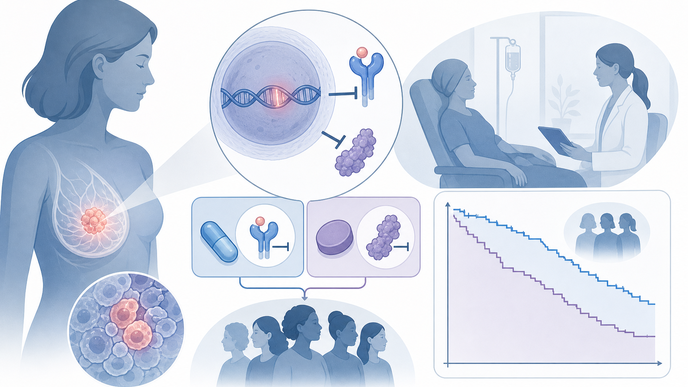
Key Takeaways
- In ER-positive, HER2-negative locally advanced or metastatic breast cancer after CDK4/6 inhibition plus endocrine therapy, PFS was significantly longer with giredestrant plus everolimus than with standard endocrine therapy plus everolimus in patients with ESR1-mutated tumors.
- PFS was also significantly longer with giredestrant plus everolimus in the overall randomized population.
- Adverse events were frequent and similarly prevalent between groups, with stomatitis the most common.
Investigators conducted the open-label, randomized phase 3 evERA Breast Cancer trial among patients with ER-positive, HER2-negative locally advanced or metastatic breast cancer after progression or recurrence on CDK4/6 inhibition plus endocrine therapy. Patients were assigned to oral giredestrant plus oral everolimus or to everolimus plus one of exemestane, fulvestrant, or tamoxifen. The primary endpoint was investigator-assessed progression-free survival (PFS), evaluated first among patients with ESR1-mutated tumors and then in the overall randomized population.
Among patients with ESR1-mutated tumors, median investigator-assessed PFS was 10.0 months with giredestrant plus everolimus versus 5.5 months with standard endocrine therapy plus everolimus. The hazard ratio (HR) for disease progression or death was 0.38.
Across the overall randomized population, median investigator-assessed PFS was 8.8 months with giredestrant plus everolimus versus 5.5 months with standard endocrine therapy plus everolimus. The HR for disease progression or death was 0.56. This overall estimate does not establish a difference in treatment effects between ESR1 mutation-status groups.
Both the ESR1-mutated and overall PFS comparisons were statistically significant. Any adverse event occurred in 98.9% of giredestrant–everolimus recipients versus 96.8% of standard endocrine therapy–everolimus recipients. Stomatitis was the most common adverse event; diarrhea and anemia were also among the most commonly reported.
PFS was investigator-assessed in an open-label trial. The reported endpoint measures time without documented progression or death, rather than overall survival. The FDA has approved giredestrant (Wilserdly) plus everolimus for ER-positive, HER2-negative, ESR1-mutated locally advanced or metastatic breast cancer after recurrence during or after endocrine-based adjuvant therapy, or progression on at least one endocrine-based regimen for metastatic disease. The evERA trial enrolled patients previously treated with a CDK4/6 inhibitor plus endocrine therapy.
The investigators concluded that the all-oral giredestrant–everolimus combination prolonged PFS after CDK4/6 inhibitor treatment, mainly among patients with ESR1-mutated tumors. They characterized adverse-event incidence as similar between treatment groups.
Clinician Questions
Why were giredestrant and everolimus combined for ER-positive, HER2-negative advanced breast cancer?
Giredestrant targets the estrogen receptor pathway, while everolimus targets the phosphatidylinositol 3-kinase–protein kinase B–mammalian target of rapamycin pathway. Both pathways are implicated in resistance to endocrine treatment for ER-positive, HER2-negative advanced breast cancer; this rationale does not establish a mechanism for clinical benefit.
Has giredestrant plus everolimus been shown to improve overall survival in ESR1-mutated advanced breast cancer?
For patients with ESR1-mutated, ER-positive, HER2-negative locally advanced or metastatic breast cancer, the supplied evERA findings concern investigator-assessed PFS. No overall-survival outcome is reported, so the findings do not establish an overall-survival benefit.
Recommended Reading
- For more on biomarker-guided treatment after progression: Biomarker Testing After Progression in HR+/HER2- mBC
- For more on oral SERDs in metastatic breast cancer: Interpreting Oral SERD Trial Data to Guide Metastatic Breast Cancer Care
This content is intended for healthcare professionals for educational purposes. The article and its image were developed with AI assistance and reviewed by members of the ReachMD team prior to publication. Please refer to the original source linked for the complete and most up-to-date information.