
Transcript
Announcer:
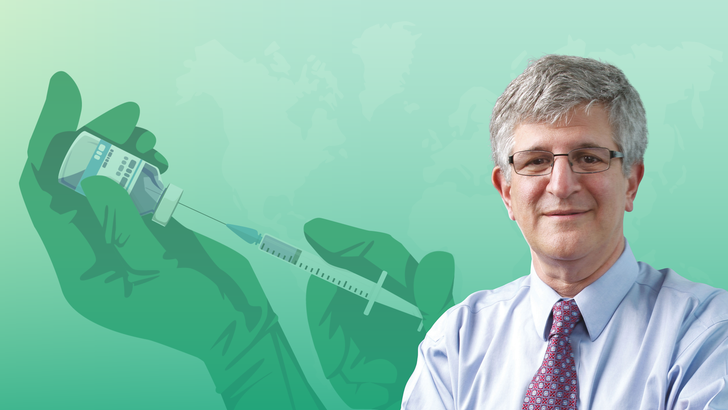
You’re listening to VacciNation on ReachMD. On this episode, we’ll hear from Dr. Paul Offit, who’s the Director of the Vaccine Education Center and a member in the Division of Infectious Diseases at Children's Hospital of Philadelphia. He’ll be discussing the importance of meningococcal disease awareness and prevention. Here’s Dr. Offit now.
Dr. Offit:
So what makes meningococcus unique among the bacterial infections that cause sepsis or meningitis or pneumonia is it has the capacity to make something called endotoxin rapidly. No other bacteria really does that. So what that means is that a child can be fine one minute and dead six hours later because of this capacity to make endotoxin. The CDC used to say they could tell whether or not meningococcus was occurring in a certain area by simply reading the newspapers, because meningococcus often causes panic in the communities.
Meningococcus serogroup B causes about 100 cases a year in the United States. It's a devastating infection. When it causes meningitis, that means the child, one, could die from meningitis. Two, it means that the child could be left permanently disabled from meningitis. Sepsis, also—which is a bloodstream infection—can cause a rapid, overwhelming disease, again, where a child is fine one moment and then dead only hours later. It's a feared infection. It causes panic in the community often for that reason.
I'll give you an example. There was, in Philadelphia, years ago, an outbreak of meningococcus disease, meningitis B, at Drexel. Now, at the time, the vaccine wasn't licensed in the United States. It was licensed in Canada and other countries. There were parents of children at Drexel who drove up to Canada, got the vaccine, and brought it back because they were that scared of that bacteria.
I think we all live under this sort of myth of invulnerability, that it's never going to happen to us, or it's never going to happen to our child, until it does. And so in that example of what happened at Drexel, the parents realized that there was an outbreak in the school, and they were scared, appropriately, that their child may be one of those children who was hurt.
And there was a death in a young girl at Drexel. And that caused them to drive up to Canada to get a vaccine which wasn't licensed here yet but would be licensed in the United States within the year. So fear is what drove them. And we don't fear these diseases, often, until they are knocking at our door. But know that: that you shouldn't wait that long.
Announcer:
That was Dr. Paul Offit explaining why the awareness and prevention of meningococcal disease continue to matter. To access this and other episodes in our series, visit VacciNation on ReachMD.com, where you can Be Part of the Knowledge. Thanks for listening!

