
Transcript
Dr. May:
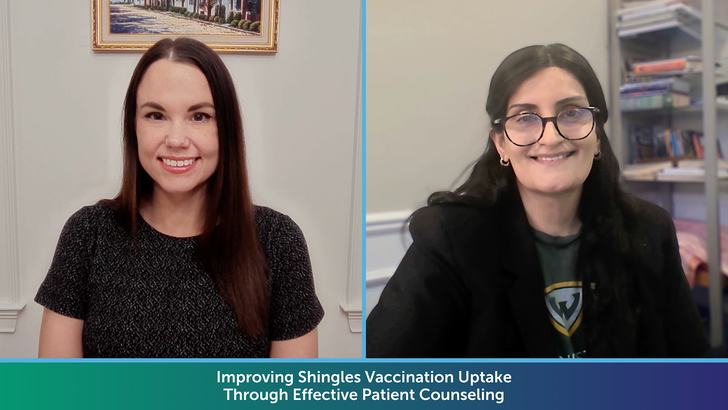
Welcome to VacciNation on ReachMD. I'm Dr. Alexandria May, and joining me to share patient counseling strategies for shingles vaccination is Dr. Teena Chopra. She serves as a Professor of Medicine and Director for the Center of Emerging and Infectious Diseases at Wayne State University in Detroit. Dr. Chopra, thanks for being here today.
Dr. Chopra:
Thank you for having me.
Dr. May:
To start us off, Dr. Chopra, why is it so important to normalize shingles prevention as part of everyday clinical care, especially for adults 50 and older?
Dr. Chopra:
As you know, one in three people will have shingles sometime in their lifetime. It is a debilitating disease, especially after the age of 50 years; the incidence is rising sharply. And people who are immunocompromised and who have chronic conditions can have complications from shingles. So I think prevention is better, as always, and it shouldn't be a reaction to the disease itself. Prevention is better than reacting to the disease or reacting to age milestones, et cetera.
So, I think vaccination should be positioned as routine. When we see our patients for any condition, when we are talking to them, we want to discuss vaccinations at every single visit. It should be standard of care; it should not be optional.
Dr. May:
Now, if we look at this from the patient perspective, what are some of the most common misconceptions or barriers you hear when shingles vaccination comes up?
Dr. Chopra:
When we see patients, a lot of times, they will say, "Well, it's just a rash, right?” They don't understand the risk. They don't understand the complications from shingles, like loss of vision or nerve pain that can be debilitating and affect their quality of life.
A lot of times, patients will say, "Well, I'm healthy, so I'm not at risk." They may not have any chronic conditions, but age itself puts them at high risk. Some patients will say, "I'll just wait until I'm older." Then, last but not least, they also have concerns about side effects from vaccines or misconceptions or beliefs that vaccines can cause shingles.
Dr. May:
And when patients underestimate shingles as just a rash, how can we reframe the conversation to convey the real risk?
Dr. Chopra:
I think empowering them with the knowledge of how shingles results from reactivation of the dormant Varicella-Zoster virus as immune function declines is one way of sharing the information with our patients. Secondly, telling them about complications of shingles, like postherpetic neuralgia, and the fact that it can persist for months and impair their quality of life. There are patients who aren't able to sleep. They're not able to function. I have a patient who had facial palsy from shingles and is not able to communicate effectively. And lastly, sharing with them that risk can increase with age and also with comorbid illnesses like diabetes and cardiovascular disease.
Dr. May:
For those just tuning in, this is VacciNation on ReachMD. I'm Dr. Alexandria May, and I'm speaking with Dr. Teena Chopra about how we can integrate shingles prevention into everyday conversations with patients.
So, Dr. Chopra, when you're in the exam room with patients in their 50s, what language or framing have you found most effective when presenting shingles vaccination as a routine part of care rather than as an optional add-on?
Dr. Chopra:
I think the most important thing is to be confident and use matter-of-fact recommendations, which are grounded in guidelines. You also want to angle it alongside other preventative measures at the age of 50. What other measures are important? You want to talk about them as a bundle and frame it around preserving quality of life, like I mentioned before - around preventing long-term destruction and around the fact that it's not just preventing shingles, but the complications of shingles, which include the postherpetic neuralgia we talked about and the fact that you can also have vision loss, which can be highly disrupting.
Dr. May:
Absolutely. Now, safety and side effects remain common concerns, so how can we counsel patients transparently about what to expect with the recombinant zoster vaccine while maintaining confidence in its benefits?
Dr. Chopra:
The important thing is to tell them that the recombinant zoster vaccine is not live, and it cannot cause shingles—again, in a very confident, fact-based manner—and the fact that transient local and systemic reactions can happen, but they're self-limited, just like with any other vaccine. And emphasize the fact that it's a two-dose schedule and the importance of completion to get the maximum benefit and protection from the vaccine.
Dr. May:
And before we close, Dr. Chopra, as we look beyond the individual conversation, what system-level strategies can help us embed shingles vaccination into everyday workflows rather than treating it as a separate preventative task?
Dr. Chopra:
One thing that we all do as busy physicians is we use EHR. Having EHR prompts that prompt us, especially when the patient reaches that age, is one way to do it. And building the shingles vaccination with other routine vaccinations when we talk to our patients about immunizations that they may need—building it as a bundled approach for immunization—and then leveraging team-based care to reinforce recommendations and reduce gaps.
Dr. May:
With those final strategies in mind, I want to thank my guest, Dr. Teena Chopra, for joining me to share these practical communication strategies to reinforce shingles prevention as part of routine patient care. Dr. Chopra, it was great speaking with you today.
Dr. Chopra:
Same here. Thank you, Dr. May.
Dr. May:
For ReachMD, I'm Dr. Alexandria May. To access this and other episodes on our series, visit VacciNation on ReachMD.com, where you can Be Part of the Knowledge. Thanks for listening.

