
Test Before You Treat: Biomarkers That Shape CLL Care
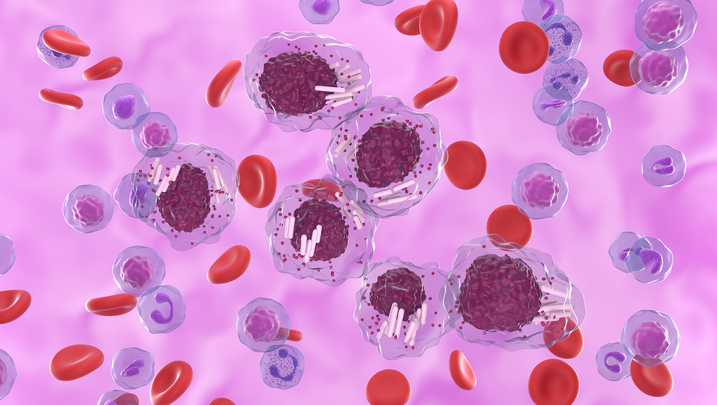
Chronic lymphocytic leukemia (CLL) is often described as a slow progressing, indolent B-cell malignancy, but that description captures only part of its clinical behavior. Some patients remain asymptomatic for years without requiring treatment, whereas others develop progressive disease that requires intervention much sooner.1,2 This variability reflects differences not only in disease burden and clinical stage, but also in the underlying biology of the leukemic clone.2
Because of this, understanding these biologic and genomic features is central to modern CLL management. Clinical findings help determine when the disease is active and when treatment is necessary, while molecular and cytogenetic biomarkers help characterize prognosis and inform treatment decision-making.2,3
The CLL Cell: Lineage and Immunophenotype
CLL is a malignancy of mature, antigen-experienced B lymphocytes that accumulate in the blood, bone marrow, lymph nodes, and spleen. The clonal cells are small and morphologically mature, and their survival depends heavily on signals from the tissue microenvironment, particularly B-cell receptor signaling and anti-apoptotic proteins such as BCL-2.4,5 These dependencies are the rationale for today's targeted therapies, including Bruton tyrosine kinase (BTK) inhibitors and the BCL-2 inhibitor venetoclax.6,7
Diagnosis requires at least 5x10⁹/L clonal B lymphocytes in the peripheral blood, sustained for at least 3 months. CLL cells typically express the B-cell marker CD5 together with CD19 and CD23, while expression of CD20, CD79b, and surface immunoglobulin are generally weak.3 Flow cytometry may also demonstrate κ or λ light-chain restriction, supporting the presence of a clonal B-cell population. Although CLL cells share a characteristic immunophenotype across patients, the clinical course of CLL can be highly heterogeneous, reflecting the underlying biological heterogeneity of the disease.2
For many patients, that trajectory is slow.2 CLL may be discovered incidentally after lymphocytosis is identified on a routine complete blood count lab test, with no symptoms or clinically significant cytopenias.1 This creates an important distinction between having CLL and having CLL that requires treatment.
From Asymptomatic Disease to Active CLL
Patients with early-stage, asymptomatic CLL generally undergo active surveillance rather than immediate treatment. Even in the era of targeted therapies, early intervention in otherwise asymptomatic disease has not demonstrated a survival advantage.8 But treating early with targeted agents in selected high-risk patients remains an open question being tested in trials such as EVOLVE CLL/SLL (SWOG S1925).
The decision to initiate treatment is driven by evidence of active or symptomatic disease. The International Workshop on CLL defines active disease as one or more of the following criteria3:
- Progressive bone marrow failure manifested by worsening anemia or thrombocytopenia
- Massive, progressive, or symptomatic splenomegaly or lymphadenopathy
- Rapidly progressive lymphocytosis
- Symptomatic extranodal disease
- Autoimmune cytopenias that respond poorly to corticosteroids or standard therapy
- Disease-related constitutional symptoms, such as significant weight loss, fatigue, persistent fever, or night sweats
This distinction is especially important when interpreting genomic risk. A patient with an adverse molecular feature does not necessarily require immediate therapy if the disease remains asymptomatic and does not otherwise meet established treatment criteria.8
Biomarkers and Risk Stratification
Clinical stage tells us how much disease is present; biomarkers tell us how it is likely to behave and help guide treatment selection. Four features carry the most weight in initial treatment planning and response prediction: TP53 mutation, del(17p), del(11q), and IGHV mutational status.2,9-11 Several of these may offer insight into how the disease is likely to respond to specific treatment approaches, beyond overall prognosis.
TP53 mutation and del(17p): Loss of the short arm of chromosome 17 (detected by FISH) and TP53 mutation (detected by DNA sequencing) both disable the p53 pathway that chemoimmunotherapy relies on to kill cells, making them resistant to chemoimmunotherapy and therefore the clearest examples of biomarkers that direct treatment.2,9 The two frequently co-occur, but either can appear alone, so both tests are needed.2
Prognostic outcomes differ among patients with TP53 mutations, del(17p), or both. TP53 mutation with del(17p) carries the poorest outlook, including shorter progression-free and overall survival with chemoimmunotherapy and targeted therapies, such as fixed-duration venetoclax-based regimens and covalent BTK inhibitors (cBTKis).12-22
Patients with del(17p) alone also have poorer responses and survival outcomes with chemoimmunotherapy.10,23,24 Although targeted therapies have improved response outcomes in this population, prognosis remains less favorable.16-22TP53 mutation without del(17p) tends to fare somewhat better, with potential improved survival outcomes on treatment.13 Because TP53 abnormalities can emerge during clonal evolution, reassessment of TP53 mutation and del(17p) status is recommended before each new line of therapy.2
del(11q). Deletion of 11q is associated with bulky lymphadenopathy, younger age at presentation, shorter time to first treatment, and shorter survival with chemoimmunotherapy.10,11 Its adverse impact appears largely mitigated by BTK inhibitors and venetoclax-based regimens, which is one reason chemoimmunotherapy has receded from first-line care.16,25 Unlike TP53 status, del(11q) does not define a separate treatment pathway but reinforces the choice of a targeted regimen.
IGHV mutational status. IGHV is classified by how much it differs from the germline sequence: more than 2% difference (less than 98% identity) is mutated, and 2% or less (98% or greater identity) is unmutated.26 Unmutated IGHV reflects a cell of origin that did not undergo extensive somatic hypermutation and it behaves more aggressively, while mutated IGHV CLL is typically more indolent.2,27
The impact of IGHV status depends on the treatment. Patients with unmutated IGHV reach first treatment sooner than those with mutated IGHV. Once treated, they also have shorter progression-free survival with chemoimmunotherapy and some time-limited venetoclax-based regimens; although, response rates are similar regardless of IGHV status with both cBTK inhibitors and time-limited venetoclax-based therapy.17-22,24,28-32 Progression-free and overall survival with cBTK inhibitors are also not correlated with IGHV status.18,19,33
IGHV status informs prognosis and treatment planning, but should be interpreted alongside TP53 mutation and del(17p) status. For patients without TP53 abnormalities, fixed-duration venetoclax-based combinations and continuous cBTK inhibitor therapy are treatment options. Selection should be individualized through shared decision-making between the patient and care team, considering disease biology, functional status, comorbidities, treatment-specific risks, monitoring requirements, and patient preferences regarding treatment duration and administration.2,17,24,28-32
Because IGHV status does not change over time, it is usually only tested once.2
Serum β-2-microglobulin. Serum β2-microglobulin is a simple blood test that adds prognostic information alongside genetic markers. Its levels correlate with CLL disease burden and remain independently associated with clinical outcomes in multivariable analyses.34,35 Among patients receiving first-line chemoimmunotherapy, elevated levels have prognostic significance for overall response, treatment-free intervals, and overall survival.36 In patients treated with ibrutinib, declines in β2-microglobulin levels during treatment have been associated with longer progression-free survival.37 Although, it’s important to note that β2-microglobulin levels can also be elevated in patients with renal dysfunction, independent of CLL disease activity. Therefore, results should be interpreted in the context of the patient's kidney function.38,39

The CLL International Prognostic Index (CLL-IPI)
The CLL-IPI integrates five independent prognostic factors into a weighted risk score, with TP53 abnormalities carrying the greatest weight, followed by IGHV mutation status.34 Although the score remains valuable for risk stratification and prognostic counseling, particularly in patients with early-stage disease, it is not intended to guide treatment selection. Importantly, the CLL-IPI was developed primarily using data from patients treated with chemoimmunotherapy, and its survival estimates may not fully reflect outcomes in the current era of targeted therapies.34

Test Before You Treat
In CLL, understanding a patient's molecular and cytogenetic profile is essential to making informed treatment decisions.2 Although clinical symptoms and disease progression determine when treatment should begin, biomarkers such as TP53 mutation, del(17p), del(11q), and IGHV mutational status help establish prognosis, anticipate treatment response, and guide regimen selection.2 Importantly, these risk factors are not static. Clonal evolution can introduce new TP53 abnormalities over time, making repeat testing before each subsequent line of therapy critical.2
Ultimately, testing before treating ensures that therapeutic decisions reflect the patient's current disease biology, helping clinicians identify appropriate treatment strategies while avoiding approaches less likely to provide durable benefit.