
Transcript
Announcer:
This is On the Frontlines of Pediatric Vaccines on ReachMD. Here’s your host, Dr. Alexandria May.
Dr. May:
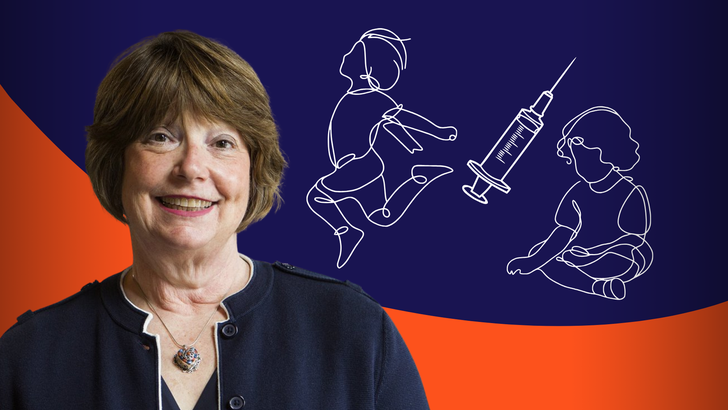
You're listening to On the Frontlines of Pediatric Vaccines on ReachMD, and I'm Dr. Alexandria May. Today, I'm joined by Dr. Ruth Carrico to explore how we can create more reliable and consistent pediatric vaccination systems. Dr. Carrico is a family nurse practitioner in Louisville, Kentucky, and an Adjunct Professor with the University of Louisville School of Medicine. She's also the senior partner in Carrico and Ramirez PLLC, and has worked in the field of infectious diseases, clinical practice and research for more than 35 years.
Dr. Carrico, welcome to the program.
Dr. Carrico:
Thanks a lot. I appreciate the opportunity.
Dr. May:
So, Dr. Carrico, to set the stage for us a bit, how consistent would you say pediatric vaccination delivery is across different care settings?
Dr. Carrico:
Well, we have a lot of differences, I think, in our integrated systems, where if you have the pharmacist there, and you have easy access to vaccines and vaccines in the actual office setting itself, systems are much, much more likely to work and be effective.
It's when one or more of those components are lacking that it can become problematic. So if I'm having a conversation with a patient about a vaccine and they're ready to receive it—and I'm thrilled to death they're gonna receive it, and I've just spent all this time telling the patient about how they're the most important person in the world to me while we are having our discussion—and then I have to tell them, I'm gonna send you somewhere else for the vaccine, all of the sudden, patients say, wait a minute, I thought I was important to you. Why can't you get me across the finish line here? So I think that if we are not able to complete the job, then that becomes a problem.
Even if you have some of the public health programs like VFC—Vaccines for Children—you still are responsible for all of the monitoring and the care of those vaccines, which includes ordering and even administration. You may get the vaccine, but you don't get a needle, you don't get a Band-Aid, you don't get an alcohol swap. So all costs are not covered.
So as margins get smaller and smaller in healthcare, I think that we will have decision making that is gonna try to pick the low-hanging fruit. What are the things that we can get rid of tha, cost us the most or are the biggest time crunch for us? And those things might fall by the wayside. So this is a time where it becomes critical to look at what resources are available. I think the long and short of that is vaccines are not easy.
Dr. May:
Building off of that, what are some ways that differences in vaccination practices show up across different providers or care environments?
Dr. Carrico:
I was talking to some of my colleagues that now are employed by health systems—they're not independent or they don't work for themselves—and in a given practice, the decision as to whether or not that office is going to carry a vaccine or vaccines may not be one that is even made by the provider. That may be made as part of management. And so you may have someone that is looking to see, gosh, what do vaccines cost me? Is that interfering with my cash flow? So someone who is not a provider now may be responsible for that decision.
So that means that we, as providers, need to understand the places in which we work. And even though we are maybe an employee—no longer the one that is leading all the decision making—our ethical and moral responsibility is the best outcomes for our patients. So we're gonna have to stick our nose in. We're gonna have to butt in and be part of the conversation, even though it may be out of our job description. But it's important for us to.
We look at the equation of healthcare, and the patient needs to always be the biggest constant, right? They need to be the biggest reason. They are the reason why we are in healthcare. They’re the reason why we go without sleep and why we're available on nights and weekends. It's because we are concerned about our patients and our communities. And so that means we need to be doing our job a little bit differently.
Dr. May:
And how can those differences influence vaccination timing or overall coverage?
Dr. Carrico:
Well, if you don't have vaccines available, then you can't administer them. We have some vaccines that are gonna be more important during some times of year. All of us are used to looking at influenza vaccine. We all know that. You know that they are available during respiratory season. The flu is a disease of breathing. We all breathe, therefore, the flu vaccine is important. And so that's become something that we have accepted.
Well, we’re getting more vaccines. For example, now we have the RSV monoclonal antibody. That needs to be given during a very specific time: very, very quickly after birth, if the mom has not been vaccinated. So we need to look at timing during RSV season. We also need to be more involved in care coordination. I need to know what mom had or didn't have, because that influences what I will or will not provide, make available, or suggest for the infant.
I just wanna pull out RSV as the example. This was a disease that we didn't know before we actually had a test for it, and that hasn’t been too many years. But still, it's something for which we have no treatment. So the only thing we can do is provide prevention. And so all of us that see children, we have all seen the devastating consequences of RSV on children, particularly those children within the first couple of months of life. Now, we can do something about it. So really, we should be running up and down the street, thrilled to death that we can do that.
And in many respects, that's happening, because we are seeing a lot of success with both maternal vaccination and immunization providing the monoclonal antibodies, and providing it to the child. So I think we're doing good things, but the journey is not done.
Dr. May:
For those just tuning in, you're listening to On the Frontlines of Pediatric Vaccines on ReachMD. I'm Dr. Alexandria May, and I'm speaking with Dr. Ruth Carrico about patterns in pediatric vaccination delivery.
So, Dr. Carrico, with all of that in mind, what approaches do you think are most effective in supporting more consistent pediatric vaccination practices?
Dr. Carrico:
Well, let’s start off by looking at this at a micro level. So let's think about what is happening in your community. Anytime we're trying to do any sort of improvement, the first thing we do is find out what our baseline is. So what are we already doing? So we’re pulling together partners to see, what are we doing, where are we doing well, and where are we not doing well?
Oftentimes, when I think about this, I think about our local public health. They may be gathering data to know the pockets within the community where we're falling short of what we need to do. Then, as we begin to drill down a little bit now, what do we have in those communities? Or what do we lack?
Go to the communities, ask, and start finding out, what is it that you need? What is it that you want? What is it that you have? And then begin to develop programs with the community. Not to them, and not for them, but with them.
If we look at it on a little bit of a lower level, then we think about what’s happening within the community, and where we have populations that are particularly vulnerable. These may be children with underlying health conditions. It may be children without health coverage, those living in poverty. And then we try to find something that is consistent across that group. What is it that schools may be able to use or do? What types of assistance do they need?
Do we have charitable organizations in the community that we can go to get these types of advisory boards together? We can then support and look at programs that support vaccination as a community benefit, and not as something that we're competing against each other.
So there are many, many opportunities. If you are willing to work together and to be thinking about that whole rising tides move all ships, then let's be part of that rising tide. This is not a competition.
Dr. May:
Let's zero in on the healthcare team specifically for a moment. What role does each member play in pediatric vaccination efforts, and are there places that care teams can better coordinate to ensure reliable vaccine delivery?
Dr. Carrico:
Well, yeah, let's know what the processes are when inside any office. Many times, people say that if you've seen one office, you've seen one office. Even within a health system, the patient population is different. The need is different. Therefore, the processes may be different.
So it's always starting off with, what are our goals? What do we need to do to accomplish those goals? What are we measuring to ensure that we're doing that? One of my friends once reminded me, you measure what you treasure. If I treasure this type of action, then I'm gonna measure and see how well I'm doing. I'm not gonna go by perception. I'm gonna be taking those steps of continuous quality improvement. It’s the things that we all know about, right? We’re taking those steps to actually investigate our existing processes. What are we doing well? Who is involved in them? Why are we doing them well? And then what are we not doing well?
And then I’m listening to the people. And I think that's really important in healthcare. If I wanna know what is happening with my patient, I'm gonna go and talk with people in the office who are having more interaction with them than I do. And that is oftentimes the front desk, the medical assistant, the phlebotomist. If you are fortunate and you've got a pharmacist or a social worker in your clinic, if you have a large clinic, go to them and solicit their feedback. What are they hearing? What are their thoughts? What are they doing?
And then try to better understand what your patient experiences. Some people even try to do a patient advisory board, where they go out and directly solicit feedback from their patients. We can think that we're doing everything well. We're doing great, but what's it like on the part of the person we are trying to serve? Are they seeing it the same way? Are they perceiving our actions in the way we intend?
It's never a problem to ask and investigate. It's a problem when you think you already know, and then you develop interventions based upon your perception. So I think, at the end of the day, doing a good job in healthcare requires a measure of humility, doesn't it? I need to be willing to say I can do better. I'm not doing as well as I feel like I could. What is it that I need to do differently? Who can help me do a better job? And then I have to be willing to take that feedback and figure out what I’m gonna do with it. I’m developing new ways to do old things.
Dr. May:
Before we wrap up our discussion, Dr. Carrico, what are the most important takeaways that clinicians should keep in mind about pediatric vaccination systems?
Dr. Carrico:
Understand your system in your particular practice, and know that what somebody else does may or may not work for you. Know yourself. Know your own practice. Gather information. Be free in your questions that you ask not only of people in your practice, but be free in the questions that you ask of your patients.
And then be willing to listen and be willing to entertain that, despite you thinking you are doing everything right and are a complete a rockstar, that may not be true. Maybe it is, but it may not be true. So you need to have, then, the willingness to accept criticism or suggestions. And then do some reflection and think, what is it that I can do?
You may not have the ability to make the change that you need, so you need to nurture and develop new partnerships and new collaborators that can help you achieve what you have not been able to achieve, either under your current actions or within the current people or support that you have around you.
So again, it goes back to that humility. Don't be afraid to ask for help. Don't be afraid to ask, what am I doing right? What am I doing wrong? And be willing to make the change, because again, at the end of the day, when your patients do better, your community does better, and you do better.
And I think all of us as healthcare workers are maybe just one step away from being on the other side of that bedrail ourselves, or having somebody in our family needing to be a consumer of healthcare. So every one of us has a vested interest in making this work. We just have to be open, and we have to be willing to make change and to do whatever it takes to get the outcomes that our communities deserve and our patients deserve.
That's our covenant with them, right? I'm gonna give them my best, not today, but every day. So we’ve gotta make good on that promise, and maybe do a little bit more outreach, do a little bit more self-reflection, and maybe do new things to make that happen.
Dr. May:
Those are great comments for us to think on as we come to the end of today's program. A big thank you to our guest, Dr. Ruth Carrico, for sharing her insights on the importance of consistency in pediatric vaccination workflows. Dr. Carrico, it was great having you with us.
Dr. Carrico:
Thanks so much. It was great to be with you.
Announcer:
You’ve been listening to On the Frontlines of Pediatric Vaccines on ReachMD. To access this and other episodes in our series, visit On the Frontlines of Pediatric Vaccines on ReachMD.com, where you can Be Part of the Knowledge.
