
Transcript
Announcer:
This is On the Frontlines of HIV on ReachMD. Here’s your host, Dr. Steve Jackson.
Dr. Jackson:
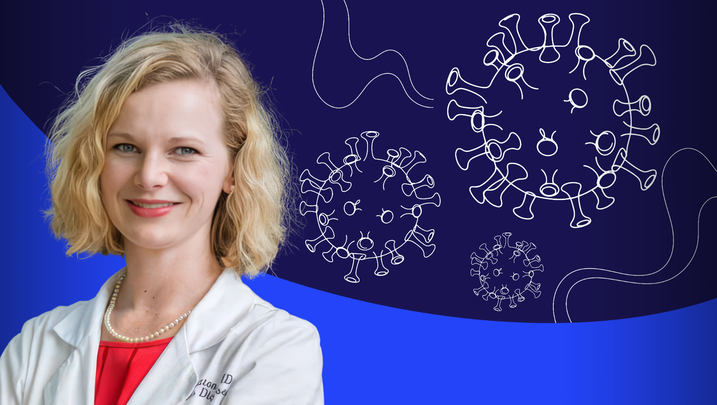
Welcome to On the Frontlines of HIV on ReachMD. I'm Dr. Steve Jackson, and joining me to discuss how rural HIV clinics can implement mental health and substance use disorder screening is Dr. Ellen Eaton. She's a Professor of Psychiatry, Medicine, and Epidemiology, as well as the Director of the Addiction Clinical Care Research and Training Program and the HIV Education and Addiction Training Program at the University of Alabama at Birmingham Heersink School of Medicine.
Dr. Eaton, thanks so much for being here today.
Dr. Eaton:
Thank you for having me.
Dr. Jackson:
To get us started, can you explain why screening for mental health conditions and substance use disorders is such an important component of comprehensive HIV care?
Dr. Eaton:
Certainly. This is an area that has become my primary area of clinical and research interest, mostly because it is understudied and certainly underappreciated in general HIV clinics and often in primary care clinics. I think there's a lot of reasons for that. These conditions can be stigmatized, so being depressed, having suicidality, or having active substance use can lead people to feel ashamed and can make them feel stigmatized. Many don't want to upset their doctor or their nurse by disclosing these conditions. And as a result, I think a lot of our patients just don't bring up these feelings unless there is an active issue—an attempted overdose, for example. So these issues don't come to light, but what we see is that when we do have a sentinel event—someone has an overdose, for example, or someone becomes severely depressed and ends up in the emergency department—when we look back through their medical history and their chart, we see many of them were engaged in care. They were seeing a primary provider. They maybe were seeing several specialists, and it never came up. It just never came up that they were depressed or anxious or struggling with alcohol use disorder.
And that's really where I started observing these gaps, these missed opportunities for screening, and I started thinking about ways to integrate more screening into routine primary outpatient settings. And for people with HIV, that is often, in Alabama especially, a Ryan White-funded HIV clinic. So most of my work in the last few years has been working with Ryan White clinics in the state of Alabama to help them implement an integrated screening process at the point of care so that people who are coming in for their diabetes or to get their antiretrovirals refilled are also getting a validated screening tool for depression and for substance use.
Dr. Jackson:
So what unique challenges do rural HIV clinics face when it comes to identifying and addressing these concerns?
Dr. Eaton:
One of the biggest challenges I've seen in talking to clinic staff and administrators about screening is they don't know what they'll do with individuals who are then identified as having a behavioral health issue. They'll say, "Ellen, it’s great to screen everybody for depression, but what if we uncover all this undiagnosed, untreated depression? Who do we refer these individuals to?" In certain areas, they may not feel comfortable providing addiction treatment or psychiatric care within that clinic, and they will look to refer people out to a specialist, and that could look like a referral to someone in a city that is an hour away. It could look like a referral where their patient is on the waitlist for six months. It could look like an expensive copay for their patient who is uninsured or underinsured and may have to pay out of pocket to get the care they need for that newly diagnosed or newly uncovered mental health condition or substance use condition.
So a lot of the work I've done has been asking those questions. How do we meet this need with what we have? How do we not just diagnose but integrate responsive service delivery within the clinic? And a lot of that starts with using the staff we have, whether they're case managers or social workers, and making sure they're all using screening results as part of their care. Everybody’s working to the top of their degree. And thinking about all the ancillary staff, can the front desk staff help support the screening process? Can the case manager and social worker help provide some services or some counseling? Do you have a peer on staff? Many clinics are working to get people with lived experience in substance use onto their staff to help with counseling and motivational interviewing.
So thinking about equipping these rural clinics using the staff they have and ensuring that everybody on their team is educated in substance use, mental health care, and using person-first language, making sure we're not stigmatizing this population, and then trying to bring everybody on board to help address the issue within the clinic rather than looking for a referral out to potentially an inaccessible specialty clinic that's an additional drive, more transportation, et cetera for your patient.
Dr. Jackson:
And given all those challenges, how can routine screening help identify unmet needs and encourage more open conversations with patients? And what kinds of tools have you found most feasible for these locations?
Dr. Eaton:
As part of the work that I've done with funding from the National Institute of Mental Health within Ryan White clinics, we've found that using an electronic screening tool is actually very acceptable and feasible for our clinics. We've used tablets, so that could be an iPad or another electronic device. And the tools we've used are validated screening tools. So there are many, and I won't get into all the potential tools to use. We've used the PHQ-9 for depression and the GAD-7 for anxiety. We've used the AUDIT-C for alcohol and the ASSIST for substance use screening. And so we've incorporated these into a survey that patients are handed either in the waiting room or when they get to the patient room. It’s several questions that they can respond to while they're waiting on their physician. And the results then go to a dashboard that the physician or the clinician can look at before they even go see the patient.
One of the biggest challenges with the study, Steve, is that we did not have the ability to incorporate these results into all the electronic medical records. So we worked specifically with five Ryan White clinics, and we had about four different electronic medical records among them. And incorporating our own screening tools and results into the electronic medical record was a challenge. We gave providers their own dashboard where they could log on with their own username and password to get these results. And in that manner, if you're going to see Mr. Smith for his annual checkup, by the time you're ready to go see him, if you're logged into your portal, you can see that Mr. Smith is no longer drinking, or his depression has gotten worse, or he's newly reporting symptoms of anxiety, for example. So that would allow the clinician at the point of patient care to incorporate some additional questions if needed or offer some treatments or bring in the social worker or the counselor after their visit to help address the symptoms that Mr. Smith has reported.
So that's what we've done here in Alabama, with some success. I will say, as I mentioned, it is not perfect, and it does take a continued investment from the clinics to keep this type of integrated screening going, especially when you have so many competing demands in these rural clinics.
Dr. Jackson:
For those just joining us, this is On the Frontlines of HIV on ReachMD. I'm Dr. Steve Jackson. I'm speaking with Dr. Ellen Eaton about the importance of substance use and mental health screening in rural HIV clinics.
So once a screening identifies a potential mental health or substance use disorder, how can the care teams translate those results into clinically meaningful action, especially when access to specialized treatment services is limited?
Dr. Eaton:
Well, I'll give you my personal example, which is that as an internal medicine physician with an infectious diseases board certification, I actually went and got training to prescribe buprenorphine. And when I started that in 2019, because there was an unmet need for opioid use disorder treatment, I took the X-waiver training, which was at the time required to prescribe buprenorphine in 2019. That is no longer required, but I'm just giving you one example of a physician who saw an unmet need and wanted to become a champion. And the clinics that we've worked with who've had the most success with sustaining substance use and mental health screening and treatment are the clinics where there's a champion. In many cases, this is a nurse or a case manager who has a personal connection to substance use, or they have seen the impact on their patients, and they appreciate that there's an unmet need. And it is certainly feasible for that case manager, nurse, or physician to then take additional training and develop clinic protocols for how to respond to these conditions.
I would not encourage anyone to take on all of these conditions at once. In my case, I started with opioid use disorder, and then I eventually got my board certification in addiction medicine through practicing through the practice pathway for addiction medicine certification. And now I am prescribing for stimulant use and alcohol use, tobacco use disorder, et cetera. I also would encourage rural primary care clinics to identify a champion and empower them to take on one or two conditions. Maybe they're going to become your depression expert, and they are going to take some extra training on how to diagnose and treat depression, including behavioral therapies, counseling, support services, and maybe pharmacotherapy. Even if they're not a clinician, could they help develop algorithms for your clinicians to prescribe more antidepressants to people who have indications for antidepressants? I really think that's the most sustainable path forward: for teams to organically identify a champion who can lead and build really appropriate acceptable algorithms for their clinics and their patient populations. I think that's the best way to meet our patients where they are with realistic treatment approaches in rural and primary care settings.
Dr. Jackson:
I like that small steps approach that you're talking about right now. It would be good to grow the right way and not just the quick way so that you could have control and be able to keep these things excellent in nature and not just pushing this all upon your staff at once. They could grow into it.
Dr. Eaton:
I totally agree. And I've gone to so many rural clinics to try to educate them and coach them through this. I've done a ton of education for physicians and advanced practice providers across the Southeast, and what I hear over and over again is that they're overwhelmed. They're being asked to be an endocrinologist for their patients with complex diabetes. They're asked to be a cardiologist for their patients with heart failure and hypertension. And now we're asking them to be a psychiatrist and addiction medicine provider, and it can all be very overwhelming.
I think the best path forward is to find out who your champion is and identify one small step. One of my mentors said it's like peeling back the layers of an onion, right? You start with one layer. You just peel back the first layer, and that's your first step. And maybe in three months, you have a protocol for how to screen and treat opioid use disorder, and you have a champion who prints out an algorithm and puts it on the team room, and people can refer back to it. And then in three months, you're going to take it to the next level. You're going to meet with your staff and see how they did and how you can improve upon it, but maybe you're moving to stimulant use disorder, because we're seeing a ton of meth use here in Alabama and across the US. So what can we do to chip away? Let's peel back that next layer of the onion in terms of stimulant use and address these things in a stepwise manner, because you're right. It can be totally overwhelming. We're all being asked to do more with less. Our patients are also being asked to do more with less, many of them. So I think having a really realistic long-term plan is the only path forward.
Dr. Jackson:
Very insightful. So looking ahead, Dr. Eaton, what practical steps can clinicians in rural areas take to make mental health and substance use screening a sustainable part of routine care for patients with HIV?
Dr. Eaton:
I think it is essential that your leadership is on board. So if you're hearing this podcast and you appreciate this is an unmet need in your clinic, I would encourage you to talk amongst your colleagues and go to your leadership and ask if this is a path that they would like to move forward with. If not, you may have some cheerleading and advocacy work to do, but hopefully they're on board.
And then I think developing that short-term plan, what do we want to do in the next three to six months? Maybe it's just identifying one condition. Maybe it's depression you're going to start with. Maybe it's substance use, or a specific substance use. Maybe you just want to work on tobacco use disorder. Certainly, most leadership and administrators should be able to get behind that. So have your short-term plan and then start thinking about your long-term plan. Maybe your long-term plan is that in 12 months you want two clinicians prescribing buprenorphine. You want two clinicians who feel comfortable treating non-complicated depression and one of those clinicians to feel comfortable with more refractory depression. I think having really objective, measurable goals in both the three to six months and maybe thinking about one to two years down the line is a really great path forward and having your leadership involved. I've worked in clinics where leadership was involved and where leadership wasn't really engaged, and it makes a tremendous difference in terms of being able to advocate and allocate staff time and resources, even if those resources are just flyers or brown bag lunches or CME training for your staff. You really have to have leadership on board, so that would be my advice to clinics.
Dr. Jackson:
And with those practical steps in mind, I want to thank my guest, Dr. Ellen Eaton, for joining me to discuss how we can improve HIV care in rural settings through substance use and mental health screening. Dr. Eaton, it was great having you on the program.
Dr. Eaton:
Thanks so much, Steve.
Announcer:
You’ve been listening to On the Frontlines of HIV on ReachMD. To access this and other episodes in our series, visit On the Frontlines of HIV on ReachMD.com, where you can Be Part of the Knowledge. Thanks for listening!