
Mobilization Outcomes After Aneurysmal Subarachnoid Hemorrhage
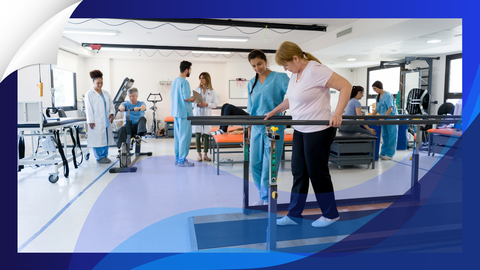
For patients recovering from aneurysmal subarachnoid hemorrhage (aSAH), evidence-based guidance on early mobilization practices remains limited. A prospective observational study published in the April 2026 issue of PTJ: Physical Therapy & Rehabilitation Journal offers new insight into how mobilization actually looks in real-world care.
Although early mobilization after acute brain injury is thought to support neuroplasticity and functional recovery, standardized protocols for patients with aSAH are still lacking. Existing studies vary considerably in the timing, frequency, and type of mobilization interventions examined, leaving uncertainty around best practices during the acute recovery phase.
A Closer Look at Real-World aSAH Care
To better characterize current practice, investigators conducted a single-center prospective observational study between April 2022 and October 2023 at a tertiary neurosurgical referral center in Australia. The study enrolled adults aged 18 years or older with confirmed aSAH who underwent aneurysm repair via surgical clipping or endovascular coiling. Patients were treated either in the ICU or neurosurgical ward, and mobilization practices delivered during physical therapist sessions were evaluated for up to 14 days following aneurysm repair.
Clinical severity was classified using the World Federation of Neurological Surgeons (WFNS) scale, with patients classified as having “good” clinical status (Grades I-II) or “poor” clinical status (Grades III-V). The Mobility Scale for Acute Stroke (MSAS) was used to measure the mobilization outcomes, including assessments of sitting, standing, and independent walking. The study included 102 patients, of whom 69 (67.6%) had “good” clinical status on admission.
Mobilization Patterns in Acute Care
Overall, 90 patients (88.2%) were mobilized using physical therapy within the first 14 days after aneurysm repair. Investigators collected data from 603 planned mobilization sessions, with 410 sessions (68.0%) ultimately completed. Patients participated in a median of 4 mobilization sessions during the acute recovery phase. Walking was the most frequently performed mobilization activity, occurring in nearly two-thirds of completed sessions. However, nearly half of all sessions required assistance from 2 or more staff members, underscoring the challenges associated with mobilizing this patient population.
Additionally, patients with “good” clinical status at admission were more likely to achieve mobility milestones by 2 weeks compared with those classified as “poor” grade. For instance, independent walking by day 14 was achieved in 65.2% of patients with “good” WFNS status versus only 12.9% of patients with “poor” status (P <0.001). Overall, the highest median MSAS score achieved was 32 (IQR, 10-36).
Barriers to Early Rehabilitation
Barriers to mobilization were reported in 193 sessions (32.0%). Neurological instability was the most common barrier, accounting for 41.5% of interrupted or canceled sessions, followed by hemodynamic instability (22.3%) and mechanical ventilation (18.1%). Additional barriers included sedation, confusion, agitation, and organizational challenges.
Safety Findings
Despite these obstacles, early mobilization was generally feasible and well tolerated. Safety concerns occurred in 8.3% of mobilization sessions, with the most common being headache, hypotension, light-headedness, or reduced consciousness, but no serious adverse events—including falls, arrhythmias, cardiac arrest, unplanned extubation, or line removal— were reported. Notably, one-third of mobilization sessions were performed in patients with concurrent external ventricular drains.
Implications for Mobilization Practices in aSAH
The authors identified several strengths, including prospective data collection and no loss to follow-up, resulting in comprehensive capture of mobilization data. However, they also acknowledged limitations, including the single-center design, observational nature of the study, lack of data regarding mobilization intensity and duration, and exclusion of mobility activities performed outside formal physical therapy sessions.
Overall, the findings suggest that while early mobilization is feasible in patients with aSAH, physiological instability can limit participation. Careful screening and monitoring are important during mobilization in the acute period. Further research is needed to define optimal mobilization strategies aimed at improving outcomes after aSAH.
Reference:
Hernandez S, Tipping C, Deane AM, et al. Early mobilization in patients with aneurysmal subarachnoid hemorrhage: a prospective observational study. Phys Ther. 2026;106(4):pzag031. doi:10.1093/ptj/pzag031