
Transcript
Announcer:
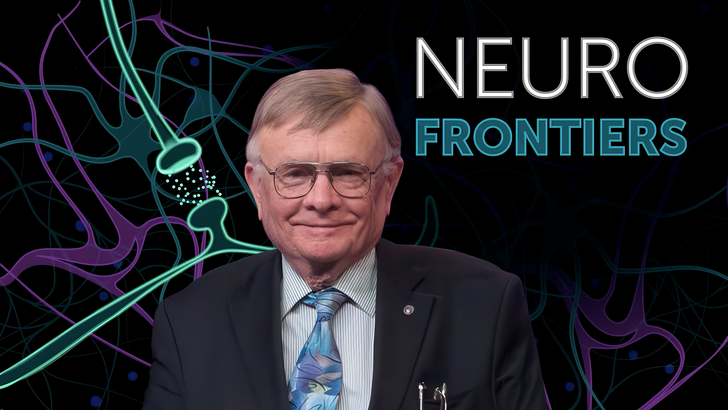
You’re listening to NeuroFrontiers on ReachMD. On this episode, we’ll hear from Dr. Arnie Koeppen, who’s a neurologist at the Albany Stratton VA Medical Center and Professor Emeritus at Albany Medical College in New York. He’ll be discussing the genetic drivers of Friedreich’s ataxia.
Here’s Dr. Koeppen now.
Dr. Koeppen:
While the frataxin gene on chromosome nine makes frataxin, the gene mutation causes a GAA repeat expansion between 200 and, let's say, 1,600 repeats. The translation and transcription are also under the control of epigenetic effects, especially related to histone acetylation. And once frataxin is made, it is processed from a longer form of protein into a shorter form at 14 kilodalton, which is then inserted into mitochondria. Frataxin is also needed for extramitochondrial locations, but by and large, we think it's a mitochondrial disease of lack of frataxin in mitochondria.
Frataxin is a chaperone protein that will generate among other proteins: so-called iron-sulfur clusters, consisting of four iron and four sulfur molecules. They are needed for electron transport chains, complexes two, three, and four. And they're also needed in the cytoplasm for the enzyme called aconitase.
Announcer:
That was Dr. Arnie Koeppen talking about what’s happening on a genetic level in Friedreich’s ataxia. To access this and other episodes in our series, visit NeuroFrontiers on ReachMD.com, where you can Be Part of the Knowledge. Thanks for listening!
