
Transcript
Announcer:
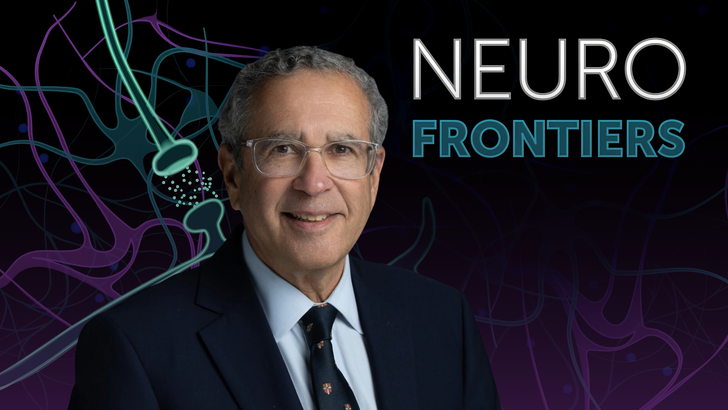
Welcome to NeuroFrontiers on ReachMD. On this episode, we’ll hear from Dr. David Hafler, who’s the William S. and Lois Stiles Edgerly Professor of Neurology and Professor of Immunobiology at the Yale School of Medicine. He’ll be discussing our current understanding of B-cell depletion in multiple sclerosis treatment. Here’s Dr. Hafler now.
Dr. Hafler:
What do we know about B-cell depletion and its efficacy in the treatment of MS? B-cell depletion, to me, has really been a breakthrough in the treatment of disease. We'd always thought that MS was a T-cell-mediated disease where the T-cells attack the myelin in the brain, and we still believe that is the case. What we're learning is that the B-cells are triggering the T-cells and turning them on. B-cell depletion is so effective that in our clinic, we've been using B-cell depletion for over a decade now. If the patient doesn't respond, we start looking for other diseases which mimic MS, such as sarcoidosis or lupus. So it's an incredibly effective treatment.
And the surprise was we recently did a study where we analyzed T-cells and B-cells in patients after treatment. One of the major defects in the immune system in patients with MS is that they've lost their immune regulation. Their regulatory T-cells are not working well, and it's succumbing by the autoreactive T-cells to myelin. And what we found with B-cell depletion is it surprisingly induced a macrophage population that's secreting the inflammatory cytokine TNF-alpha. We discovered the TNF-alpha was engaging a receptor on regulatory T-cells, correcting the dysfunction in Tregs associated with loss of autoreactive T-cells. We recently published in the Journal of Clinical Investigation. So we have a very plausible mechanism for how it works, but again, in terms of efficacy, it's extremely effective.
The story in progressive MS is very different. Now, I would like to suggest that maybe we should relabel the disease autoimmune MS, which is the early inflammatory autoimmune part of the disease, which is incredibly responsive to immunotherapy and B-cell depletion. So we have an autoimmune form of MS and a neurodegenerative form of MS. And recent studies have shown that if you look at the microglia and astrocytes in patients with progressive MS, they're virtually identical to what one sees in macular degeneration or in Alzheimer's disease, suggesting that it's a common pathway for neurodegeneration when there is inflammatory damage to the central nervous system. So whereas B-cell depletion works extremely well in the autoimmune phase of the disease, for the neurodegenerative phase of the disease, which can begin to occur very early, it’s not nearly as effective. And in my own clinical experience, it’s not really very effective at all.
The hope is that the new BTK inhibitors, which hopefully will be approved by the FDA in short order, will have a better effect on the progression of the disease, perhaps working directly on the microglia in the central nervous system. But to me, the whole idea is to treat as early as possible and try to prevent the secondary neurodegeneration, which occurs in a significant number of patients from the time you have T-cell infiltration in the brain.
It's reasonably rare for patients to break through after a year or two on B-cell depletion. We monitor patients every six months and every year with MRI, and in very few instances do patients break through. It occasionally happens, and we check the B-cell levels. In terms of progressive disease and neurodegenerative phase of disease, it's much harder to measure. There aren't changes on MRI in the neurodegenerative phase of the disease in terms of new lesions. So we follow ambulation index and how well the patient can walk. But the neurodegenerative disease is more ambulatory and more spinal cord disease, so we monitor that with ambulation. But again, the effect of B-cell depletion in the neurodegenerative phase of disease is modest at best.
Announcer:
That was Dr. David Hafler talking about the use of B-cell depletion to treat multiple sclerosis. To access this and other episodes in our series, visit NeuroFrontiers on ReachMD.com, where you can Be Part of the Knowledge. Thanks for listening!

