
Transcript
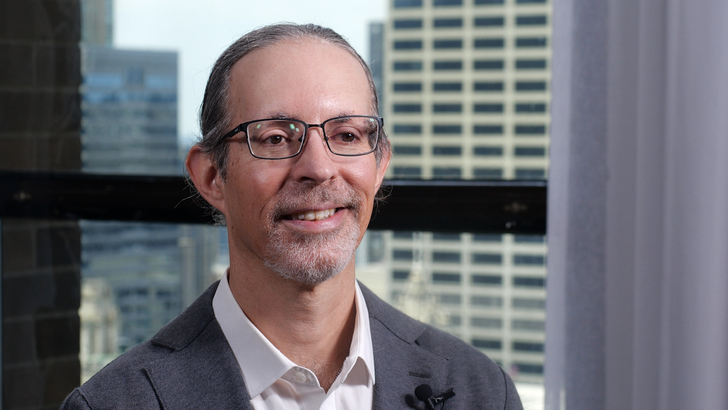
Todd Schlesinger, MD (00:07):
Hi, I'm Dr. Todd Schlesinger. I'm a board-certified dermatologist and member of the American Academy of Dermatology. I practice in Charleston, South Carolina, and I founded the Clinical Research Center of the Carolinas, and I also work with Epiphany Dermatology as my practice location.
(00:23):
Thinking about systemic storage, you also wanted to think about topical steroids. Of course, topical steroids are day in and day out, bread and butter practice of our clinical practice of atopic dermatitis and treatment of that. And of course, they have great utility and getting our patients under control in many cases.
(00:39):
So some of the things I've learned in my clinic, of course, we have so many different options now of non-steroidal topicals that we can use that work very well with varying levels of minor irritation that come along with their initial use. But oftentimes, they can be very effective, and used all over the whole body and follow different mechanisms of action.
(00:58):
But as far as topical steroids go, I still use them. And in some cases they're more accessible because of different factors within the healthcare system. Sometimes it's hard to get some of the newer topicals that we want to use for our patients. So what I do a lot is I tend to mix my topical steroids in solution liquid form into larger quantities of a moisturizer of one kind or another.
(01:21):
So what I think of is taking a bottle of Clobetasol, for example, a 50 ml bottle of Clobetasol, which I think has been very talked about. But I think maybe not everyone knows about this, but Clobetasol in a moisturizing 16-ounce jar moisturizing cream, I've really found to be very helpful in my practice of getting someone under control with atopic dermatitis, psoriasis, maybe just a chronic itch situation that they have. And I can just tell them to use that over their whole body with relative safety. I don't have to worry about them doing a two-week on, one-week off course. I can get them to use it for longer.
(01:53):
So getting someone on that type of therapy can help not only repair the barrier of the skin, depending on what moisturizer you use, but also provide that inflammation in a little bit more of a diluted way with the steroid and help me find a bridge to using something a little bit longer-lasting that's non-steroidal. Again, those are day in, day out, but how do we prevent our patients from having atrophy and things like that? We don't see too much with topical steroids. I think we know how to use them well, but how do we use them in a wider area for our patients and then use them as a bridge to getting onto something more effective long-term?
