
Transcript
Announcer:
You’re listening to GLC on ReachMD. This activity, titled ‘Reimagining Alzheimer's Care: The Advent of Subcutaneous Administration of Anti-Amyloid Therapy,’ is provided by Global Learning Collaborative.
Prior to beginning the activity, please be sure to review the faculty and commercial support disclosure statements, as well as the learning objectives.
Chapter 1
Dr. Atri:
Welcome to Reimagining Alzheimer's Care With the Use of Subcutaneous Anti-Amyloid Plaque-Reducing Therapies. In the first chapter, we'll talk about the differences between IV and subcutaneous therapy and when to consider sub-q treatments.
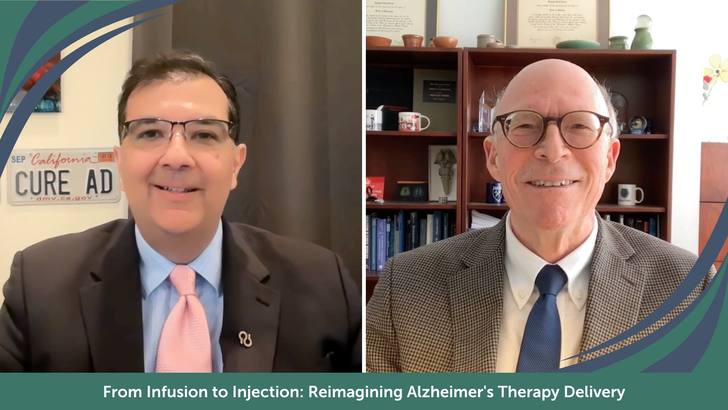
This is CE on ReachMD, and I'm Dr. Alireza Atri. I'm a cognitive neurologist. I take care of patients and families with Alzheimer's disease and related dementias, and it's a great pleasure to be here with my colleague, Dr. Scott Turner. Scott?
Dr. Turner:
Hello, it's good to be here. I'm Scott Turner. I'm a neurologist at Georgetown. I'm director of the Memory Disorders Program and also see patients with Alzheimer's disease and mild cognitive impairment and other dementias.
Dr. Atri:
Great. So, Scott, we're going to dive right in. What can you tell us about the differences in general between the IV and sub-q formulations of these monoclonals?
Dr. Turner:
Okay, I'll start with just sort of a general statement first. This is obviously a new era in Alzheimer's disease treatment, which we've been working for for many, many years. There are new diagnostics. There are new antibodies available. There are actually now more than 100 monoclonal antibodies, most of them subcutaneous, that are approved by the FDA, of course mostly for other indications—oncology, rheumatology, immunology. Some of these are advertised on television all the time.
So this is an increasingly important classification of therapeutics, and a lot of them, of course, going to subcutaneous as opposed to intravenous because of lower cost and patient comfort, convenience, and of course lower burdens to our healthcare system. And as we know, our healthcare system is a little bit overburdened, especially now that we have this huge demand for treatment with these antibodies.
So I'll talk a little bit about the IV risk because obviously you have to have 18 months of IV treatment before you go to the subcutaneous form. So we know this from the phase 3 clinical trials with the Clarity-AD study with IV lecanemab. And the major side effects of concern were the infusion-related reactions, which were found in about 26% compared to 7% in placebo, and ARIA, or amyloid-related imaging abnormalities, which was about 21% compared to 9%. So these possible side effects persist once you switch over to the subcutaneous form.
But the period of high risk for ARIA is really at the initiation of treatment, the first 6 months, first 12 months. So once you've been through the 18 months of IV treatment, I think the major period of ARIA risk has passed. Of course it never goes away. And ARIA-H, especially microhemorrhages, can occur spontaneously even in the placebo group.
And as you know, there are 2 types of ARIA: ARIA-E, or edema, and ARIA-H, and most of it is asymptomatic. But there were 3% of patients who were symptomatic in the phase 3 clinical trial with IV, but <1% was serious and symptomatic. But this, of course, has led to the black box warning with this class of drugs, including lecanemab. So we do have to mention that as a potential risk.
And as you know, the APOE4 carriers have a higher risk than the noncarrier, so we have to do APOE genotyping.
The symptoms of infusion-related reactions are usually mild and temporary flu-like symptoms post infusion and can be treated with antihistamines, acetaminophen, if needed. Symptoms of ARIA may include headache, confusion, any new neurologic sign or symptom, visual changes that would prompt you to get an unscheduled MRI to look for ARIA.
And of course, we think it's a manageable risk. You manage this by careful patient selection—I think you're going to talk about that in Chapter 2 a little bit more—and of course clinical and MRI monitoring, and maybe temporary or permanent suspension depending on the degree of the ARIA.
So after the 18 months, we can switch to the subcutaneous form, which clearly has many benefits compared to the IV. So you can also continue a monthly IV, but most people are choosing the subcutaneous form, which is a weekly injection.
I do have to mention that the weekly injection also has another category of possible side effects that are not part of the IV, although these side effects can persist for the sub-q, and these are the local injection site reactions. So of course you can get local swelling, soreness, redness, itching. These are reported in about 11% of patients, and about 1% also had some systemic symptoms such as fever, headache, and fatigue, and things like that.
So clearly a new era in Alzheimer treatment. After the 18-month IV treatment, there's a big enthusiasm for getting the subcutaneous formulation, both from the providers and from the patients. So we would like to switch after the 18 months to this weekly subcutaneous maintenance dose.
Dr. Atri:
That was a great summary, Scott. I agree. Whether it's lecanemab or donanemab, from the Clarity and the TRAILBLAZER studies, there were different rates of infusion reactions or ARIA. But generally I think the take-home message is that this is a class effect. These potential side effects and the things that we look out for are going to be the same. But now we have a new option, which is great.
Dr. Turner:
So who do you think we should consider for these subcutaneous therapies?
Dr. Atri:
Well, everybody. Everybody, meaning the people who are already on 18 months of therapy. Patients and families aren't monolithic, right? So different strokes for different folks, as they said. And many patients and families really like the freedom of not being tethered to an infusion schedule every month, for example, having to go to the infusion center, the time it takes to go back and forth, or being able to continue their treatment in their own houses or if they're on the road, for example, on their own time.
So having said that, some people also actually like the camaraderie and support of going to the infusion center. So I think the important thing is to present this option for people to know that it's available now, and that helps them obviously have more agency and freedom to decide for themselves.
Dr. Turner:
Yeah, and as you know, since it's so new, there's still a little bit of friction in getting coverage issues. But I think this is hopefully to be worked out in the near future, and we'll have more and more patients on the sub-q since it also, in the long run, is less costly to our healthcare system to have the sub-q versus the IV.
Dr. Atri:
We'll discuss clinical data and clinical trial data and patient selection for these therapies, including sub-q therapy, in Chapter 2. So stay tuned.
Chapter 2
Dr. Atri:
Welcome back. In the first chapter, we covered the differences between IV and subcutaneous administration of plaque-lowering monoclonal antibodies, and in Chapter 2 we're looking at clinical trial data and patient selection.
And okay, I'm going to go back to Scott here. Scott, what do our listeners need to know about the clinical trial data for lecanemab and donanemab and also the differences between IV and sub-q delivery?
Dr. Turner:
Okay, great. Well, there's a lot to cover here with the clinical trials. I'll start with the phase 3 Clarity-AD results, which was the study of lecanemab, which I think we both participated in this study. And this was an 18-month study. It was double-blind, placebo-controlled, of course.
And at the end of the 18 months, the lecanemab-treated group declined significantly less depending on the outcome, either around 25% to 40% less compared to the placebo group. So the slope of the curve was different. We actually managed to change the slope of the curve.
We also demonstrated a significant amount of amyloid plaque removal, and this was fairly quickly, within the first several months of the trial. And so our hypothesis is that we found that we could bend the curve of clinical decline, probably because we could move the amyloid plaque, a significant burden of that, with the antibody treatment.
So of course, we talked about some of the side effects of this clinical benefit in Chapter 1, but the results were significant enough. I feel they were clinically significant. They were clearly statistically significant, and the FDA agreed and approved this medication. So this was our first new treatment for Alzheimer's disease after many other antibodies that failed phase 3 clinical trials.
And then after that there was another phase 3 clinical trial, TRAILBLAZER-ALZ 2 donanemab trial, which also demonstrated significant amyloid clearance as well as bending the curve again on all the clinical, cognitive functional outcome measures. Unfortunately, donanemab only has IV administration. I don't know if there are any plans to develop another formulation. But lecanemab more recently has come out with this subcutaneous formulation for maintenance dose.
And early indications even show that it has similar comparable effects to IV on amyloid clearance and clinical efficacy and also has similar rates with side effects—the ARIA, possible infusion reactions, and of course the injection site reactions.
Since we completed the phase 3 clinical trial, we've also done open-label extension, and now we have 3-year and 4-year data. Now, we no longer have a true placebo group. We have historic controls, from ADNI study. We can sort of predict what the rate of decline would be, but you can see since we've changed the slopes, the magnitude of the difference keeps getting larger and larger at the 3-year time point and the 4-year time point. So the benefits are getting even better as the further we go out from the initiation of the treatment.
And there are other data that suggest that the earlier you start treatment, the better. So those who have, for example, less tau pathology and less cognitive decline may have an even better efficacy in these outcome measures than those who start later.
But another advance has been this subcutaneous formulation, and this is now under review at the FDA to initiate treatment with Alzheimer's disease. And we don't know what the ruling is going to be. We haven't seen all the data yet, but there's an application to start treatment with patients with early Alzheimer's with a subcutaneous formulation of 500 mg right from the beginning, so you don't even have to do the 18-month IV course. Of course, we're waiting to see what the ruling is going to be on that.
But other subcutaneous anti-amyloid–targeting therapies are obviously in the pipeline from other providers, but it will take some time to determine whether they are safe and effective.
Dr. Atri:
For those just tuning in, you're listening to CE on ReachMD. I'm Dr. Atri, and here with me today is Dr. Scott Turner. We're talking about how the approval of sub-q formulations of anti-amyloid monoclonal antibodies can change the landscape of treating Alzheimer's disease.
I echo your thoughts, Scott, that we have 2 fully approved drugs, monoclonals. They’re our first generation, I would say, in practice. Obviously, there are multiple generations in research that we've gone through to get to this point after 20 years. It's important not to over blow the expectations of these treatments. They're not cures, but they're really important.
So I agree with you, because they really look like disease-modifying therapies and by definitions of disease-modifying therapies. Our symptomatic treatments that we have already, things like cholinesterase and memantine, etc, and some other approved drugs are very important. They're not mutually exclusive, right?
And for these drugs now, for the first time, to work on the pathobiology of the disease, the biological effect they're targeting is reducing plaque loads. Even though the monoclonals are different in their targets, the pyroglutamate mature plaques by donanemab versus protofibrils with lecanemab, really the biological effects is to reduce the plaques. And they both show it, and so that's important.
And along with that, in clinical trials, what you get is proof that there's efficacy for the population. And this has been shown. The mileage very much varies for the person in front of you, right? So the risk–benefit profile may be very different, and we're going to learn over the years who may benefit more.
But I think you mentioned something that's very important, is going earlier. It does seem like people who have lower Centiloid levels, potentially less tangles, may actually—that magnitude of effect, on average, may be higher. And so as a class, what they're showing is somewhere between 20% and 35% to maybe even 40% slowing of decline with slopes changing over time between groups.
And as you mentioned, the longer-term studies don't have placebo groups, but when they're matched with pretty good longitudinal observational studies, it's pretty clear and consistent that the drugs are not losing effect. And that's really, really important.
So we can build on that over the coming years. So of course patient selection really, really matters.
Dr. Turner:
Yeah, and some people have difficulty with understanding the significance of these differences between placebo and treated because, on average, everyone is still going downhill, even though those who are treated are going downhill less than those in the placebo group.
And abstract concepts such as the iADRS, which is an outcome measure, or the clinical dementia rating scales, sort of difficult to explain sometimes. So another way to talk about these results is staying in the earlier stages of the disease for longer. I think that's something that's more easily understandable by patients and families and other clinicians and payers, perhaps, to try to explain these results. So sometimes I resort to that as a way to explain the benefits of the drug.
Dr. Atri:
Yeah, no one's ever come to me—or I don't know, maybe to you they've come, but not to me—to say, “Dr. Atri, I really want to make sure that compared to a placebo group within 18 months, my average CDR doesn't drop more than 0.5 or 0.47 or 0.6.” No, what people say is that, “I want to stay functional for longer, give myself a chance for that, decrease my dependence on people as long as I can and preserve my personhood.”
And again, these RCTs and these phase 3 trials tell you efficacy in a population, something's occurring, and that overall looks like it's disease modifying. Biological effect is occurring, lowering plaques, and the slopes are diverging, and we can build on that.
And that's why this patient-centered approach about explaining things within 18 months, if things are slowed by 25% or 30%, that, on average, means that somewhere between 5, 6, maybe 7 months of time is saved during that time. Over longer term, that obviously could expand.
Even the probability both for donanemab and lecanemab has been shown that for people in that 18 months to advance to the next stage of dementia, going from MCI, where they're relatively independent, to becoming dependent on an instrumental ADL, the likelihood even in those 18 months is lower by 30% to 40% almost with these drugs.
So you see the signals in multiple ways that are very, very consistent. So explaining that to patients and families but not giving them the expectation that these are cures, that they're going to go back to the way they were, is really also important.
And patient selection, again, really matters that we have to have ways for eligibility that are very, very important. How we start these drugs like the donanemab and lecanemab, right? So they have to be in the right clinical stages, MCI, or mild dementia. You have to have proof of amyloid positivity with either usually a CSF or, I think many of us, if we can, with Medicare covering it, with the amyloid PET scans, because later on you could also see the difference in many ways, right, after 18 months or so.
Dr. Turner:
That’s a question that many would have is patient selection. Obviously they're only approved for what's called early Alzheimer's, which is mild cognitive impairment and mild dementia due to Alzheimer's. But talk a little bit more about how you choose the best patients for the IV and then the sub-q.
Dr. Atri:
Well, I think patient selection is the same, right, in the sense that they have to be in the right stages, amyloid confirmation. For individual risk-benefit analysis, we really do the APOE4 testing. As you mentioned, people who have APOE4, if they're heterozygous, their risk is higher than E3/E3, for example, or people who don't have an E4. If they're homozygous, the risk of having ARIA increases, right? And having ARIA, having recurrent ARIA, having more severe ARIA, or even symptomatic ARIA is higher in homozygous E4. So that's a really important factor.
And explaining to them, again, what the expectations of treatment are and coming up with shared decision-making, that this is something that we both have to commit to for monitoring. Explaining to them what ARIA is. There is MRI schedules to be had, right? If they have symptoms, we need to know about them. These are all elements of that individualized patient-centered dyadic or triadic shared decision-making that's important.
Now, as far as transitioning from infusion to sub-q, I think for people to have the choice, to know that it's possible, right? And then they can decide which one they want to choose.
I think you still have to think about ARIA. If they have new symptoms, they have to tell us, right? So that doesn't change. But ultimately, they have to be on 18 months of therapy before they can change.
Do you have any experiences to share with patients? I've had a few that really have wanted not to be tethered and have gone on sub-q.
Dr. Turner:
Yeah, we've had several patients now just approaching the 18-month treatment with IV, and they're inquiring about the subcutaneous, and we're trying to switch them over to the subcutaneous. And as I said, we're getting some friction with third-party payers, but I think this will all be worked out in the near future.
And I don't know about you, but many of our patients like to travel, and they like to travel a lot. And some of our patients like to spend 6 months in Florida or 2 months in California. And so obviously if they're tethered to an infusion center and tethered to an MRI center, then it's very difficult to travel. When we initiate these drugs, we typically tell them try not to travel at least during the first 6 months, because if there's an ARIA event, that's when it might happen, and we would like to see them clinically and we'd like to get an MRI and compare it to their baseline MRI.
So these travel restrictions are very important for our patients and really affect their quality of life, if they want to spend some time with their grandchildren or 6 months in Florida. So this is a huge advantage for the subcutaneous formulation is they can just do this in the convenience of their home. They're not tied to an infusion center. They can take it with them. We can ship it there. They do have to keep it in the refrigerator, but I think this certainly allows a lot more travel. And this is, as I said, this is a big, big item and sometimes the deciding factor in some of our patients in deciding to get treatment and deciding when to get treatment.
Dr. Atri:
Great, great. Well, it's been a fascinating conversation, Scott. Before we wrap up, any other take-home messages you'd like to share?
Dr. Turner:
I encourage patients to be seen as early as possible if they have cognitive decline, and practitioners to fully address it and embrace this whole new era of Alzheimer's diagnostics, Alzheimer's therapeutics. Don't ignore memory concerns, but avail yourself to these new diagnostics, therapeutics, and join the new era.
Dr. Atri:
Wonderful. Thank you. I agree with you. I think it is very exciting times for Alzheimer's, and actually what we're learning from Alzheimer's into the other fields, ADRD for diagnostics and therapeutics.
And I also call it sort of the end of the beginning. It's not the beginning of the end; it's the end of the beginning. We've still got a ways to go, but we have options now. We have 2 monoclonals, lecanemab and donanemab, an IV formulation, and now we have sub-q lecanemab approved for maintenance dosing, which means greater choices for our patient–care partner dyads and ultimately increasing their autonomy, their agency, freedom, and justice. It should be available, and people should be able to have a choice in this.
So thank you very much, Dr. Scott Turner, for your valuable insights. And in the next chapter we'll explore the patient experience with sub-q monoclonal therapies. Stay tuned.
Dr. Turner:
Thank you. Good to see you.
Dr. Atri:
All right. You, too. Bye-bye.
Chapter 3
Dr. Cabral:
Welcome back, everyone. In the first 2 chapters, we discussed the differences between intravenous and subcutaneous administration of anti-amyloid monoclonal antibody therapies, the clinical trial data, and patient selection for these.
In this chapter, I have the honor of speaking with someone who's been living this journey of these treatments for many years now. His name is Mike, and we want to understand his journey and his treatment for mild cognitive impairment due to Alzheimer's disease and then transitioning from the intravenous, or IV, formulation to the subcutaneous anti-amyloid monoclonal therapy.
This is CE with GLC. I'm Dr. Dani Cabral, and here with me today is Mike.
Mike:
Dr. Cabral, thank you very much. I'm glad to be here.
Dr. Cabral:
Great, it's an honor. So in this short time, we have a lot to get through, and this is some of the most important information that physicians and healthcare professionals need to hear about, these medications. So if you could tell us about, for you, after you were diagnosed, that was a long experience, and what ultimately led you to pursue anti-amyloid therapy.
Mike:
I wanted to find the best treatment possible, as both of my parents had this disease and I was their caretaker. And then when I got diagnosed, I was determined to not let this disease defeat me. So I sought out a center of excellence when I got diagnosed. That was before any anti-amyloid therapies were available. And about 6 months after I got diagnosed, they did become available, and I was one of the first people to take the disease-modifying treatments outside of a clinical trial.
Dr. Cabral:
Okay, great. So it took a lot of your own, it sounds like, initiative to get to that point that early on, before few people were on these treatments.
Can you tell us a bit about how much time it would take you to travel to get the infusions, wait, have the treatment, recover in the infusion center, and then afterwards?
Mike:
Yes. The travel time—I live in a sort of remote part of the country of Colorado, so I had to travel to Arizona. Well, the travel time involved a 9-hour drive, and then it involved, the next day, a 4-hour infusion appointment followed by returning back that day or returning back the next day. So it could be a 2- to 3-day journey covering over about 900 miles, involving an overnight hotel stay, and so everything I did had to be scheduled around those 2 or 3 days to get my infusion.
Dr. Cabral:
That is a significant amount of time. How did your spouse support you through this?
Mike:
Well, she supported me just fine. She came with me on most of the trips until I got clearance. And because I'm early stage, I did not need a caretaker to sit through all that with me, so a lot of those times I made the trips on my own. But, yeah, it did involve her time, because she was the one who scheduled everything, and the scheduling wasn't as easy as it sounds, and the hotel room, and it's just a logistical—besides the loss of time.
Dr. Cabral:
Okay, yes. And then, so you were on IV lecanemab for a part of this, and so you were having that experience every 2 weeks, correct?
Mike:
No, when I was on lecanemab, that was a monthly infusion.
Dr. Cabral:
Okay, you were on that maintenance dose, right. Okay, all right.
And so, just in general, thinking about your decision to pursue anti-amyloid therapies at all—so as a healthcare professional, many of us, we focus on the data of the efficacy and the safety, but people like you usually think about their lives and then how is this treatment going to help them keep doing the things that are important to them.
So I'm wondering about how being on these treatments has supported you to do the things that are important to you, and then, yeah, why don't we start there?
Mike:
Well, my decision to go on anti-amyloid therapy was after a long discussion with my physician about the pros and cons, about the possible side effects and my point of view. I’m one person. I know what the possible side effects of anti-amyloid therapy may be, but I knew what the 100% certain side effects of Alzheimer's disease were going to be. So, for me, that was an easy choice. I was not going to go down the road of Alzheimer's. I was going to go down the road of anti-amyloid therapy.
That was 6 years ago, and I don't think without the anti-amyloid therapy I would be able to sit here and talk to you today.
Dr. Cabral:
Wow, that's really powerful.
And so with that, can you talk about when you first heard about that there might be this subcutaneous injection, home injection option available, what was your reaction?
Mike:
I was super excited. I was very, very excited. It took a long time for me to be able to receive the at-home injection, because there were a lot of hurdles, administrative hurdles, through the treatment providers and the hospital that really slowed it down.
But in the end, because I was—I don't want to say demanding, but persistent that I get on this medication, the new medication, that I was fortunate enough to start on the at-home IQLIK pen, and it's been a game changer, an absolute game changer.
Dr. Cabral:
Wow, that's great to hear. And kudos to you for sticking with the administrative issues to get to that. Calling it a game changer is really profound. Can you elaborate on that? How has it been a game changer for you?
Mike:
Well, there's a lot of, I would say, stress going to get the experience of the infusion, and these are all good, wonderful people that work well, but I had to check in. And then after I checked in, I had to recheck in at the infusion center, and I had to repeat the same information twice to them, and then I had to have a room that was nice and warm and comfortable, and then I had to have a phlebotomist who was very good, and then I had to have a post-op discharge, and it was a long time to sit there for 4 hours. So there's a lot of things that went into the infusion experience that had to go pretty good to have a good experience, so to speak. Okay?
With the at-home infusion, I don't have to worry about any of that. Okay? It literally takes me less than 60 seconds to administer the medication, and then I go about my business. So you take 60 seconds of time versus 3 days of time, and that's why it's a game changer.
Dr. Cabral:
Wow, that's huge. And so what have you been able to do with this time that you've gotten back?
Mike:
Oh, the most important thing about getting the time back is not the stress hanging over me of I've got to go in 2 weeks, I've got to go in 1 week. Oh, that’s the next 3 days. It's just the kind of the general stress hanging over you.
What it has given to me is agency. It has given me some control, I feel now, over my treatment. The fact that I'm doing it, psychologically, tells me that I'm doing something here rather than other people doing things to me. I’m administering the medication at a time when I can, and it's just given me a sense of more of control over my medication and my treatments.
And there's a lot of stress that can be associated with this disease, so that's just one less stressor for having mild cognitive impairment that I don't have to worry about.
Dr. Cabral:
Wow. I think that a lot of us don't think about the stress in between the actual infusion visits and all of the planning and logistics that are usually not just for one person, but the family also are trying to coordinate everything, and there's so many places there can be errors, given so many people and resources. So that's really great to hear that in reality it's working out so well.
And I'm just wondering, to be balanced, is there any downsides to the transition to the subcutaneous version?
Mike:
No.
Dr. Cabral:
Okay.
Mike:
Let me think about that. No, no. There’s been no downsides whatsoever. The only downside was kind of getting it started and getting the right specialty pharmacy. But now my pharmacy, they call me or I get a notice that it's time, and then they say, "Do I want this prescription?" and I just click on my phone, and then 2 days later, it miraculously, a month's supply, arrives at my doorstep, and I put it in my refrigerator, and I'm good to go.
It's very, very seamless, and so, no, there's no downfall whatsoever.
Dr. Cabral:
That's amazing. And so you can take those with you when you travel, right? As long as they're refrigerated?
Mike:
I can. I can take them. They actually don't have to be refrigerated. I can move them from the refrigerator and, say, leave it out of the refrigerator for a couple, 3 days, and then infuse it. What they don't want me to do is remove it from the refrigerator, warm it up to room temperature, and then put it back in the refrigerator. After I remove it from the refrigerator, I have 14 days to do the injection. So it's very convenient. It's very, very convenient.
Dr. Cabral:
And it sounds like ultimately it's really supporting your autonomy, your independence, and your freedom.
Mike:
Absolutely, absolutely. Plus, I'm getting, in my mind, a lifesaving therapy. Okay, so you put those things together, and it’s a pretty good deal.
Dr. Cabral:
Yeah. Well said.
If you can offer one key takeaway on this transition to the subcutaneous formulation of lecanemab for anybody out there who's considering this for themselves or their patients, what would that be?
Mike:
I would say to someone who's considering this, one, you have to be your own best advocate. Okay, you have to find a physician, neurologist, who is up to date and willing to do this.
But I'm going to tell you it's easy; it's simple; it's life-changing. The medicines do work, and just I would think it’s just a wonderful thing to try and pursue because it’s so much better than going the infusion route.
Dr. Cabral:
Great, thank you.
And I think that's all the time we have today. So thank you, Mike. It's always an honor to talk to you. Thank you for joining us today and sharing your real lived experience from transitioning from intravenous to subcutaneous anti-amyloid monoclonal antibody therapy.
Mike:
You're welcome. My pleasure.
Announcer:
You have been listening to GLC on ReachMD. This activity is provided by Global Learning Collaborative.
To receive your free CE credit or to download this activity, visit ReachMD.com/CME. Thank you for listening.
 In support of improving patient care, Global Learning Collaborative (GLC) is jointly accredited by the Accreditation Council for Continuing Medical Education (ACCME), the Accreditation Council for Pharmacy Education (ACPE), and the American Nurses Credentialing Center (ANCC) to provide continuing education for the healthcare team.
  Global Learning Collaborative (GLC) designates this activity for 0.50 contact hours/0.05 CEUs of pharmacy contact hour(s).
  Global Learning Collaborative (GLC) has been authorized by the American Academy of PAs (AAPA) to award AAPA Category 1 CME credit(s) for activities planned in accordance with AAPA CME Criteria. This activity is designated for 0.50 AAPA Category 1 CME credit(s). Approval is valid until June 23rd, 2027. PAs should claim only the credit commensurate with the extent of their participation in the activity.

