
Transcript
Chapter 1: Navigating the Differential: DED vs Stage 1 NK
Dr. Koetting:
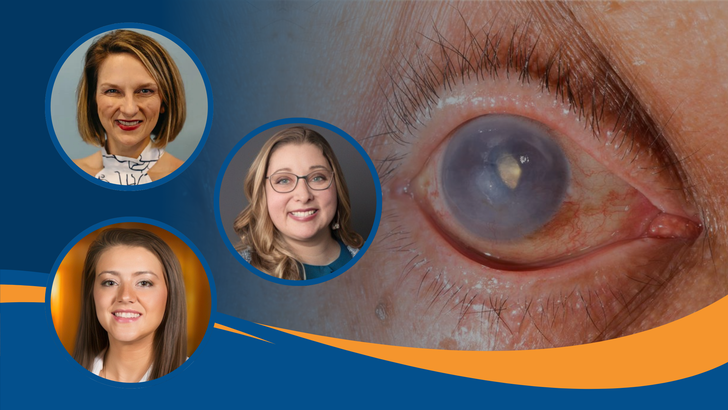
So welcome tonight. Thank you for all the choices you have of places to be. We appreciate that you've taken the time to come and spend the evening with myself, Katie Rachon, and Lisa Hornick. We will be talking about neurotrophic keratitis tonight, which I think this title is very appropriate, Hidden in Plain Sight. It's one of those things that sometimes we just don't think about. And I think stage 1 NK is the hardest, because you think it may be one of multiple things. Honestly, it really just looks like it's probably dry eye, right? But those are the ones where we can really make a huge difference.
So it's just not that rare. It's not as rare as we think, right? It's estimated that a prevalence of less than 50 in 100,000 in 2014. And in 2014, I know I was not checking everybody's corneal sensitivity, or even five a week, five a month, five in 6 months, to be honest, in 2014. At this point, we know it's a lot more than that, and that's because we are actually stopping to check the corneal sensitivity in our patients.
And when we talk about this, I like to go a little bit above and start at trigeminal neuropathy, because this is part of under that umbrella. Trigeminal neuropathy is a general term for a dysfunction in the sensory or motor functions in our cranial nerve 5, which we know cranial nerve 5 is part of the only thing there, right, that is innervating the cornea.
And this can go in a couple of different directions. This can be either neurotrophic, which is hypoesthesia, a partial loss of sensation, or anesthesia, which is the complete loss. So I think it's important to understand that neurotrophic, as we're talking about this, doesn't mean that somebody has no feeling of the cornea. It's anybody who has reduced or no feeling of the cornea. The other end of this is hyperesthesia, aberrant discomfort. This is actually more of our neuropathic patient.
So trigeminal hypoesthesia or anesthesia, or neurotrophic keratitis. What etiology is not a part of this? It is a laundry list. And okay, so I do have to pick on you, Katie, because you have some of the same amazing mentors that I do. When you think of NK, what did John Sheppard just drill in your head?
Dr. Rachon:
Oh, that's always herpetic keratitis.
Dr. Koetting:
Herpes, herpes. Also, when you don't know what it is, it's probably herpes, yep. So post-herpetic infection, we know that that is a large risk factor for patients, and that is kind of the low-hanging fruit. Start there.
Beyond that, thinking about patients who maybe have had a chemical or physical burn to the eye, even if they've healed. Patients who have chronic use of ocular therapeutics, especially glaucoma, things that have lots of BAK. People who have chronic ocular surface disease or dry eye.
But then thinking beyond just the ocular, diabetes. When we talk about diabetes, we know that there's neuropathies in the fingers and toes. What about the eye? It's another small nerve. So that's an easy dunk. Moebius syndrome is going to be related to depending on where within the brain and the brainstem that they have a flare.
And then beyond that, honestly, I don't honestly know I've ever seen a Riley-Day syndrome. Have you guys? No, okay. Well, it's there. It's a concern. But also tumors, mass, strokes, TBIs, anything affecting the brain, because the eye is an extension of the brain, and our nerves flow through the brain and back to the brain.
This is one of my favorite patients that I like to talk about now, because she came in to me about 6, 8 months ago. She had had multiple surgeries, as we can see. The picture on the left is the 28-cut RK, and the second picture is 18-cut RK. Now, those in itself is an issue, because that's going to sever lots of nerves, right? Even more fun are these intrastromal sutures that we see, that I thought were for maybe stabilizing the cornea, because that might make sense when you've got that many cuts. And it turns out that I talked with one of our surgeons. It is a local surgeon's calling card.
Speaker:
Oh, wow.
Dr. Koetting:
Yeah, yeah, for presbyopia treatment.
Speaker:
Got it.
Dr. Koetting:
Yeah. I was like, oh, cool. So she has NK. But why is it underdiagnosed? Why do you guys think it's underdiagnosed?
Dr. Rachon:
I think we're just not checking for it enough. I think if we checked more for it, then it would be diagnosed more.
Dr. Hornick:
Absolutely, I agree.
Dr. Koetting:
Do you think we don't check for it because we don't think it's important, or what do you think? Why do you think we don't check?
Dr. Rachon:
I think it all like starts where how we're trained. I think you know we get really comfortable in how we practice. We are comfortable treating dry eye. We're comfortable with tears. We're comfortable with prescription medications, and we really don't go beyond that, because you know we get busy, or you know maybe the patient doesn't follow up, or maybe the patient's not compliant. For one of those ways that we're just not taking that extra effort, and it takes time to change that mindset.
Dr. Koetting:
I think the getting busy part is probably the biggest one, and it's how do I put corneal sensitivity testing into the flow?
Dr. Hornick:
Yeah, or maybe we think it's going to be really time-consuming, but actually— more on that later.
Dr. Koetting:
Yep. This is a great image that I love, that our colleague and friend Jackie Theis has put together on just a very quick way to start thinking about this, right?
When we have positive signs and positive symptoms of dry eye, guess what? It's probably dry eye. If we have somebody who has positive signs but no symptoms, we know that's the most highly innervated part of our body, we should probably feel it. So maybe we should be thinking neurotrophic versus somebody who has no signs but symptoms, and maybe it's neuropathic.
So I like this. It's just kind of that quick, we know there's gray, but yeah, this is a good way to start.
Dr. Hornick:
Definitely.
Dr. Koetting:
So Lisa, I'm going to let you kind of start to walk us through.
Chapter 2: Navigating the Differential: DED vs Stage 1 NK
Dr. Hornick:
Absolutely, so thank you so much for that. And it is a little bit tricky and a little bit confusing. How do we differentiate? Is this just your regular run-of-the-mill dry eye disease, or could it be something else? Maybe it is your stage 1 NK, and we're going to dive into that. And so by the end of this portion of the lecture, you're all going to be experts.
But let's start us off with a case. Cases are always fun. This was my patient that I saw not too long ago actually. It was a 64-year-old white female, and she was referred to me for her persistent and longstanding dry eye that was really difficult to treat from a local optometrist.
So I actually have a referral clinic, tertiary clinic. I only see dry eye patients. So I'm fortunate enough, I get internal referrals from other doctors in my office, but then I also get a lot of external referrals from local optometrists and ophthalmologists, patients who are getting ready for cataract surgery, that kind of thing. And then I get self-referrals from people who just find us online.
So I just was very fortunate to have this wonderful patient come in from another local OD. And they had tried lots of artificial tears for a while, but nothing had helped.
So the interesting part was, she came to me, she said, ‘You know what, Doc, I honestly don't understand why I'm here. I mean, they keep telling me I have dry eye disease, but I don't feel dry. I don't have the symptoms of dry eye. I don't have the burning and the stinging and the foreign body sensation or the pain.’ She said, you know ‘I really would just love my vision to be better, because it's pretty blurry right now.’ She came in, she was about 20/30 best corrected in both eyes, and she said, you know ‘Can you just give me a new refraction? I need some new glasses. These glasses are less than a year old. Can you help me out with that?
I don't know what's going on with the dry eye.’ She said, ‘My doctor wants me to do my drops at least four times a day. I might do them once or twice a day, but I don't really see the point.’
And so of course, I took a look, and there it is, our 2+ diffuse SPK in both eyes. And I did do her corneal sensitivity testing, which was absent—completely absent in both eyes.
Okay, so this is the big takeaway when it comes to NK, and Cecilia kind of started to mention this, but when we have this signs and symptoms mismatch, that's your big indicator, your kind of red flag that something is different here, something is going on, and that I need to look at this a little bit differently. So we know that NK is an abnormality of the trigeminal nerve resulting in that decreased or absent corneal sensitivity.
And why is that bad? Well, when we don't have the proper corneal sensitivity, we're not getting the messages to the brain that's causing the eye to blink more, right? So we're probably not blinking enough. We're not healing correctly. So we're having this epithelial damage, but there's no indicator to the brain saying, ‘Okay, epithelial cells, we need to start fixing this damage.’ So what we're getting is this beginning diffuse corneal punctate epithelial defects.
Now this gets confusing, because this looks very similar to our dry eye patients, right? Again, but the difference is that the symptoms don't match the signs, so they're not having dry eye symptoms. They're usually complaining of changes in their vision. So stain without pain is your big takeaway here, that that's going to help you diagnose NK.
There's some different stages of NK. I don't know about you guys, what classification system you like to use. This is actually my favorite. It's very easy. It's just three stages. So our stage 1, which is what we're differentiating right here, between dry eye, it looks just like dry eye. That's our mild stage 1, we just have that diffuse punctate keratitis. Stage 2 is our moderate. These ones have more of a persistent epithelial defect that is just not healing.
And I'll give you a very quick story about a stage 2 patient that I had. So we talk about, well, why are we missing all these NK patients? Well, this was a patient who I was getting ready for cataract surgery, and she just had this defect, you know she couldn't do the surgery. Her ocular surface was just not ready to have cataract surgery, although she really needed it. And she had this defect that I just could not heal. NK wasn't top of mind, say even 5 years ago, for me; it wasn't the first thing I thought of. And so I'm giving her her steroid drops, I'm doing immunomodulators, and my tried-and-true tricks to help my dry eye patients are not working. And I'm you know thinking, what? Kind of that head scratch, right? What is going on here? And then it hit me like a light bulb. Okay, this probably NK, and sure enough, as soon as I did the corneal sensitivity testing, she definitely had NK, so that's what your stage 2 looks like.
And then your stage 3, of course, is that severe corneal ulcer. We never want to get to that stage.
Dr. Koetting:
So one of the things that I love and you might get to this, yeah, stage 1.
Dr. Hornick:
Yeah.
Dr. Koetting:
Two things that make me think NK, and I want to check corneal sensitivity despite the pain, right, no stain pain, right? Stain, no pain. There we go. Central staining only. If I see only central staining, I'm suspect that there's probably a little bit of NK going on or some dysfunction of the nerves.
The second one is, if I am seeing a patient who is not responding, regardless what I put on there.
Dr. Hornick:
Absolutely.
Dr. Koetting:
And if I see that, then I'm definitely going to check the corneal sensitivity, because we can't do it on everyone. I would love to say we do it on everyone. I do it in my ocular surface disease clinic, but that's because it makes sense, right? I'm seeing somebody for annual it might not make sense.
Dr. Hornick:
Absolutely, yes, I agree.
But of course, these patients, these NK patients, don't live in a vacuum, right? So they're going to have comorbidities going on, which makes things even a little bit more tricky to diagnose. So just because they have NK doesn't mean they're not also going to have meibomian gland dysfunction or blepharitis. Or even like we talked about before, maybe they're on glaucoma medications and they're having a toxic reaction to all the preservatives in their drops. But it's really important to remember your key difference here is that when you do your corneal sensitivity testing, your NK patients are going to have that reduced or absence of the corneal sensitivity. Okay, so that's very important to remember.
And as Cecilia already mentioned that post herpetic infection, that’s something that's a really red flag, right there. Your diabetics, especially your ones that are not managed very well. Patients maybe had a stroke or MS or other systemic immune disorders. Think of things like Sjogren's, right.
Okay, so we really wanted to do a deep dive and drill down into what is the literature saying about how are we diagnosing NK. So who here—I just would love a raise of hands, who's familiar with the TFOS report?
Dr. Koetting:
I thought you were going to ask, who's read the TFOS report.
Dr. Hornick:
Well, if you're interested at all in dry eye, I would highly, highly recommend looking at this TFOS DEWS III reports. So TFOS stands for Tear Film and Ocular Surface Society. And we're so fortunate that they do these reports every couple years or so. This new one came out in the summer of last year, so it's very new. It's got great research. And so they have a diagnostic report. They also have a treatment report.
So we're going to focus right now on what did they say about these neurosensory abnormalities in the TFOS report. So they said it's not detected by common dry eye tests. So what do we think of common dry eye tests? Probably our vital stains, right? So we have to do something a little bit different when we're diagnosing our NK. The pattern on staining is diffuse, and as Cecilia said, central, whereas our dry eye patients that typically have more of that inferior even like a band staining, especially if they have some sort of exposure, like a lagophthalmos or inadequate lid seal or incomplete blinks, so it's a slightly different staining pattern. And then, as we talked about, that's failure of those long-term, your tried-and-true things that usually work for you are not going to be working.
Dr. Koetting:
Smart people told us we were right. I love that. I love it.
Dr. Hornick:
I love when that happens, yes.
And so if you are suspicious, if these things are popping up and you're saying, you know what, this just doesn't make sense, go ahead and do that corneal sensitivity testing.
There was actually an NK expert consensus report. This was mainly ophthalmologists. There was one optometrist. But it was a mix of ophthalmologists who are general ophthalmologists and cornea specialists. And this is when they say it's strongly recommended. So I won't read all of this for you. You can go ahead and take a screenshot if you'd like. But basically, these are the considerations when you know that suspicion really comes up and you say, okay, I better go ahead and test for corneal nerve sensitivity. And herpes is on there too. Yeah, it always comes up.
Dr. Koetting:
John must have been on that paper.
Dr. Hornick:
And then these are some considerations, where it's a good idea, maybe considered, hopefully, for sure if you have time, if you're noticing any of these sort of unusual aspects, go ahead and just test for it. It's easy.
Dr. Koetting:
I would say, especially with the limbal stem cell. It's chicken/egg, right?
Dr. Hornick:
Right. Sure.
Dr. Koetting:
Perfect support is triggered by the nerve, right? And that helps with differentiation, proliferation of the epithelial cells at the limbal stem cells. And that then helps support the nerve tissue, right, or the tissue above the nerve. So I tend to find, if I see one, I'm probably seeing a little bit of the other.
Dr. Hornick:
Yeah, absolutely, great point. Okay.
And then lastly, the American Academy of Ophthalmology has this preferred practice pattern report, and they didn't have anything specifically about NK, but they did have something about corneal edema and opacification. So just a reminder that these corneal opacities are going to start as this persistent nonhealing—again remember that term nonhealing—epithelial defect, and that's going to kind of give you that, you know did that trigger that feeling, okay, I better go ahead and test for this. I need to figure out why this is happening. Why is this not healing?
So just quick summary of your diagnosing of NK, check the symptoms or lack thereof. Remember stain without pain. Do that thorough case history, because it can be comorbid with lots of different other ocular and systemic diseases. Check for clinical signs, it has a slightly different diffuse staining pattern, can look like dry eye disease, but it's a little bit more central and more diffuse. And then go ahead, and if you have any suspicion, just test that corneal sensitivity.
Chapter 3: Corneal Sensitivity Testing: The Missing Diagnostic Step
Dr. Rachon:
So the recurring theme is we aren't doing this enough, and it is so easy. There are so many different methods, and it doesn't matter which method you pick, as long as it makes sense in your clinic.
So let's go through a case that started off as dry eye that we eventually found that it was neurotrophic keratitis, and what we did to help this woman. So this is a previous patient of ours that was seen our clinic about 20 years ago, in 2005-2006.
Dr. Koetting:
Oh, that's 20 years ago.
Dr. Rachon:
Yeah, I almost said 10, but it's actually 20, yes.
So this person, she had cataract surgery. She was diagnosed with dry eye and with mild-moderate stage open-angle glaucoma at the time, and then she had been seeing her primary optometrist for the last 20 years. Like Lisa, I have a tertiary care practice, so we get referrals in. And her optometry sent her back because he really couldn't get her glasses prescription right. And this, poor woman, she was just like, ‘I can't see my dinner plate. It's all messed up. It just doesn't look right.’ And I'm kind of like asking her, like, okay, well, do you have any itching? Do you have any fluctuating vision. She has some tearing, no pain, so we know that that's a red flag. And you can see that she has high cholesterol and hypertension.
And she's been on a few medications for dry eye. She's been on lifitegrast, cyclosporine, a bunch of tears, punctal plugs, hot compresses. And she's been taking those regularly since 2005-ish. And she has been on dorzolamide timolol for her glaucoma. So her- her best corrected is, like, really about like 20/60 in both eyes. And then we look at her lensometry, she has 8.50 diopters of CYL in her glasses in her right eye. And this woman does not have keratoconus, okay, she had cataract surgery already. I've never seen this high of a CYL in someone that didn't have keratoconus or previous refractive surgery, or corneal ectasia. So this poor lady was looking at a very distorted dinner plate. Okay.
So we look at her slit lamp, and you can see that it's all in the cornea, a little bit in the lids with the MGD. She has this really dense SPK, she hasa quick TBUT. And so what are we going to do for her? In our clinic, I work with a lot of residents and a lot of students. So by the time I saw this person, she had already had multiple rounds of proparacaine and fluorescein by the time I saw her. She had a very strong positive MMP-9 testing. So we're going to treat her inflammation with some loteprednol. We're going to treat the evaporative dry eye disease. We're going to switch her off of her BAK preserved glaucoma medication that she's been on for 20 years to the preservative-free version. We're going to be really aggressive for this woman that's having a lot of difficulty because we don't mess around. So let's see her back in a month, because she is a little bit suspicious and the dryness is pretty severe. So let's see how she does.
She doesn't do great. No improvement at all, no subjective improvement from her. She's still having a lot of difficulty with her vision, and you can see on her slit lamp examination down at the bottom, she still has 3+ SPK. So like Lisa said, like Cecilia said, when you don't have improvement with your treatment, with you know all the four or five drops that she's taking with all these things that we have done to help her, we need to be thinking about neurotrophic keratitis.
Dr. Koetting:
And I think you still did the right thing. Although she had had previous treatment, it doesn't mean in the time that you're trying to figure it out, right, you can't go at it. And there's times where doing one treatment at a time, like somebody who's gone through treatments, they do one at a time, it's very rare that somebody has gone here's kitchen sink, go all at the same time now. And the, definitely at that point, if you had any question whether or not it was NK, and it doesn't respond to that, you're probably looking at it.
Dr. Rachon:
Yeah, this is what her corneas look like. So you can see her right eye has this like dense central SPK, and it's just really diffuse in the left eye. So we did test her corneal sensitivity. Completely absent in her left eye and reduced in some quadrants in her right eye and absent in some quadrants in her right eye. And I'll talk about why quadrants matter in just a moment.
So as Lisa talked about, the corneal sensitivity is so important for us to know, because it keeps that corneal integrity, that healing, the blink and the tear reflex. So if we have a decreased function of those corneal nerves and they're not acting like they're supposed to, and we have solutions for this, we can help these patients. So there are a lot of different methods, and we’ll go through kind of the most common ones.
Cochet-Bonnet. This is considered the gold standard. We do have this in our research clinic. I personally have never used it.
You can see on the bottom picture, it has that long filament, and it’s a stimulus, a contact, so you just push it until the patient can feel it. There- There is two cons to this method. One is that access, you have to purchase this method. It’s I think now like probably about like a grand.
Dr. Koetting:
Uh $700-800, but it's not- you can't buy it right now.
Dr. Rachon:
Oh, okay. Okay.
Dr. Koetting:
Okay, that's what I, that's what I heard on the street was you can't buy it right now.
Dr. Rachon:
It’s definitely poor access. So unless you have one already, according to Cecilia, you cannot get one right now. And then also that they have found that you can give people corneal abrasions with this.
Dr. Koetting:
So I refute. I have never.
Dr. Rachon:
None of us have ever given anyone a corneal abrasion.
The second one, I really like this one. It's by Brill Engines, and it's a non-contact esthesiometer. And you can see my two residents are playing with it. It's attached to the slit lamp, but you can also use it handheld as well. And it's quantitative, so it's in millibars, the pressure of the air stimulus. And 1 is a very light stimulus, and 5 is a very strong stimulus. So if you have someone with reduced sensitivity, it might be closer to a 5, maybe a normal is closer to a 1.Reproducible results, and you can move it anywhere you want. On the picture on the left, whereas the interface, you see that little white dot there. You can actually move it up and down depending on where you want to put it on the cornea.
It's a lot more expensive than all the other methods, a lot more expensive. And you can train technicians to do this. My technicians at my clinic do this. However, is it efficient for me? And yes, the answer is yes and no. If we are absolutely killing it in clinic that day, if we're moving very fast, this is clinically efficient for me. If Virginia has a hurricane or a snowstorm, because weirdly we have both, and half the staff doesn't come to work that day, I'm not going to have a patient wait an hour for a technician or a tester to do this esthesiometer for a patient.
Dr. Hornick:
How long does it usually take?
Dr. Koetting:
Oh, it's super quick. It's like 5 seconds. But the problem we've run into—because I have one as well—yes, you can attach it to the slit lamp, and you can move it pretty quickly between slit lamps, but there's only one. And unless I want to spend $10,000 for every room to have one, yeah, yeah. So there's ups and downs.
Dr. Rachon:
And I have to share it with John Sheppard.
Dr. Koetting:
Oh, you're never seeing it then. Yeah.
Dr. Rachon:
That's our corneal uveitis specialist. He bought this.
And then my personal favorite is the exam chair method. This is our classic cotton wisp. And we take a sterile cotton tip applicator, and we kind of pull the edge of the fibers off so we can create a little wisp. And I have a video coming up on the next slide, and we can check all the quadrants on the cornea. That picture kind of shows I like to do superior, inferior, nasal, temporal, and then central as well. The reason why we do quadrants instead of just testing you know kind of a random point on the cornea is because you can have areas that have full sensitivity and then areas that have reduced or absent sensitivity. And that is very common with ding ding ding herpes.
Dr. Koetting:
Back to herpes.
Dr. Rachon:
Yes, back to herpes. So if you test the wrong quadrant, you may get a false negative. Yeah. So that's why we test it all.
Dr. Koetting:
So one of the things I have found is that if I get one shot, if I got a squirmy patient and it's just not going to happen, one, I suggest having them look up and going to the bottom first, because they typically can't see you approach. And then two, go for the quadrant where you see the staining, because that's probably the area of the reduced function. But otherwise, yes, ideally you want all four quadrants in the center.
Dr. Rachon:
Yeah. So you can see on that picture, her nasal area has a lot of that staining, so she had a completely absent sensitivity in that quadrant, where she had a little bit still reduced, but there was some sensitivity on the temporal quadrant.
And I really like this, because this is really easy to perform. It's cheap. I'm pretty sure all of us have cotton tip applicators. I hope all of us have dental floss. Some people use dental floss. I never have.
Dr. Koetting:
So dental floss- yeah, I've never used dental floss, but one of our colleagues brought up a really good point when I lectured on this at one point, you can cut off the same length of dental floss every time versus your cotton wisp, which may be different every time you make it, yeah. And I was like, okay, I can buy that. Consistency.
Dr. Rachon:
Yeah, yeah. I like that.
Dr. Hornick:
We actually used to do the cotton wisp, and now we use dental floss in our clinic to make it more repeatable, but just make sure that it is not scented and it's unwaxed. That's my tip there.
Dr. Koetting:
Cinnamon or mint?
Dr. Hornick:
No, your patients might look a little funny at you.
Dr. Koetting:
That’s a different type of test.
Dr. Hornick:
Yeah, yeah. When you pull out the dental floss and you say, yeah, we're not doing the teeth, I promise, we’re staying in the eye zone. And then, of course, this kind of goes without saying, but just make sure before you do this test that your patient has not had any proparacaine. They could have maybe a tech was working them up and used some proparacaine. So just confirm that just to be sure.
Dr. Rachon:
And then when you have one eye that you're suspecting is worse, then you want to check the better eye first.
Dr. Koetting:
Do you? Because then they know what you're doing. They felt that. They felt that and they know what's coming. I'm sneaky.
Dr. Rachon:
Alright, so this eye, this is, this is my resident. So this is that little cotton tip that we're checking her eye. And you can see kind of that little flutter of her eyelid. And I always ask the patient too, yeah, you can see her central was good. And then on her other eye—this is her right eye, we did put proparacaine in to simulate neurotrophic keratitis. Did you see her little blink reflex?
Speaker:
Yes.
Dr. Rachon:
That was because the cotton swab touched the eyelid. So be careful not to touch the eyelid, because that will give you a false positive.
Dr. Koetting:
And I ask my patients: pain, pressure or itching, if you feel any of the above.
Dr. Hornick:
Pain, pressure, itching. I like that.
Dr. Rachon:
Yeah, that's a good one. So this patient was diagnosed with NK bilateral and the stage according to Mackie, which Lisa wonderfully covered earlier, stage 1, so punctate keratitis, no epithelial defect. The second number, number 2, this is a neurotrophic keratitis study group. Paper was published in 2023. Stage 1 is absent or reduced corneal sensitivity. Stage 2 is punctate keratitis, no epithelial defect. So depending on which stage that you want to use, you know Mackie is very, very easy, simple. Most everybody understands that either one is fine.
Dr. Koetting:
I will say for the sake of insurance, when you go to fill out forms for cenegermin, they go Mackie’s.
Dr. Rachon:
Mackie, yeah. And so for her, what we're going to do is we're going to actually initiate cenegermin. And then what are we going to do in the meantime for this patient? On average, it kind of takes me about 2 weeks to get this medication to the patient, so I don't want her to suffer any longer than she already has suffered. So we did place a cryopreserved amniotic membrane on her left eye, which is the worst eye, and then brought her back in a few days, took it out, and then put the right one in, brought her back in a few days, took it out.
There is data on the amniotic membrane that it does increase sensitivity. So that's a good way to kind of you know in between treat this while the patient is waiting for their insurance and the foundation to approve the medication and get it to the patient. And then, of cou—
Dr. Koetting:
I think that’s a great plan. I love that you did that.
Dr. Rachon:
And then, of course, we're going to continue her other treatment, because we don't want to give up on her other stuff that she has going on, like her lid disease or if a person has blepharitis or anything else that they may have along with the NK.
And what John Sheppard calls this is the one-two punch.
Dr. Hornick:
Oh, okay.
Dr. Rachon:
Amniotic membrane.
Dr. Koetting:
I’ve got to meet this guy.
Dr. Rachon:
I know.
And then nerve growth factor, so the one-two punch.
Dr. Hornick:
I love it.
Dr. Rachon:
And so this is her after her treatment of cenegermin. So you can see top is what the pictures I showed you earlier, and then down at the bottom. It's not perfect. It's not like totally absent of—
Dr. Koetting:
But how is her corneal sensitivity after?
Dr. Rachon:
Back up to 100%.
Dr. Koetting:
And that's what we want, because now we got functioning nerves that will continue to heal.
Dr. Rachon:
Yep.
And finally, she is able to get her pair of glasses, and she is so happy that she doesn't have to look at those distorted dinner plates anymore. Yeah.
So the clinical pearls for this is that if there is any reason to suspect that there might be neurotrophic keratitis, your treatment is not working as planned, you have- you see the stain but they don't have the pain, they have a high-risk condition—diabetes, herpes, they have a history of a genetic or a neurological condition, they have an epithelial defect that is persistent, or they don't even feel it. I mean, I was looking at that patient with that SPK, like, how does this not hurt? How is she not coming in and being really uncomfortable. So when you see that and you're like, how is this, like head scratcher, not bothering the patient, that’s when you have to test.
And Lisa brought up a really, really good point. If you have somebody that you are going to be sending out for refractive surgery, cornea surgery, or cataract surgery, those surgeries are going to make this worse, so we need to treat that before we send them to our ophthalmology colleagues. And they will be— well, the patient is going to be happy, and then your ophthalmology colleagues are going to be really happy, and they're going to think that you're really smart. So that’s always something that we have to do for the patient and patient care. And then again—
Dr. Hornick:
The healing for the patient is going to be that much easier and faster if they're starting off in a good place instead of damaged already.
Dr. Rachon:
Yeah, it's always easier to do it in the beginning than to backtrack and be like, ‘oh, I paid for this lens, why are my eyes not healing, why is my vision so blurry,’ yeah.
And then again, whatever method is best for you, whatever makes sense in your clinic is a method that I want you to use, because doing it more in an efficient manner in your clinic is going to be better than not testing for it at all.
Dr. Rachon:
I'd like to ask Cecilia and Lisa how often they are doing this. Is it necessary to do it on every single dry eye patient that comes into your clinic?
Dr. Hornick:
I think in a perfect world, yes, you know that would be a goal to do it on every single patient. But do I do that? I do not. No, I do it when I'm either highly suspicious, or for those reasons that we already talked about. Or if I'm even a little bit suspicious, I just like to have that information in the patient's chart in case something ever changes in the future. And it does kind of steer how I manage the patient, absolutely. Yeah.
Dr. Koetting:
I would love to say again that I do it on every patient. It's pretty often. It's probably about 75% of my new patients, just based on the discussion. And then it gets added in if I start something, and then I'm like, I didn't think about this, right, there's something I'm missing, and then I go back and do it, yeah.
So we've got 42% sometimes, and I think that's actually I would think is pretty good, right? I don't expect everybody to do it all the time. It's when it makes sense. Because not everybody has it and we got that, right?
Chapter 4: Treating Earlier and More Effectively
Dr. Koetting:
Okay, so let's move into treating earlier and more effectively. Let's talk a little bit about treatments.
So we have a 60 year old white female presents today for comprehensive dry eye evaluation, referred by Tebon, that's one of my colleagues, dryness issues for a number of years, was told by another doctor to see a dry eye specialist in 2022, lo and behold, she did not go. This is a 2026 patient. Significant dry mouth, has a pain 8 out of 10 ache in the eye, characterizes aching and throbbing in both eyes, eye pain, foreign body sensation, irritation, burning, redness, tearing, blurred vision, discharge, all the above, right, occurring constantly, worse throughout the day, and with computer use, gradually worsening since onset.
So currently using cyclosporine twice a day January 2026,4 weeks. So this is literally within the last month that I've seen this patient. Four weeks has been on there, minimal improvement. FML three times a day starting in January, 4 weeks preservative-free artificial tears at night, no heat mask, no lid hygiene, no omega-3s, trigeminal neuralgia causing itching of the left side of the face—and that’s actually should be trigeminal neuropathy. Whoever diagnosed it a neuralgia was actually incorrect, if we want to go back and be real about that.
But the fact that she has trigeminal issues, what is the corneal nerve? The trigeminal nerve, right? And so when we go back, she says she's got all of this pain, right? There's some issues. She's got Charcot- Marie-Tooth, I didn't say that right, but we've got CMT, so we've got a neuromuscular degenerative disorder. We've got neck surgery. She's had fusion. Neuropathic pain from diabetes. She's been diabetic for a couple of years, last A1c was 6.5. She's on a number of medications. She's on gabapentin to help with sleep.
So proparacaine test prior 8 to 10, after 6 out of 10, minimal to no change. When I check her cornea, so going back to Cochet-Bonnet, we see 2 out of 6. This is not normal. If I get a 5 or a 6, it's pretty normal. So she's 2 out of 6 on central, inferior and superior. And lo and behold, guess what her front surface looks like? She's got 3+ SPK, 1+ stippling, and 6-second tear breakup time. So that front surface is a bit of a mess.
Now we might say, okay, well, yeah, but Koetting, she said she's in pain. She has a 2. When I physically touch that eye, she does not feel it. She has neurotrophic keratitis. She has also neuropathic pain. This is where they get a little bit tricky. So if you have a patient who's in pain, sometimes it's worth checking the corneal sensitivity too.
Dr. Hornick:
I love that you added this case. It's such an interesting case to me, because this is one of those rare kind of exclusions where we're talking about the stain no pain, but she had definitely a reduction in corneal nerve sensitivity, but she also had the pain, but from something else. So it was from her diabetes, right?
Dr. Koetting:
So we can't—it's from diabetes, it's from neck surgery, it's from CMT.
Dr. Hornick:
Again, these patients don't live in a vacuum. You can have multiple things happening at the same time.
Dr. Koetting:
So this is where we started. This is again just a few weeks ago, so I have not seen her back. We started on warm compresses, lid hygiene. I think that keeping the oil glands functioning, because we know that that's where a lot of the nutrients come from to our tear film, right? So making sure that those are working, and then keeping any bacteria under control so I don't end up with a stage 3.I don't like ulcers. Tacrolimus ointment. I love tacrolimus. It is an immunomodulatory. You can get it compounded, but I honestly just use the prescription that is meant for topical use. Preservative-free artificial tears. Cenegermin. And as Katie said, we know it's going to take anywhere between 2 to 4 weeks, depending on how quickly my patient answers their phone and we get through the approval process.
So I'm also going to put her on cyclosporine, an immunomodulatory, as well as a steroid, FML twice a day to start calming down the inflammation and decreasing the risk that this is going to progress while I'm waiting. The other option would also be to put an amniotic membrane. Her insurance said you can't have it today, so we a lot of times will bring patients back to do that. In this case, I felt confident and okay with leaving her alone.
But the other thing that's going to work out for this patient is afterwards she's going to go on autologous serum after she finishes her cenegermin. So this is one of those weird patients that’s a neurotrophic, neuropathic, back to that lovely little diagram that we have here.
So for treatment of anybody who has a stage 1NK, the big thing is managing ocular surface disease, right? If you see concomitant ocular surface disease or are concerned that this is probably how it probably got there, make sure that you're dealing with that. Cleaning up anything that's a risk for infection, which is that blepharitis or Demodex, things like that. If they have poor-fitting contact lenses, making sure we remove those. If you can add in sclerals, I love scleral. I don't fit them, but I love them. It's a refer-a-friend for me. Anti-inflammatories or immunomodulatories, our lifitegrast, cyclosporine, corticosteroids, tacrolimus falls in that area, right, without being a steroid. A lot of times I have to use this long term in these patients, and so I don't want thinning of the tissue or discoloration or the risk factors that come with as far as any long-term steroid use, but we know it's not; it’s what, 15% of people, so I'm not too concerned.
Dr. Hornick:
So how many times a day do you have them do that, the tacrolimus?
Dr. Koetting:
At night, before bed. I just have them use it at night and then use it while they're sleeping, because most people I feel like have some kind of incomplete closure as well. So we’re just—
Dr. Hornick:
Yeah, how long do you usually have them on for?
Dr. Koetting:
Till I feel like I don't want it anymore.
Dr. Hornick:
Okay fair enough. I like that answer.
Dr. Koetting:
Yep, sometimes it's long term. Sometimes it's not. Usually 6 months to a year until I get other things functioning again.
Dr. Hornick:
Nice, yeah.
Dr. Koetting:
Neuroregenerative, this is where we really want, right? Because we need to regrow those nerves. We need to make those nerves function better. And there are some underlying causes when we talk about NK that I can't regrow the nerve because it's not actually the corneal surface that's the issue, it's further back in that trigeminal nerve. But when I know it's the ocular surface, I love cenegermin. Get it going. We've got every 2 hours while awake, so six times a day for 8 weeks, that helps to kind of kick start it. And then I follow it with autologous serum, because I can't get PRP or PRGF, to help continue the growth of those nerves in a lot of my patients, especially those who are more chronic or I suspect that the NK has been longstanding.
Systemics, sometimes depending, like this patient, she's got pain, I may use gabapentin to help with mitigating some of that discomfort that she's having, or tramadol, low-dose naltrexone, and then vitamin B is good just for health of nerves.
Do you have anything else that you guys add that I didn't mention? I know it’s—
Dr. Rachon:
It's pretty comprehensive.
Dr. Koetting:
Yes, it is, yeah. And I may not use every single thing in here for every single patient, but I will use a lot of them, because again, if I can keep that stage 1 from becoming a stage 2 or 3, I think that's super important.
Now, that makes these two very short. So stage 2, everything I just said, right? But I want to promote the healing, because now we've got an open wound, and I want to decrease the risk that this patient is going to all of a sudden have an ulcer. We've got an open wound with a poor functioning nerve system that's not going to know how to tell the body to fight, so I don't want it to get infected. So topical antibiotics, prophylactically, at least once a day is really good. Bandage contact lenses, there's ups and downs to it, there's pros and cons. It's a small petri dish. It's going to absorb everything, right? But it also decreases the friction from the eyelid. So do you use bandage contact lenses in these patients?
Dr. Hornick:
Every once in a while. But like you said, I watch them really closely. Yeah.
Dr. Koetting:
Yeah. I am definitely going to watch it close now.
Now, guess what? This is actually a patient of mine who was on prophylactic tobramycin and she ended up with an ulcer. So you get an ulcer, what are you going to do, especially in these patients? Culture, culture, culture. And then you're going to probably need to use some more heavy fortified antibiotics if it's like my patient who is on tobramycin already. But the big thing here is we might need surgery if it perforates, and that's what we don't want to get to. And this is why I said I'm heavy-hitting on those stage 1 patients.
So cenegermin, if you have not had a chance to use it or have not heard of it, approved by FDA in 2018. It is the only FDA approved medication for all stages of NK. It's actually the only one who's approved for neurotrophic keratitis anyway at all. It is approved for the treatment of adults and children age 2 and older and available through specialty pharmacy. So it has to go through Accredo. So if you have tried to order this and you've sent it to anything other than the pharmacy, they've said it's not going to happen. That is literally the only way you can get it.
Phase 2 randomized double—this is just their studies coming through. I don't remember that photo, but here we go. This is what I wanted to see, DEFENDO. So this was one of their studies. So they had too the study out of Europe, and then the DEFENDO study. And so this was looking at who healed by week 8. And what they looked for is for patients who had 100% epithelial healing of stage 2 or 3. So we know we've got an epithelial defect. And of the patients who are enrolled by week 8,84.8% were healed. Those who were 100% healed, 95.2% of them maintained corneal integrity by week 32, so that’s pretty powerful, yeah.
But what I want to bring point to is, just like you said, Katie, your patient, the front surface still wasn't 100%. That was your patient, right?
Dr. Rachon:
Yeah.
Dr. Koetting:
Yeah. Your patient wasn't 100%. It doesn't mean it didn't work. It doesn't mean that the patient isn't better. It means that they are still healing, and that's okay.
Dr. Rachon:
Yeah. Yeah.
Dr. Koetting:
Corneal sensitivity, this is one of the secondary studies, so looking at patients who actually had improvement in corneal sensitivity. Now you might say, well, why wasn't this part of the FDA study? Do you know how hard it is to get something through the FDA? And checking corneal sensitivity, we just sat here and talked about for 15 minutes, right? So it's much easier to show that somebody's wound healed versus somebody's corneal nerves grew. So that is why.
However, other studies have looked at corneal sensitivity and finding that there is an improvement on Cochet-Bonnet by almost 2 mm, or 2 points essentially, by week 32. So that again is, to me, almost more important, because that shows nerve function and sustained.
The other thing to remember, as we talked about, a lot of these patients have so many different things going on. Consulting a friend, interdisciplinary, getting the rheumatologist, immunologist, neurologist, allergist, anybody involved who needs to be involved to control things that are outside your area. If they may be the underlying issue, don't hesitate. We're really good as a profession at involving and working with other specialists, so just do what we do best.
Chapter 5: Panel Discussion: Key Takeaways
Dr. Koetting:
So I want to open it up to any discussions at this point. Any questions from anybody? Yes, you have a microphone right by you.
Audience Member:
Hi, thank you so much for a great discussion and talk. I just have a little different question. You spoke about a little bit on the artificial intelligence stuff. So there's a lot of talk on artificial intelligence. How you connect the ophthalmologist and optometrist using artificial intelligence in diagnostics domain, where you can connect and verify or how AI can help in the workflow?
Dr. Koetting:
So the AI is autoimmune, not AI as in artificial intelligence. But that is a good question, because that is artificial intelligence, I think will help with aiding us in,working within interdisciplinary. We are utilizing AI within our EHR to help with creating notes, pulling things from it to make sure that we're getting the important information for referrals, or to send messages. So I know that's how we are currently. Are you guys utilizing AI in interdisciplinary?
Dr. Rachon:
Not as extensively as you are, but we are using programs that streamline referrals.
Dr. Koetting:
Good.
Dr. Hornick:
Yeah, it's a great tool for patient education. So we use an AI tool that actually prints out a report, and it gives it to the patient. Because a lot of times these patients, they're very complicated and they have a lot of questions, and unfortunately we don't always have enough time to have these discussions with our patients. So it prints outa patient report of exactly what they have, the treatments that we're giving them, how to use the treatments, and then sort of the hero ingredients or why we're giving them these treatments and why they work. So that I found very helpful.
Speaker:
That's excellent.
Audience Member:
Thank you so much. That's very helpful. Just one extended question on that. On the diagnostic side, do you also use AI as an assistance or assistive tool in the optometry domain as of now?
Dr. Koetting:
We do not, but we are part of a study for OCT, and so everybody's undergoing OCT to help build a database to get there. Yeah, so not currently.
Audience Member:
Got it, not on the fundus imaging?
Dr. Koetting:
Yep.
Audience Member:
Okay, thanks.
Dr. Koetting:
Yep. We're gathering data, but not currently.
So I have an online question. I do like this one. Can cenegermin treatment be prescribed multiple times if a patient's underlying disease remains uncontrolled? What is your? Yes? I say yes as well.
Dr. Hornick:
Yeah. Just like Cecilia said, we get these massive improvements, and that's really great, but sometimes it's not 100%,and so you can actually do a second treatment or multiple treatments if that's what you need.
Dr. Koetting:
Yep. Good. And so the second part of that was what's an indication for that? And I would say it's starting to break back down, especially in a patient. So I have a couple patients who've had acoustic schwannomas where their trigeminal nerve has been severed, or dental surgery where it's like, hey, we're going to keep you as steady as we can, but we're probably going to have to redo this every once in a while.
I also have somebody who's in end-of-life care, and to keep them comfortable, we are— I'm not here speaking on label, so we're using it off label four times a day extended to just keep them functional and happy and comfortable while they're at their end of life. So yep, great.
Well, last one, peripheral vascularization after herpes infections, what do you recommend? So for me, typically we'll try to pull it back with steroids as much as I can. Depending on how much peripheral vascularization is, I will send them to cornea to do PTK and an Avastin injection, and that can help pull it back. If it's gone too far, you're looking at somebody who's either going to need a partial or full corneal transplant. And that's even risky, because they don't love to do it when there's neo because that means higher rejection rate.
Dr. Hornick:
That's exactly what we do.
Dr. Koetting:
Well, yeah, I know that, yeah.
Typical cost of cenegermin, what has it been for your patients?
Dr. Rachon:
I've had no- no higher than $200.
Dr. Hornick:
Free.
Speaker:
That's awesome.
Dr. Hornick:
Fully covered, yeah.
Dr. Koetting:
$100 or less, except for that one person who made way too much money, and it was like $1,000, so they could afford it, it was fine, yeah.
Dr. Hornick:
Yeah. It is very, very critical that you go through that specialty pharmacy. Yeah, that's how they're going to get the best possible price.
Dr. Koetting:
And there are grant programs, because this is considered a rare disease. So if for some reason they have a high copay or they have a high deductible or it's not covered and it’s rejected by insurance, they should make sure that they apply for the grant program that has helped many, many of my patients.
So I want to thank all of you. Big things I want you to take away, when you've thrown away the kitchen sink at the dry eye case and you cannot get it better, check the corneal sensitivity. Stain without pain, check your corneal sensitivity. Pain without stain, check the corneal sensitivity. NK is classified as a rare disease, but it's actually not, it's just underdiagnosed. So don't lose your nerve, check corneal sensitivity. Thank you all so much for joining us.
 In support of improving patient care, Global Learning Collaborative (GLC) is jointly accredited by the Accreditation Council for Continuing Medical Education (ACCME), the Accreditation Council for Pharmacy Education (ACPE), and the American Nurses Credentialing Center (ANCC) to provide continuing education for the healthcare team.

