
Transcript
Announcer:
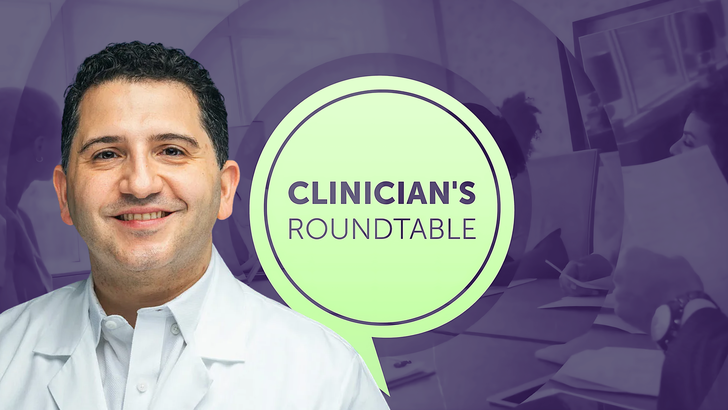
You’re listening to Clinician’s Roundtable on ReachMD. Today, we’ll hear from Dr. Ali Ataya, who is a Professor of Medicine in the University of Florida Division of Pulmonary, Critical Care, and Sleep Medicine, as well as the Director of the Pulmonary Hypertension Program and the HHT and Rare Lung Disease Program. He’ll be discussing the future of pulmonary arterial tension treatment. Here’s Dr. Ataya now.
Dr. Ataya:
This is an exciting time for the PAH space. We have had new drugs enter the market for new pathways. For a long time, all the therapies that we've had work on, not treating the underlying disease, so to speak, but really on opening up the blood vessels in the lungs in order to lower the pressures and improve symptoms. These are what we call vasodilators.
In the last two years, we've had a new drug enter the market called sotatercept, which is, potentially, a first-in-its-class disease-modifying treatment that can potentially help remodel these blood vessels in the lungs, not just dilate them. And multiple trials for sotatercept—the STELLAR trial was the first that helped bring it to market, followed by ZENITH and HYPERION in more advanced and earlier disease—have proven that this molecule works really well on top of background therapy. And patients in the real world, in our clinical experience, do remarkably well on this treatment.
And this is just the tip of the iceberg. We are seeing multiple clinical trials underway for other drugs that are similar and different, with pharmacological mechanisms of action that can potentially disease-modify PH. I hope that the future of this disease is that we can have combination disease-modifying therapies that can truly turn this into a chronic illness.
Other drugs that we've seen in trials where there's been a lot of excitement about some top-line results are for drugs such as TPIP, mosliciguat, ralinepag, seralutinib. And there's a lot of drug trials on the way. Some have had better results than others, but it's an exciting time for patients and for providers.
One of the overlooked aspects of PAH is, while patients are usually on multiple combination treatments, you can imagine they're taking three or four different drugs. Some of the pills are two or three times a day, and there are inhalers that are four times a day. So that's a lot of drug burden on patients and their families.
So a lot of these newer therapies are offering even more simplified regimens. For example, TPIP is an inhaled molecule of inhaled prostaglandin that's potentially once a day that is showing promising results. Currently, inhaled therapies are four times a day, so that can improve and simplify the regimen for patients.
Additionally, drugs like ralinepag in trials are once-a-day pills compared to three times or twice-a-day pills that are currently on the market for prostacyclins. So the goal is, hopefully, we can not just improve the disease, but simplify the regimen for patients and improve their quality of life.
Announcer:
You just heard Dr. Ali Ataya talking about therapeutic developments for pulmonary arterial hypertension. To access this and other episodes in our series, visit Clinician’s Roundtable on ReachMD.com, where you can Be Part of the Knowledge. Thanks for listening!
