
Wearable SpO₂ During Walking: Missing Readings and Monitor Bias
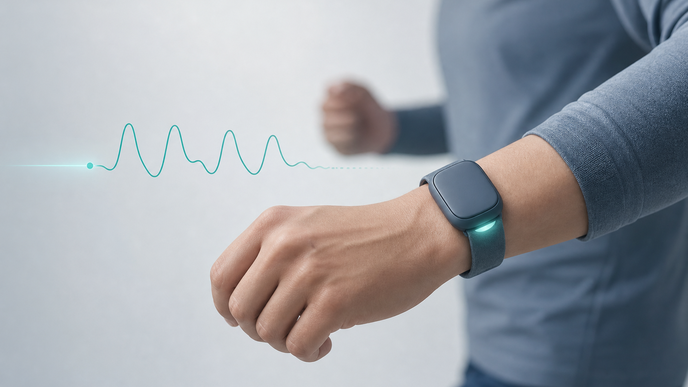
Key Takeaways
- Among healthy adults tested at rest, while walking, and during recovery, consumer-device SpO₂ agreement with clinical monitors varied by device and activity.
- Garmin returned substantially more treadmill readings than Apple Watch, whose near-absence of readings did not establish a walking measurement bias.
- Garmin during recovery and Wellue during walking showed significant negative signed bias against their GE Dash comparator.
- Wellue’s signed and absolute errors changed significantly between walking and recovery.
- Neither ITA nor Fitzpatrick grouping showed a device-specific error association significant after Holm correction; this does not establish equal performance across skin tones.
It involved 49 healthy adults at Lehigh University in Pennsylvania. Participants completed seated rest, treadmill walking, and seated recovery, each lasting five minutes with readings scheduled every minute. In a fixed-order first round, Garmin Fenix 7 and Wellue O2Ring were paired with a GE Dash 3000; in the second, Apple Watch Series 6 and Zacurate 500BL were paired with a Welch Allyn Vital Signs Monitor 6000 Series. The monitors were clinical comparators, not arterial references, and consumer devices in different rounds were not measured simultaneously.
Garmin and Apple Watch use wrist-based reflective optical sensing, whereas Wellue and Zacurate use finger-based transmissive sensing. The Apple Watch’s on-demand Blood Oxygen application requires the wearer to remain stationary while recording. For blood oxygen saturation (SpO₂), signed error was the consumer reading minus its same-round clinical-monitor reading; absolute error was the magnitude of that difference. Researchers characterized pigmentation using researcher-assigned Fitzpatrick type and wrist colorimetry-derived Individual Typology Angle (ITA). Agreement estimates included only synchronized, valid pairs, and analyses used generalized estimating equations (GEE) for repeated observations and Holm correction for multiple comparisons.
During treadmill walking, Garmin returned 82.4% of scheduled readings, compared with 0.4% for Apple Watch. Wellue and Zacurate returned all scheduled readings across the activity conditions. The single valid synchronized Apple Watch walking pair could not yield a walking bias, Bland–Altman limits of agreement, or an intraclass correlation estimate; the missing readings cannot establish systematic overestimation or underestimation.
During seated recovery, Garmin showed an adjusted signed bias of −0.72 percentage points against the GE Dash (Holm-adjusted p = 0.028). A negative signed bias means the consumer device read lower on average than its paired monitor under that condition. This comparison concerns Garmin and its within-round GE Dash comparator, not a direct comparison with the Apple Watch or Zacurate in the other round.
During treadmill walking, Wellue showed an adjusted signed bias of −1.03 percentage points against the GE Dash (Holm-adjusted p < 0.001). Repeated-measures Bland–Altman limits varied by device and activity state, with particularly wide Garmin limits while sitting. Average bias describes the mean difference but not the full spread of paired differences.
From treadmill walking to seated recovery, Wellue’s signed error increased by 1.37 percentage points and its absolute error changed by −0.62 percentage points; both changes remained significant after Holm correction. The negative absolute-error change indicates lower absolute error during recovery. Neither continuous ITA nor grouped Fitzpatrick type had a device-specific association with signed or absolute error that remained significant after correction.
The comparators were clinical pulse oximeters rather than arterial co-oximetry, so agreement with them does not establish absolute accuracy or performance in detecting hypoxemia. Participants were predominantly young, healthy, and normoxic, and diagnosed respiratory disease was excluded; small groups at the pigmentation extremes and the absence of a prospective power calculation further constrain interpretation of skin-tone comparisons. Nonsignificance does not establish equivalent performance across pigmentation groups. Fixed round order cannot separate device-set effects from order effects. Manually transcribed values and controlled treadmill walking also differ from unsupervised wearable measurement.
The authors identified broader clinical cohorts, more representation across pigmentation groups, and wider oxygen-saturation ranges as priorities for further evaluation. They also identified randomized device order and comparison with arterial co-oximetry as ways to distinguish agreement with a clinical monitor from absolute accuracy. Whether these devices detect hypoxemia accurately across activity conditions and skin tones remains an unresolved measurement question.
Clinician Questions
Who was excluded from the consumer wearable SpO₂ treadmill comparison?
Miller and colleagues excluded people younger than 18, those with pacemakers, known cardiac rhythm disorders or diagnosed respiratory disorders, and those with tattoos at device-placement sites. Participants also had to be capable of light treadmill exercise; these were study eligibility criteria, not clinical exclusion rules.
Were consumer pulse-oximeter sensor models and clinical-monitor SpO₂ modules recorded?
Device-specific sensor models, firmware versions, and installed SpO₂ module configurations in the clinical comparator monitors were not documented prospectively. The Apple Watch Series 6 operating system was separately identified as watchOS 11.5, so its software platform was not wholly unspecified.
This content is intended for healthcare professionals for educational purposes. The article and its image were developed with AI assistance and reviewed by members of the ReachMD team prior to publication. Please refer to the original source linked for the complete and most up-to-date information.