
US Diabetic Retinopathy Care Cascade Shows Major Drop-Offs
Key Takeaways
- Screening varied widely, but the sharpest disengagement appeared after diagnosis and during ongoing care.
- A large share of people with diabetic retinopathy were unaware of the diagnosis, and initial linkage from primary care remained limited.
- Recurring barriers included younger age, systemic racism, language, transportation, and insurance gaps, and the estimates came from heterogeneous studies without meta-analysis.
In a BMJ Open systematic review, investigators synthesized English-language, US-based studies of adults with diabetes published from 1 January 2018 through 31 December 2025. They screened 14,893 records and included 46 studies after full-text review. Searches ran from September to November 2025, were updated in March to April 2026, and followed an Open Science Framework protocol registered in September 2025. Two reviewers assessed bias with the Newcastle-Ottawa Scale and the Risk of Bias in Systematic Reviews tool. The review organized evidence across diabetes diagnosis, DR screening adherence, DR diagnosis, DR care adherence, and DR-related blindness to map where engagement declined across the care pathway.
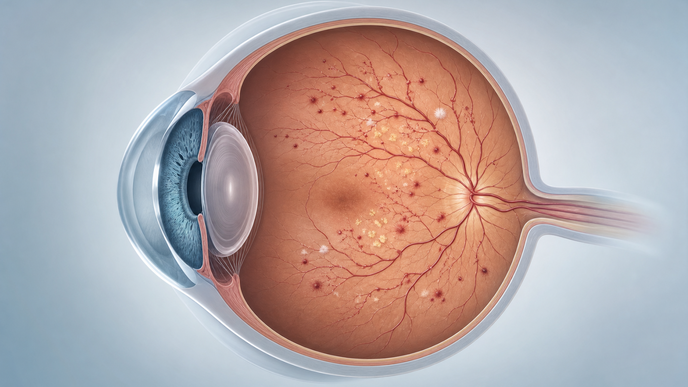
Across the five-stage diabetic retinopathy care cascade, biennial screening adherence ranged from 15.5% to 78.7%, with a median of 59.4% and IQR 33.9% to 74.0%. Among people with photographic evidence of DR, 54.9% to 88.5% were unaware of the diagnosis, with a median of 70.1% and IQR 62.5% to 79.3%. Initial linkage to DR care after diagnosis in primary care ranged from 30.9% to 62.7%, with a median of 52.0% and IQR 40.9% to 59.1%. These ranges reflect heterogeneous studies rather than a single cohort, and awareness and early linkage were especially fragile.
The authors associated missed referral, delayed linkage, and loss to follow-up with younger age, systemic racism, language barriers, transportation difficulties, and lack of insurance. They also noted that screening and follow-up can overlap conceptually under diabetic eye exams, while follow-up may carry greater burden because treatment and care coordination are more complex. Strategies described in the literature included patient navigation, telemedicine-based services, AI-assisted diagnosis tools, rural health clinics, and community co-designed digital health tools. The synthesis also estimated DR-related blindness in about 0.4% of people with DR, or roughly 34,800 individuals, and moderate to severe visual impairment in 2.64%, or about 420,000. These findings appeared alongside social and structural barriers across multiple stages of care.
Interpretation was constrained by heterogeneity in study populations, stage definitions, and outcome definitions, which prevented meta-analysis and limited direct comparability. The review presented ranges, medians, and IQRs as a conceptual synthesis rather than definitive central estimates. Some included studies analyzed data collected before 2018, which may reduce applicability to current care patterns. The investigators also noted partial overlap in national datasets such as NHANES, did not formally assess certainty of evidence, and framed the cascade as hypothesis-generating rather than causal.
Overall, the review depicts the diabetic retinopathy care continuum as marked by repeated attrition across multiple stages, particularly around diagnosis awareness, linkage, and retention.