
Urinary Protein vs Albumin for Assessing Kidney Failure Risk in CKD
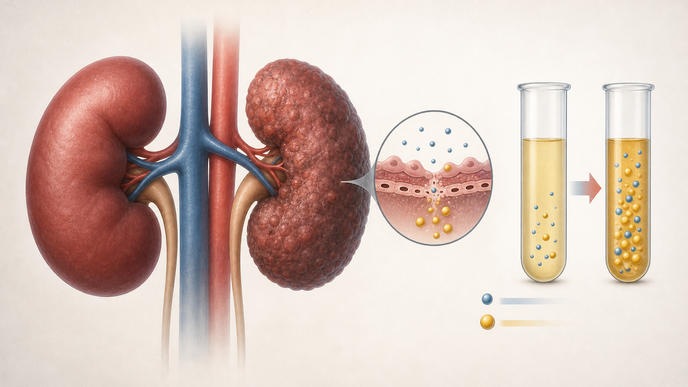
Key Takeaways
- In an overlapping cohort, 30% declines in UPCR and UACR were each associated with lower subsequent KFRT risk.
- A 30% decline in UPCR over 1 year was also associated with lower subsequent KFRT risk.
- UPCR-based and UACR-based models showed similar discrimination and good calibration overall, although the UPCR association weakened at eGFR below 15 ml/min/1.73 m².
This prospective observational analysis included predialysis CKD patients in Japan and used kidney failure requiring replacement therapy as the primary endpoint, including initiation of hemodialysis, peritoneal dialysis, or kidney transplantation. Researchers examined 30% decreases in UPCR or UACR over 2 years and separately assessed a 30% UPCR decrease over 1 year. The 2-year UPCR cohort included 603 participants, with mean age 60 years, mean eGFR 29 ml/min/1.73 m², median UPCR 0.81 g/gCr, and median UACR 601 mg/gCr; the 2-year UACR cohort included 1,753 participants. In the 2-year UPCR cohort, median follow-up was 4.9 years, during which 245 of 603 patients developed KFRT.
In the overlapping 2-year cohort, a 30% UPCR decrease was associated with lower subsequent KFRT risk, with an HR of 0.52 and 95% CI of 0.38 to 0.71. The corresponding UACR association was similar, with an HR of 0.58 and 95% CI of 0.41 to 0.82. A 30% UPCR decrease over 1 year was also associated with lower subsequent KFRT risk in 831 patients, with an HR of 0.56 and 95% CI of 0.43 to 0.73. Baseline UPCR and UACR were strongly correlated, with Pearson r of 0.943, while 2-year fold changes were moderately correlated at r of 0.69, indicating similar prognostic signaling across most of the cohort.
UPCR-based and UACR-based models showed similar discrimination, with Harrell’s C values of 0.854 and 0.847, and calibration was good. In patients with eGFR below 15 ml/min/1.73 m², the UPCR association was weaker than the UACR association. Authors linked that pattern to a smaller albumin fraction within total urinary protein at lower eGFR. They also reported a declining albumin-to-protein proportion as kidney function worsened, and estimates were uncertain in patients with baseline UACR below 30 mg/gCr. The comparison was most consistent outside the most advanced CKD subgroup.
Multivariable Cox models adjusted for age, sex, baseline eGFR, log-transformed UACR, systolic blood pressure, smoking, body mass index, total cholesterol, diabetes, cardiovascular disease history, and ACEi or ARB use. Missing baseline values were handled with multiple imputation using chained equations, and restricted cubic splines were used to assess nonlinearity. A sensitivity analysis excluding new ACEi, ARB, or mineralocorticoid receptor antagonist users showed a consistent UACR association, with an HR of 0.48, 95% CI 0.39 to 0.60, in 1,649 patients. This observational cohort analysis supported UPCR as a comparable surrogate marker within this cohort rather than a proven replacement across all CKD settings.