
Ultra-Endurance Running Linked to Muscle Stress and Slow Recovery
Key Takeaways
- In one highly experienced male ultra-endurance runner, a world-record challenge was associated with fat-dominant weight loss, reduced thigh muscle thickness, and lower maximal strength and power.
- Creatine kinase stayed elevated throughout the challenge, while oxidative-stress and anabolic-signaling markers shifted in a pattern consistent with ongoing muscle stress and a reduced anabolic milieu.
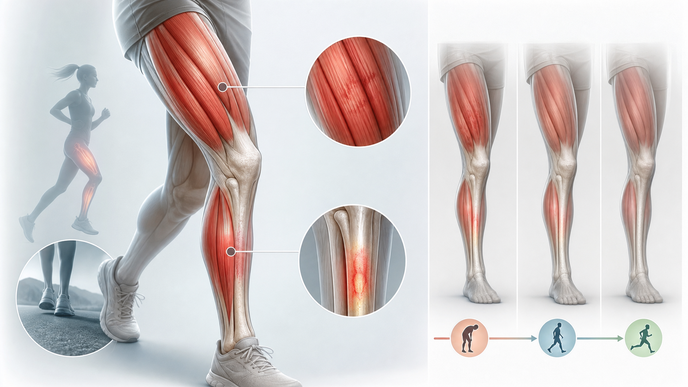
- Imaging documented a painful tibial stress reaction with additional iliotibial band, meniscal, tendon, and plantar fascia abnormalities, although not every lesion was symptomatic.
- Recovery extended well beyond a year, with many strength and molecular measures improving while power-related performance remained below baseline at the latest follow-up.
In the Journal of Cachexia, Sarcopenia and Muscle, a longitudinal case study followed one highly experienced 49-year-old male ultra-endurance runner before, during, and after a world-record attempt in Vilnius, Lithuania. He covered 30,303 km over 444 days at about 68.3 ± 15.7 km/day, mostly on flat asphalt, and recovery follow-up extended to 17 months. Serial anthropometrics and ultrasonography were paired with strength and power testing at prespecified time points, while blood sampling spanned the challenge, stool sampling continued through running and early recovery, and serial vastus lateralis biopsies were obtained after the challenge and during recovery. Running resumed only 12 months after completion and remained limited through the latest follow-up.
Immediately after the challenge, body mass was down modestly, largely from fat loss, and thigh muscle thickness had declined. Jump height and generated power were 35%–50% lower, and voluntary and electrically evoked torques were about 25% lower. Central activation was unchanged, supporting a predominantly peripheral rather than neural explanation for the functional deficits.
Serum creatine kinase (CK) peaked about 15-fold above baseline by day 30 and remained about 3-fold elevated during the rest of the challenge, while oxidative stress increased and insulin-like growth factor-1 (IGF-1) fell as growth differentiation factor 8 (GDF8) rose, consistent with sustained muscle stress and a reduced anabolic signal. Imaging identified a painful left tibial stress reaction; other iliotibial band, meniscal, tendon, and plantar fascia findings included lesions that developed during the challenge as well as preexisting abnormalities that worsened or became more obvious, although some lesions were asymptomatic and the left leg was more affected.
Across recovery, electron transport chain (ETC) complexes and mitochondrial turnover proteins rose, autophagy-, apoptosis-, and inflammation-related signals declined, myosin heavy chain (MHC) I remained nearly exclusive, and alpha diversity increased, with Bifidobacterium more abundant during running and Akkermansia during recovery. Many molecular and strength measures improved across recovery, but power-related deficits persisted at the latest follow-up.
These observations come from one athlete in Vilnius, Lithuania, so generalizability is sharply limited. Tissue-level interpretation is also constrained because no baseline muscle biopsy was available, making biopsy comparisons post-challenge rather than pre- to post-exposure. The authors also noted that body composition was estimated from skinfolds, blood markers may have been influenced by plasma-volume shifts, and no exercise tests or biopsies were performed during the challenge.
According to the investigators, skeletal muscle emerged as the physiologic system most challenged by this degree of prolonged ultrarunning, whereas endocrine and hematologic measures were comparatively preserved. Most molecular and strength-related changes improved within 10–17 months, but power-related deficits persisted at the latest follow-up.
Clinician Questions
How long did recovery take after a 30,303-km ultrarunning challenge?
In the one athlete studied after this extreme ultrarunning exposure, investigators tracked recovery for 17 months and found that different systems recovered at different rates. Torque and many molecular measures improved earlier in follow-up, while power generation and RSI were still below baseline at the latest assessment.
Which musculoskeletal injuries were documented during the 444-day running challenge?
The lesion pattern reflected multifocal overuse burden rather than a single isolated injury. Investigators reported a painful distal left tibial stress reaction, bilateral iliotibial band bursitis, patellar and semitendinosus tendon abnormalities, more obvious medial meniscal tears, and increased plantar fascia thickness, with some lesions remaining asymptomatic and the left leg more affected.
What muscle-biopsy changes were seen after prolonged extreme ultrarunning?
Post-challenge tissue findings suggested recovery from a stressed muscle state rather than a static fiber profile alone. ETC complexes and mitochondrial turnover proteins increased across recovery, while autophagy-, apoptosis-, and inflammation-related signals declined, and MHC-I remained nearly exclusive in the vastus lateralis; interpretation is limited because no pre-challenge biopsy was available.
Were endocrine and hematologic measures preserved during the 15-month ultrarunning challenge?
The report described relative stability in several endocrine and hematologic measures despite substantial skeletal-muscle stress. Testosterone, hemoglobin, and most hematologic indices were largely preserved, whereas ferritin remained low despite supplementation and an additional iron infusion, consistent with iron deficiency without overt anemia.