
TROP2 Marks Aggressive Colorectal Cancer Cells
Key Takeaways
- In reported sequencing analyses and translational models, high TROP2 expression in colorectal cancer was associated with metastasis development, significantly increased recurrence risk, poor prognosis, and treatment resistance.
- TROP2-positive colorectal cancer cells showed fetal-like features and, in some tumors, appeared to function as an alternative stem-cell population capable of initiating tumors and metastases.
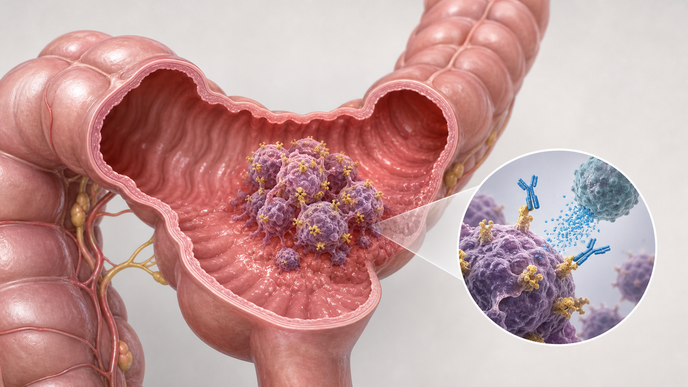
- In patient-derived mini-tumors, organoids, and mouse models, TROP2-targeted antibody-drug conjugates showed selective preclinical activity that was stronger in high-TROP2 tumors, while combination treatment with chemotherapy outperformed single therapies.
Against the broader challenge of cellular plasticity in metastatic disease, the report placed sequencing analyses from large patient cohorts at the center of the prognostic association. In that summary, high TROP2 expression was linked to metastasis development and significantly increased recurrence risk, and TROP2 marked poor-prognosis, treatment-resistant tumor cells with a distinct fetal-like phenotype. In laboratory models, TROP2-positive colorectal cancer cells also showed cancer stem-cell behavior, and in some tumors they appeared to form an alternative stem-cell population capable of initiating both new tumors and metastases.
The therapeutic findings extended that biology into preclinical testing. TROP2-targeted antibody-drug conjugates, already approved in other cancers including breast cancer, showed particularly strong activity in patient-derived mini-tumors with high TROP2 expression. In tumor-bearing mice, TROP2-directed treatment reduced TROP2-positive cell populations and prolonged survival, while separate mini-tumor experiments suggested that standard colorectal cancer chemotherapy promoted TROP2-expressing cells. When chemotherapy was combined with TROP2-targeted therapy, tumor growth and metastasis were reduced more than with the respective single therapies in organoids and mouse models.
Clinician Questions
What does high TROP2 expression indicate in colorectal cancer?
In colorectal cancer, sequencing analyses from large patient cohorts linked high TROP2 expression with greater likelihood of metastasis and significantly increased recurrence risk, and the report framed TROP2 as marking poor-prognosis, treatment-resistant tumor cells. The finding was presented as an association rather than as a standalone validated clinical decision tool.
How were TROP2-positive colorectal cancer cells characterized in laboratory models?
In colorectal cancer laboratory models, TROP2-positive cells showed fetal-like features and could perform cancer stem-cell functions; in certain tumors, TROP2-positive colorectal cancer cells formed an alternative stem-cell population capable of initiating new tumors and metastases.
What was reported for TROP2-targeted therapy with and without chemotherapy in colorectal cancer models?
In colorectal cancer models, patient-derived mini-tumors with high TROP2 expression responded particularly well to TROP2-targeted antibody-drug conjugates, mouse models showed reduction of TROP2-positive cell populations with prolonged survival, chemotherapy promoted TROP2-expressing cells in mini-tumors, and combination treatment reduced tumor growth and metastasis more than single therapies in organoids and mouse models.