
Tirzepatide Weight Loss Was Mostly Fat Mass in Obesity Care
Key Takeaways
- In physician-managed obesity care, tirzepatide was associated with significant reductions across body weight and multiple body-composition measures over follow-up.
- Most observed weight loss was attributable to fat mass rather than lean compartments.
- Reductions in body fat percentage and fat mass were larger than declines in fat-free mass, skeletal muscle mass, and total body water.
- Fluid distribution ratios remained stable overall, while sex and baseline BMI were associated with different percentage-change patterns across several outcomes.
In the Corso et al. analysis of tirzepatide-associated body composition changes, investigators retrospectively reviewed electronic health records from Precision Medical Care LLC from March 2019 through December 31, 2024. The cohort included 35 adults aged 41 to 75 years, with a mean age of 53.4 ± 7.8 years and a baseline body mass index (BMI) of 37.2 ± 9.16 kg/m²; BMI ranged from 26.9 to 60.8 kg/m². All received physician-managed obesity care with diet and exercise counseling, started tirzepatide at 2.5 mg or 5 mg once weekly with escalation up to 15 mg based on tolerance and clinical response, and underwent multi-frequency bioelectrical impedance analysis (BIA) on the InBody770 at baseline and again at a fixed follow-up around 81 weeks. Complete baseline and follow-up data were available for all participants, all remained on tirzepatide through follow-up, and analyses examined time, sex, and baseline weight status.
From baseline to follow-up, body weight fell by 31.1 kg (27.8%) and BMI by 10.4 kg/m² (27.8%), with both changes reported at p < 0.001.
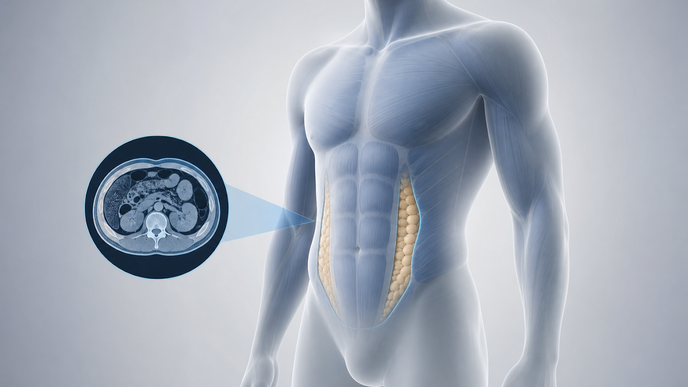
Body-composition changes were weighted toward adiposity, with body fat percentage down 16.2% (37.6%) and fat mass down 26.4 kg (54.2%). The authors report that fat-free mass decreased by 4.5 kg (7.3%) and skeletal muscle mass by 2.8 kg (8.3%), although the paper is internally inconsistent about presentation of skeletal muscle mass estimates; total body water decreased by 3.5 kg (7.7%), while fat mass accounted for 85.7% of total weight loss (95% CI 81.9 to 89.5). Extracellular and intracellular water also declined, but extracellular-to-total and extracellular-to-intracellular water ratios did not change significantly. Females showed larger percentage reductions across several compartments, males showed greater fluid-ratio reductions, and participants with higher baseline BMI had larger percentage declines in weight-related outcomes even though post-treatment values often did not differ between BMI groups.
The retrospective observational design precludes causal inference, and potentially important contributors including diet, protein intake, resistance exercise, dosing variation, and formal adherence were not systematically captured. Subgroup analyses were exploratory in a small single-center cohort, and the study did not assess muscle strength, gait speed, chair rise time, bone density, or patient-reported function, leaving the clinical meaning of lean-tissue losses uncertain. Because BIA is an indirect method that is sensitive to hydration, some of the observed changes in fat-free mass and skeletal muscle mass may reflect body-water shifts rather than contractile tissue change.
The authors interpreted the pattern as tirzepatide-associated weight loss being driven mainly by adipose reduction, with measurable lean-tissue and water losses remaining part of the overall change in this physician-managed cohort. That interpretation remains bounded to exploratory real-world observations rather than a definitive estimate of tirzepatide’s tissue-specific effects.
Clinician Questions
How was body composition tracked during tirzepatide treatment in this obesity cohort?
Adults in physician-managed obesity care underwent multi-frequency BIA using the InBody770 alongside standard anthropometric measurements at baseline and again at a consistent follow-up time point, allowing the program to track fat mass, fat-free mass, skeletal muscle mass, and body-water compartments.
Which patients do these tirzepatide body-composition findings apply to?
The analysis covered adults with overweight or obesity receiving routine care in a single physician-managed obesity program, all of whom had complete baseline and follow-up body-composition data and remained on tirzepatide through outcome assessment, so the findings are bounded to that real-world cohort and setting.
Why can’t the lean-mass decline be treated as a direct measure of functional muscle loss?
The reported declines in fat-free mass and skeletal muscle mass were derived from BIA, which is an indirect and hydration-sensitive method, and the study did not measure strength, gait speed, chair rise time, bone density, or patient-reported function, so the functional consequences of lean-tissue loss were not determined.