
4% Tetrasodium EDTA Lowers CVAD Complications in ICU Trial
Key Takeaways
- The primary composite outcome occurred less often during t-EDTA periods than during control periods.
- In prespecified analyses of the primary outcome components, only catheter occlusion requiring alteplase use showed a significant between-group difference.
- The trial used a pragmatic, triple-blind, multicenter, cluster-randomized crossover design across Canadian ICUs at six hospitals.
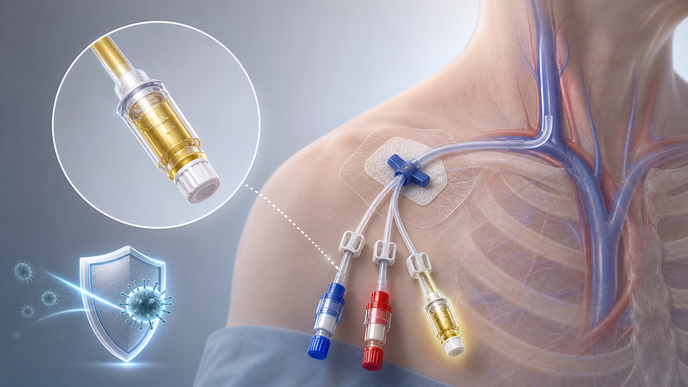
This pragmatic, triple-blind, multicenter, cluster-randomized crossover trial was conducted in 6 Canadian hospitals, including 3 community hospitals and 3 academic centers. Eligible participants were adults older than 18 years in the ICU with a central venous access device in place and at least 1 lumen not in use. Units used prefilled, identical, masked syringes containing 2.5 mL of 4% tetrasodium EDTA or control fluid, which was saline or 4% citrate for hemodialysis lines. Intervention and control periods each lasted 3.5 months, were separated by a 1-month follow-up, and then crossed over. Among 1574 eligible patients, 1468 were analyzed, with 696 receiving t-EDTA and 772 receiving control.
The prespecified primary outcome was the composite incidence rate of CVAD-associated bloodstream infection, catheter occlusion requiring alteplase use, and catheter removal due to occlusion. There were 74 events, or 13.1 per 1000 catheter-days, during t-EDTA periods and 126 events, or 19.9 per 1000 catheter-days, during control periods. In adjusted multivariable analysis, the rate ratio for the composite outcome was 0.68, with a 95% CI of 0.47 to 0.96 and P = .03. Overall, the composite CVAD complication rate was lower with t-EDTA than with control.
Among the three components analyzed separately, only catheter occlusion requiring alteplase use differed significantly between groups. The trial recorded 66 such events with t-EDTA and 112 with control, corresponding to 11.67 and 17.73 per 1000 catheter-days. The rate ratio for this component was 0.66, with a 95% CI of 0.46 to 0.96. Participants had a mean age of 60 years, 37.7% were female, and catheter occlusion requiring alteplase use was the only component with a significant difference.