
Tele-Designated Clinic Care for Mild COVID-19 in Hong Kong
Key Takeaways
- Tele-designated clinic care was associated with hospitalization and other short-term severe outcomes similar to those with face-to-face care.
- Tele-designated clinic care was associated with more accident and emergency visits and more designated clinic revisits during follow-up.
- Antiviral prescribing was lower overall and among adults aged 60 years or older, and Paxlovid accounted for most prescriptions in both groups.
A retrospective Hong Kong public primary care cohort study in the Hospital Authority's Kowloon Central Cluster ran from July 28, 2022, to January 29, 2023. It initially included 38,628 tele-designated clinic visits and 23,031 physical designated clinic visits; after exclusions, 36,951 and 18,371 adult patients with COVID-19 remained before matching. Propensity score matching used age, sex, smoking status, CSSA status, and Charlson comorbidity score, yielding 17,199 patients in each group. After matching, the average age was about 58.5 years and about 59.5% were women. The primary endpoint was hospital admission from day 1 through day 28, and there were no missing data or loss to follow-up.
Length of stay was similar at 6.92 days with tele-designated clinics and 6.61 days with physical designated clinics. Severe complications occurred in 0.27% and 0.19%, respectively, and included pneumonia, sepsis, encephalopathy or encephalitis, myocarditis, systemic inflammatory response syndrome, and shock. Mortality was 0.13% versus 0.10%, HDU or ICU admission was 0.09% in both groups, and day 0 hospital admission was 0.63% versus 0.50%. Over 28 days, severe events were uncommon in both care pathways.
Between days 1 and 28, accident and emergency department visits were higher with tele-designated clinics at 3.73% versus 3.15%, and designated clinic revisits were 8.41% versus 7.48%. Same-day emergency use was similar between groups. Antiviral prescribing was lower with tele-designated clinics overall at 57.40% versus 62.78%, and among adults aged 60 years or older at 77.37% versus 83.47%. Paxlovid represented most prescriptions in both groups, with rates of 43.96% versus 47.01%, while molnupiravir was 13.44% versus 15.77%; the differences during follow-up were in service use and prescribing.
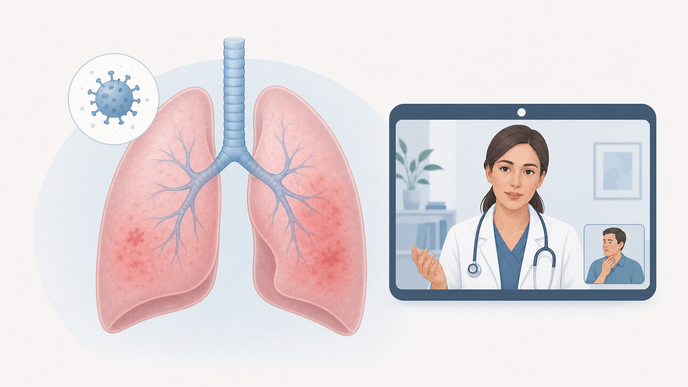
Tele-designated clinics used HA GO video consultation with medication delivery, and some patients also received a pulse oximeter. Physical designated clinics used face-to-face assessment with immediate medication dispensing, and both services were free of charge and staffed by the same pool of family physicians.
The authors suggested that higher emergency use and revisits may reflect limits of remote examination, diagnostic uncertainty, or reassurance-seeking, although those reasons were not directly measured. Interpretation was limited by the retrospective design, residual confounding, no sensitivity analysis, missing vaccination and broader socioeconomic variables, possible coding misclassification, no satisfaction assessment, and fixed 28-day binary outcomes.