
Study Links Non-Ablative Fractional Laser Treatment to Epigenetic Remodeling of Aging Skin
Key Takeaways
- A split-face study published in Scientific Reports found that treatment with Candela’s Nordlys 1940-nm non-ablative fractional laser was associated with durable changes in skin DNA methylation patterns linked to aging.
- Investigators reported reversal of age-associated DNA methylation at 83.9% of responsive CpG sites and progressive epigenetic remodeling over a 6-month follow-up period, alongside improvements in pigmentation and skin texture.
- The authors also identified methylation changes in keratinocyte-regulating genes associated with cutaneous carcinogenesis, although the findings do not demonstrate skin cancer prevention or reduced cancer risk.
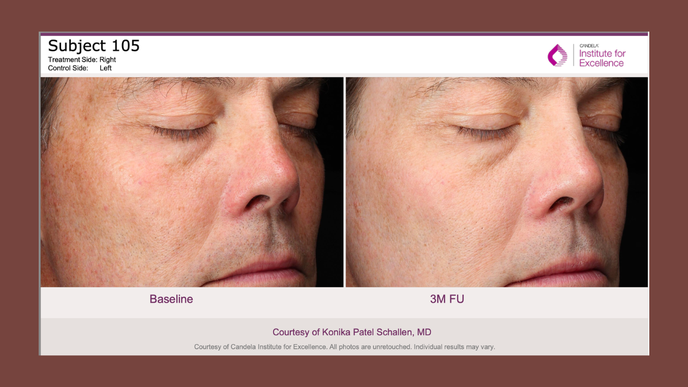
A new study published in Scientific Reports provides in vivo human evidence that treatment with a 1940-nm non-ablative fractional laser may induce durable epigenetic changes associated with skin rejuvenation, expanding understanding of the biologic effects of energy-based devices beyond clinical resurfacing.
The prospective split-face investigation enrolled 22 adults who received three treatments with Candela's Nordlys 1940-nm non-ablative fractional laser. Researchers collected epidermal samples using tape stripping over a 9-month period and performed genome-wide enzymatic methylation sequencing, profiling approximately 3.8 million CpG sites per sample.
Epigenetic Changes Paralleled Clinical Skin Improvement
No significant differentially methylated regions (DMRs) were identified immediately after treatment. However, investigators identified 635 DMRs 1 month after the treatment series, with changes expanding through 3 months and stabilizing by 6 months. The altered loci were enriched in pathways involved in epidermal differentiation, collagen organization, wound healing, stem-cell maintenance, and extracellular matrix remodeling.
Among CpG sites associated with skin aging, 83.9% demonstrated DNA methylation changes in the opposite direction of age-associated patterns, suggesting partial reversal of molecular signatures linked to cutaneous aging.
Clinical outcomes mirrored these molecular findings. Quantitative VISIA imaging demonstrated a median 38% reduction in brown spot counts on treated skin 1 month after the treatment series, along with improvements in pigmentation and skin texture compared with untreated control sites.
Investigators also reported methylation changes involving keratinocyte-regulating genes, including FGFR3, HOXB4, UBE2I, and PPP1R18/PPP1R26, which have previously been implicated in basal cell carcinoma and cutaneous squamous cell carcinoma biology. The authors emphasized that these findings identify biologic associations rather than demonstrating cancer prevention or altered skin cancer risk.
"This pilot study provides the first in vivo evidence that non-ablative fractional laser (NAFL) treatment at 1940 nm induces durable, time-dependent changes of DNA methylation in pathways relevant to skin aging," the authors wrote. "These results extend prior transcriptomic and histological studies of laser resurfacing by demonstrating that energy-based treatments can remodel the epigenetic landscape of skin, providing a potential biological mechanism underlying their sustained clinical efficacy."
Source
Schallen KP, Schomacker K, Banila C, et al. Non-ablative fractional laser 1940-nm treatment modulates epigenetic signatures associated with skin aging in a split-face investigation. Sci Rep. 2026;16:17695. doi:10.1038/s41598-026-56604-4.