
Spice-Containing Diets Showed No Postprandial Benefit
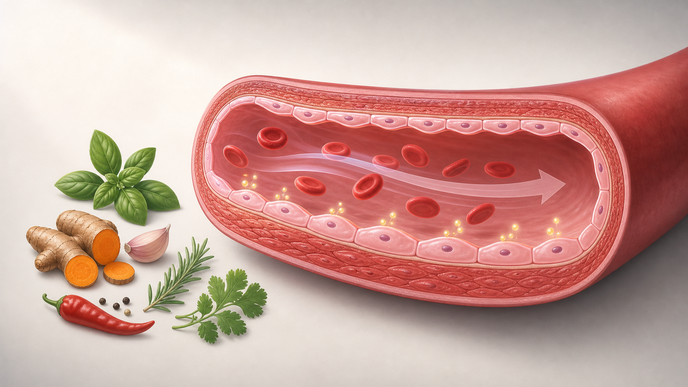
Key Takeaways
- Adults at cardiometabolic risk completing low-, moderate-, and high-spice diet periods had no significant between-condition differences in postprandial endothelial function, glycemia, or lipemia after matched meal challenges.
- Postprandial FMD increased after meals relative to fasting across all spice conditions, including at 120 and 240 minutes.
- Insulin AUC was lower after the low-spice meal than after the moderate-spice meal, although the investigators reported that the reason for that difference was unclear.
- Individual postprandial vascular, glycemic, and lipemic responses varied widely across the three spice conditions.
Investigators conducted a secondary analysis of a randomized, crossover, controlled-feeding study in adults aged 30-75 years with increased waist circumference, a body mass index (BMI) of 25-35, and at least one additional cardiometabolic risk factor. Only males and postmenopausal females took part in the meal challenge, which narrows direct applicability to those groups under these controlled-feeding conditions.
Participants completed three 4-week diet periods containing 0.5, 3.3, or 6.6 g of herbs and spices per 2100 kcal per day, separated by washouts, and then received a 1192-kcal test meal matched to the preceding diet’s spice dose. Investigators measured fasting and post-meal flow-mediated dilation (FMD) at 120 and 240 minutes, with glucose, insulin, triglycerides, and cholesterol tracked through the same postprandial window.
Among 43 adults, no significant between-condition differences were reported for postprandial endothelial function, glycemia, or lipemia after the low-, moderate-, and high-spice conditions. Flow-mediated dilation increased from fasting at 120 and 240 minutes regardless of spice dose. Glucose, insulin, triglyceride, and cholesterol measures chaged over time but did not show significant diet-by-time interactions, and an apparent low-density lipoprotein cholesterol separation did not persist after multiple-comparison adjustment. Insulin area under the curve (AUC) was lower after the low-spice meal than after the moderate-spice meal and remained significant after baseline-AUC adjustment.
The meal challenge did not produce the expected postprandial impairment in FMD, which the investigators said may have reduced the ability to detect a spice-related vascular benefit. They also noted relatively normal baseline endothelial function, possible underpowering for modest effects, and the absence of a no-spice meal condition as key limits on interpretation. The isolated insulin AUC difference therefore remained difficult to place within an otherwise largely null postprandial pattern.
In this controlled-feeding population, the Current Developments in Nutrition analysis did not show clear dose-dependent postprandial vascular or metabolic advantages after corresponding herb- and spice-containing diets. The investigators interpreted the findings as suggesting that acute meal-related spice effects may be less apparent after longer-term intake under these study conditions.
Clinician Questions
Which adults were included in the postprandial herb-and-spice meal challenge?
The findings apply to adults with increased waist circumference, overweight or obesity, and at least one additional cardiometabolic risk factor who were studied under controlled-feeding conditions. Because only males and postmenopausal females participated in the meal challenge, the results do not directly describe premenopausal females or lower-risk populations.
How was postprandial endothelial function measured after the spice-containing diets?
Flow-mediated dilation was the primary vascular endpoint and was measured in the fasting state and again at two post-meal time points after each matched test meal. Glucose, insulin, triglycerides, and cholesterol were tracked over the same postprandial window, pairing vascular assessment with short-term metabolic monitoring rather than fasting values alone.
Why might longer-term spice intake have failed to show clearer postprandial benefits in this analysis?
Because the meal did not lower FMD as expected, the investigators said the protocol may not have generated a strong enough vascular stress signal to show a spice-related benefit. They also cited relatively normal baseline endothelial function, possible underpowering for modest effects, and the lack of a no-spice meal comparator as reasons the remaining question about persistence of acute spice effects could not be resolved more clearly.
Recommended Reading
- For more on diet effects on glycemia and lipids: Diet Plus 14:10 Fasting Lowered HbA1c in Women with Type 2 Diabetes