
Shoulder Instability in Young Athletes: Recurrence and Sport Return
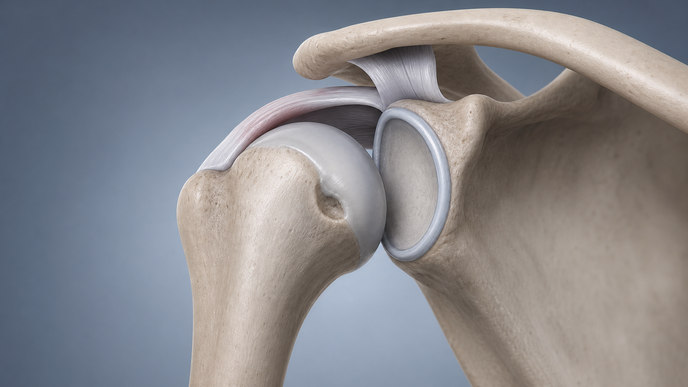
Key Takeaways
- Among adolescent athletes with primary anterior shoulder dislocation, reviewed evidence showed 44–77% recurrent instability after nonoperative management.
- Younger children more often had atypical soft-tissue injuries, whereas older adolescents more often had bony Bankart lesions.
- Off-track Hill-Sachs lesions were more frequent in adolescents than adults.
- Return to sport was common after pediatric Bankart repair, although recurrent instability persisted across cohorts.
- A small adolescent comparison found less recurrence with adjunctive remplissage than with Bankart repair alone, without establishing superiority.
A narrative review in Current Reviews in Musculoskeletal Medicine covered traumatic anterior and atraumatic multidirectional shoulder instability in pediatric and adolescent athletes. It addressed developmental anatomy and physeal status, injury and sport history, examination, initial radiographs, magnetic resonance imaging (MRI), selective computed tomography (CT), rehabilitation, Bankart repair, remplissage, bone augmentation, and capsular plication. Its estimates came from different reviewed cohorts and outcomes, not an original trial or a pooled procedure comparison.
Children younger than 15 more often had atypical injuries, including anterior labrum periosteal sleeve avulsion, humeral avulsion of the glenohumeral ligament, and subscapularis avulsion; bony Bankart lesions were more common in older adolescents. Recurrence after nonoperative management of primary anterior dislocation in adolescents was substantial. In a reviewed age comparison, off-track Hill-Sachs lesions occurred in 24.4% of adolescents versus 3.3% of adults.
Across separate pediatric and adolescent Bankart cohorts, return to sport ranged from 75% to over 90%, while recurrent instability ranged from approximately 15% to over 50%; sport return did not necessarily mean return to preinjury level. A small adolescent comparison found less recurrence after Bankart repair with adjunctive remplissage than after Bankart repair alone, but did not establish a general causal advantage. Selected patients with substantial glenoid bone loss or failed stabilization had lower reported recurrence after Latarjet (about 3% to 8% across recent studies). Most of these figures came from separate Latarjet series, not direct comparisons with unselected Bankart cohorts. One study of 41 adolescents did compare open Latarjet with arthroscopic Bankart repair and reported lower recurrence and better patient-reported outcomes with Latarjet, but it covered a selected group and doesn’t establish a general advantage. The authors framed rehabilitation as the initial approach to atraumatic multidirectional instability. In one study of 50 adolescent shoulders undergoing capsular plication, 26% had recurrent instability requiring reoperation, and 56% returned to sport.
The reviewed cohorts differed in age, skeletal maturity, sport, lesion profile, endpoints, and follow-up. Recurrent subluxation or instability, complete redislocation, revision surgery, any sport return, and return to preinjury level are distinct outcomes; preinjury-level return varied by sport, including dominant-arm overhead and contact participation. Pediatric comparative evidence for remplissage and long-term Latarjet outcomes in skeletally immature patients remain limited, while isolated pediatric outcomes for alternative bone blocks are lacking. Possible external-rotation loss after remplissage comes mainly from adult evidence, not demonstrated pediatric outcomes. Bone augmentation raises graft-position, coracoid-injury, nerve-injury, and longer-term joint concerns; post-Bankart stiffness, persistent pain, and anchor issues were also described.
The authors concluded that physeal maturity, sport demands, traumatic versus multidirectional instability, glenoid bone loss, and Hill-Sachs morphology provide context for interpreting outcomes. Their postoperative progression describes an institutional protocol, not a tested standard. Across reviewed pediatric and adolescent cohorts, return to sport after stabilization coexisted with recurrent instability.
Clinician Questions
What makes a Hill-Sachs lesion off-track in adolescent anterior shoulder instability?
The glenoid track describes the humeral-head contact zone during shoulder motion. A Hill-Sachs lesion extending medial to that track is off-track and may engage the glenoid rim, increasing recurrent-instability risk; a lesion confined within the track is on-track and less likely to engage.
When are MRI and CT used to assess bone loss after pediatric shoulder dislocation?
MRI characterizes labral and other soft-tissue injury, humeral-head lesions, and glenoid bone loss. The authors describe MRI as comparably accurate to three-dimensional CT for measuring glenoid bone loss without CT radiation exposure. CT is described selectively for recurrent instability or preoperative bone-loss quantification, while routine MRI after a first pediatric dislocation remains debated.