
Review Explores Energy-based Devices in Gender-affirming Care
Key Takeaways
- Laser hair removal and energy-based devices (EBDs) are being used across gender-affirming dermatologic care, including hair removal, acne treatment, scar management, and body contouring, according to a new paper in the Journal of Drugs in Dermatology.
- Laser selection for hair removal should account for hair and skin pigmentation, while emerging acne and scar data suggest potential roles for 1726-nm lasers, pulsed dye lasers, and fractional picosecond Nd:YAG devices.
- Evidence specific to transgender populations remains limited, particularly for acne treatment and body contouring, underscoring the need for additional prospective research.
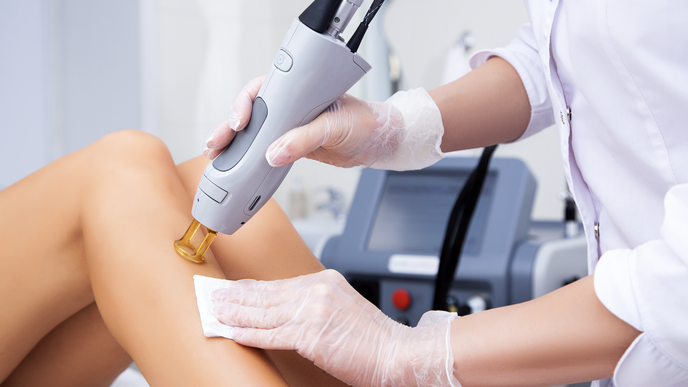
Laser and energy-based devices (EBDs) may address several dermatologic concerns relevant to transgender patients, from unwanted hair and acne to postoperative scars and body contouring, according to a recent review by Zarghami et al.
Laser Applications Span Hair Removal, Acne, and Postsurgical Scarring
Laser hair removal (LHR) has both cosmetic and perioperative applications in gender-affirming care. Long-pulse alexandrite, diode, and Nd lasers commonly operate at wavelengths of 755 nm, 810 nm, and 1064 nm, respectively. Because Nd lasers have lower absorption by epidermal melanin than shorter-wavelength lasers, they may be more suitable for patients with darker skin. LHR may also be performed before phalloplasty or vaginoplasty to reduce complications associated with hair-bearing surgical tissue.
EBDs are also being investigated for acne, which may occur during gender-affirming hormone therapy. The authors noted that radiofrequency, photodynamic therapy, and laser technologies can reduce sebum production. In one cited study, a 1726-nm laser achieved a 91.5% treatment success rate among 104 patients at 52 weeks. However, the review emphasized that additional research specifically involving transgender patients is needed.
Laser therapy may additionally improve scars following gender-affirming surgery. Studies cited in the review found improvements with 595-nm pulsed dye laser plus intralesional triamcinolone for postoperative hypertrophic scars and keloids and with a 1064-nm fractional picosecond Nd laser for postmastectomy scars. Reported laser-related adverse effects included transient erythema and less frequent purpura.
Low-level laser and radiofrequency technologies are also being explored for body contouring, although evidence specific to transgender patients remains limited.
“The use of laser therapy and EBDs in the care of transgender patients highlights the opportunity for dermatologists to play a pivotal role in gender-affirming care,” the authors wrote. “With continued expansion of evidence and advocacy, laser therapy and EBDs show strong potential for promoting gender congruence, quality of life, and well-being for transgender patients.”
Source
Zhargami A, et al. Journal of Drugs in Dermatology.2026;25(9):0926.