
RACC: Robotic vs Open Hysterectomy Perioperative Outcomes
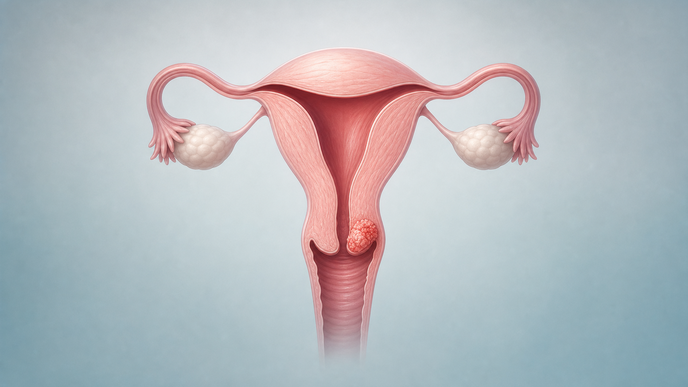
Key Takeaways
- Among women undergoing radical hysterectomy for early-stage cervical cancer at European tertiary centers, robot-assisted surgery had fewer intraoperative complications, chiefly lower-grade events.
- Thirty-day postoperative complications, including serious events, readmission, and reoperation, were broadly similar between approaches.
- Hospital stays were shorter after robot-assisted surgery, while one-month patient-reported differences were limited to selected domains.
- The trial’s primary recurrence-free survival outcome remains under follow-up.
Radical hysterectomy with pelvic lymphadenectomy was the treatment compared in Salehi and colleagues’ prespecified secondary analysis of the Robot-Assisted Approach to Cervical Cancer (RACC) trial. This international, multicenter, open-label phase 3 randomized noninferiority trial took place at European tertiary centers and was coordinated by Karolinska University Hospital. Adults with histologically confirmed International Federation of Gynecology and Obstetrics (FIGO) 2018 stage IB cervical cancer, excluding IB3, or stage IIA1 disease were eligible if they had Eastern Cooperative Oncology Group (ECOG) performance status 0–2 and were suitable for radical hysterectomy. Recruited from 2019 through 2025, they were allocated equally to robot-assisted laparoscopic or open surgery.
The parent trial’s primary endpoint is recurrence-free survival, distinct from the exploratory perioperative and recovery endpoints reported here. Of 900 randomized women, 809 had available data for intraoperative safety analysis and 798 for postoperative safety analysis. Those groups reflect endpoint-specific data availability, not a single cohort with complete results for every measure.
Both groups underwent standardized type B or C radical hysterectomy with pelvic lymphadenectomy; the comparison concerned surgical approach, not a particular robot feature. Investigators graded intraoperative events prospectively using the Classification of Intraoperative Complications (CLASSIC) and Kaafarani systems, and postoperative events using Clavien-Dindo. They counted each woman’s highest-grade event, with grades I–II considered minor and grade III or higher major. Health-related quality of life (HRQOL) at one month was available for 723 women using the European Organisation for Research and Treatment of Cancer (EORTC) Quality of Life Questionnaire Core 30 (QLQ-C30), its Quality of Life Questionnaire–Cervical Cancer Module (QLQ-CX24), and the EuroQol 5-Dimension 3-Level questionnaire (EQ-5D-3L).
Intraoperative complications occurred in 24/419 (5.7%) women assigned robot-assisted surgery and 39/390 (10%) assigned open surgery. The absolute risk difference was −4.3 percentage points (95% confidence interval [CI], −8.0 to −0.6). The separation mainly reflected lower-grade events; major intraoperative complications were too uncommon to support a precise comparison.
Postoperative complications within 30 days occurred in 135/404 (33.4%) women in the robotic group and 137/394 (34.8%) in the open group. Minor and major postoperative morbidity, readmission, and reoperation were similar, although similar rates do not establish equivalence. Median hospital stay was 3 versus 5 days, respectively. Robotic procedures took longer, both operatively and in total operating-room time, but involved less estimated blood loss.
At one month, physical functioning favored robot-assisted surgery by 5 points (95% CI, 3–8) on the QLQ-C30, meeting the investigators’ threshold for a small clinically important difference. Role functioning and lower pain scores also favored robotic surgery, but most quality-of-life domains, including global health, did not meet thresholds for clinically important between-group differences. On the cervical cancer module, sexual enjoyment favored robotic surgery whereas sexual and vaginal functioning favored open surgery; few women responded to those items. EQ-5D-3L dimensional responses were broadly similar. These domain-specific findings do not demonstrate better overall recovery.
These prespecified secondary analyses were exploratory, were not powered for confirmatory inference, and were not adjusted for multiple comparisons. Surgeons and participants could not be blinded. Postrandomization exclusions included two centers excluded under prespecified data-integrity criteria, and unavailable endpoint data further narrowed the groups analyzed; missing HRQOL responses were not imputed. The intraoperative grading systems lacked validation specifically in gynecologic oncology, while sparse sexual-domain responses limit interpretation of those comparisons.
The parent trial’s primary recurrence-free survival outcome remains under follow-up for a separate report. Fewer mainly lower-grade intraoperative events, broadly similar postoperative morbidity, and limited one-month patient-reported differences cannot answer that oncologic question or determine the overall choice of surgical approach.
Clinician Questions
Which patients were excluded from the RACC comparison of robotic and open radical hysterectomy for cervical cancer?
The comparison involved adults with FIGO stage IB disease, excluding IB3, or stage IIA1 disease who were suitable for radical hysterectomy. Women with metastatic disease, prior pelvic radiotherapy, pregnancy, or contraindications to surgery were excluded; the findings do not extend to those groups.
Were one-month quality-of-life outcomes after robotic versus open radical hysterectomy adjusted for baseline scores or center?
One-month EORTC QLQ-C30 and QLQ-CX24 between-group estimates used linear regression with randomized surgical assignment as the only explanatory variable. Baseline HRQOL scores and participating center were not included as adjustment variables.