
Psychiatric Outpatient Profiles Linked to Problematic Digital Use
Key Takeaways
- Albayrak and colleagues reported three psychosocial profiles among 158 adolescents aged 9 to 18 who were receiving psychiatric outpatient care.
- The profiles were formed from psychiatric symptoms, diagnoses, emotion-recognition abilities, and demographic factors before problematic internet, gaming, smartphone, and social media use were compared.
- The largest predominantly female profile with higher internalizing symptoms showed the highest problematic social media, smartphone, and internet use, while gaming was relatively more central in a younger male externalizing profile and gaming scores did not differ significantly across groups.
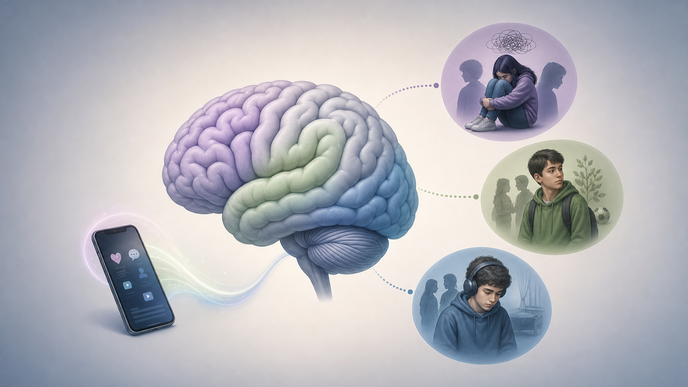
Participants were ages 9 to 18 years and were recruited from child and adolescent psychiatry outpatient clinics, where experienced child psychiatrists established diagnoses through semi-structured interviews. Adolescents then completed validated assessments of anxiety, depression, emotion recognition, and problematic digital behaviors, but technology-use measures were excluded from initial cluster formation so the psychosocial groups were not defined by the same outcomes later compared. The resulting three-profile structure was described qualitatively as older girls with moderate psychological risk and relatively balanced digital engagement, a predominantly female internalizing profile with relatively strong emotion-recognition abilities and lower parental education levels, and younger boys with more externalizing features, higher ADHD prevalence, and weaker emotion-recognition performance. Digital-use patterns were compared only after those psychosocial groups had been defined.
Across those groups, the predominantly female internalizing profile showed the highest problematic social media, smartphone, and internet use, whereas the younger male externalizing profile had comparatively low overall problematic digital use with gaming occupying a more central place within its broader activity pattern. The researchers also reported that gaming scores did not differ significantly across groups, which keeps the gaming signal relative to that profile's overall digital pattern rather than establishing higher problematic gaming than in the other groups.
Because the analysis was cross-sectional, drew on self-reported digital behavior, and came from adolescents referred to psychiatric outpatient clinics, it does not establish whether emotional difficulties preceded problematic digital use or the reverse.
Clinician Questions
How were psychosocial profiles defined among adolescents in psychiatric outpatient care before problematic digital-use outcomes were compared?
Albayrak and colleagues grouped 158 adolescents ages 9 to 18 from child and adolescent psychiatry outpatient clinics using psychiatric symptoms, diagnoses, emotion-recognition abilities, and demographic factors, with technology-use measures excluded from the initial clustering step. Diagnoses were established through semi-structured interviews by experienced child psychiatrists, and validated assessments measured anxiety, depression, emotion recognition, and problematic digital behaviors.
Which adolescent psychosocial profile showed the highest problematic social media, smartphone, and internet use?
The largest profile, described as predominantly female with higher internalizing symptoms, especially anxiety and depression, showed the highest problematic social media, smartphone, and internet use among the three groups. This predominantly female internalizing profile was also described as having relatively strong emotion-recognition abilities and lower parental education levels.
Did gaming differ across psychosocial profiles in psychiatric outpatient adolescents?
Gaming was described as relatively more central within the younger male profile with more externalizing features and higher ADHD prevalence, but the researchers reported that gaming scores did not differ significantly across the three groups. That means the gaming signal was relative to that younger male profile's broader digital activity pattern rather than evidence of higher problematic gaming than in the other profiles.
What limits interpretation of the digital-use profiles reported in psychiatric outpatient adolescents?
The findings came from adolescents referred to psychiatric outpatient clinics, digital behavior was measured with self-reported assessments, and the design was cross-sectional, so the analysis does not establish whether emotional difficulties preceded problematic digital use or the reverse and may not generalize to the broader adolescent population.