
PRP or Bmac Added To ACL Reconstruction Shows No 2-Year Benefit
Key Takeaways
- Platelet-rich plasma and bone marrow aspirate concentrate were not associated with better clinical outcomes at about 2 years after ACL reconstruction.
- MRI signal intensity of the intra-articular graft and the tunnel graft did not differ significantly overall between groups.
- Poorer MRI signal intensity was observed in the BMAC cases, even though no overall clinical or radiologic benefit was reported.
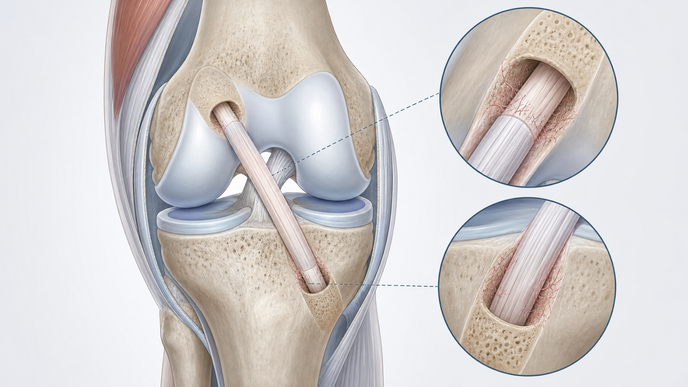
This Level I prospective randomized controlled trial enrolled 175 patients undergoing standardized semitendinosus quadruple autograft ACL reconstruction. Patients were assigned to control treatment without biologic additives, PRP augmentation, or BMAC augmentation, with group sizes of 79, 53, and 43, respectively. All procedures were standardized and performed by a senior surgeon, and the biologic preparations were standardized and prepared in the operating room by a senior laboratory physician. Clinical assessment and MRI signal intensity evaluation were completed after a mean follow-up of about 2 years.
Clinical findings were similar across the three groups at follow-up. Between-group differences on examination were not clinically significant, with p=0.867. Patient-reported measures also showed no meaningful separation, including Lysholm at p=0.881, IKDC at p=0.864, and Marx activity return-to-sport scores at p=0.666. These findings indicated that the added biologics did not translate into better measured knee function or activity scores over the reported follow-up.
The trial also compared MRI signal intensity findings for the intra-articular graft and for graft segments within the tunnels. Overall MRI signal intensity did not differ significantly across groups, with p=0.898 after about 2 years. A separate directional finding showed poorer MRI signal intensity in cases that received BMAC. The randomized comparison did not identify a 2-year imaging advantage from biologic augmentation, while the BMAC arm showed the less favorable MRI signal pattern.