
Prostate Radiotherapy Linked to Persistent T-Cell DNA Damage
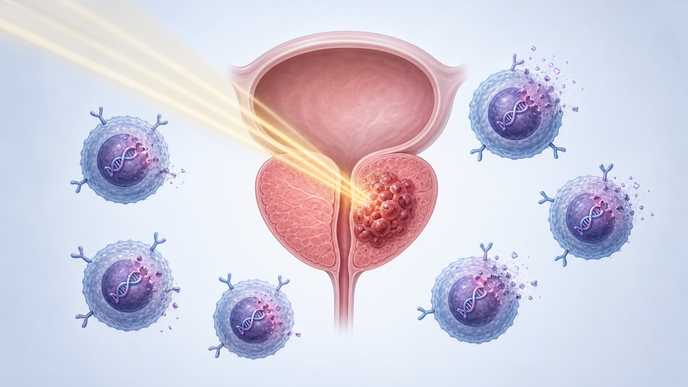
Key Takeaways
- In men with low- and intermediate-risk prostate cancer, teletherapy was associated with 1.6- to 3.6-fold more T-lymphocyte chromosomal aberrations than brachytherapy.
- At 3 months after treatment, 4.4% to 13.1% of T-lymphocytes were reported as damaged across the radiotherapy techniques studied.
- Long-term chromosome aberration values remained significantly above pretreatment levels after conventional LINAC radiotherapy and after low-dose-rate brachytherapy.
- Regression analyses suggested chromosome aberration measures may add to toxicity prediction alongside BED and V100%, and brachytherapy was associated with fewer reported toxicities.
Teletherapy was associated with 1.6- to 3.6-fold more chromosomal aberrations than brachytherapy, and brachytherapy was also associated with lower chromosome aberration frequency and fewer toxicities. Five years after treatment, total aberration values remained significantly above baseline for conventional LINAC (p < 0.001) and LDR brachytherapy (p = 0.011). Toxicity models were also significant for total aberrations (p = 0.020) and aberrant cell frequency (p = 0.010), alongside BED and V100%.
Because this was a prospective observational comparison, the findings only show associations between treatment technique and the magnitude and persistence of chromosome injury. These findings remain specific to low- and intermediate-risk prostate cancer and the four regimens studied.
Among the four prostate radiotherapy approaches studied, technique was associated with both the amount of T-lymphocyte DNA damage and how long it persisted. In this comparison, the pattern favored brachytherapy as the lower-aberration approach, and chromosome aberration burden may have value as a toxicity-related biomarker when interpreted with dose and volume parameters.
Clinician Questions
Which prostate radiotherapy techniques were grouped as teletherapy and which were grouped as brachytherapy in this comparison?
Teletherapy comprised conventional LINAC radiotherapy and CyberKnife teletherapy, while brachytherapy comprised low-dose-rate brachytherapy and high-dose-rate brachytherapy.
How was T-lymphocyte DNA damage tracked over time after prostate radiotherapy?
Investigators used a chromosome aberration technique in circulating T-lymphocytes and repeated testing at 3, 6, 9, 12, 24, 36, 48, and 60 months to assess persistence over time.
What does the toxicity-modeling signal add beyond the main prostate radiotherapy comparison?
Beyond the modality comparison, the modeling suggests that chromosome aberration burden may add information about toxicity risk when considered with biologically effective dose and irradiated volume (V100%).