
Polycaprolactone Dermal Fillers Show Significant Full-Face Rejuvenation Benefits
Key Takeaways
- A retrospective analysis of 31 patients found polycaprolactone (PCL)-based dermal fillers significantly reduced shadowing in eight of 11 facial regions following full-face rejuvenation treatment.
- The greatest improvements were observed in the piriform fossa, nasolabial fold, mentolabial groove, infraorbital region, and palpebromalar groove, while no statistically significant changes were seen in the zygomatic region, mandibular angle/ramus, or labiomental sulcus.
- Although the findings support the use of PCL fillers for global facial rejuvenation, the study's small sample size and retrospective design limit the generalizability of the results.
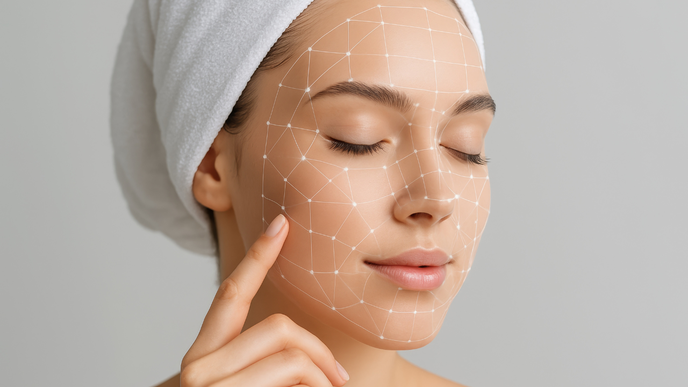
A retrospective image analysis suggests that polycaprolactone (PCL)-based dermal fillers may provide measurable improvements in facial contour and volume restoration across multiple anatomical regions during full-face rejuvenation, according to findings published online in the Journal of Cosmetic and Laser Therapy.
Image Analysis Quantifies Full-Face Rejuvenation with Polycaprolactone Fillers
Investigators reviewed pre- and post-treatment photographs from 31 patients who underwent full-face treatment with PCL-based dermal fillers. Images were processed using GIMP, Adobe Photoshop, and ImageJ software to quantify changes in facial projections and shadowing at 11 predefined treatment sites. Statistical analyses included bootstrap testing (n = 300), analysis of variance, and Tukey post hoc testing, with statistical significance defined as P < .05.
The analysis found statistically significant reductions in shadow area in eight of the 11 facial regions evaluated, reflecting increased projection of adjacent treated tissues. Mean reductions in shadowing included the piriform fossa (-11.9%; P < .001), nasolabial fold (-9.5%; P = .002), mentolabial groove (-9.0%; P = .001), infraorbital margin (-8.3%; P = .021), palpebromalar groove (-7.4%; P = .006), pre-jowl area (-6.9%; P = .001), chin (-6.9%; P = .001), and oral commissure (-5.5%; P = .002).
No statistically significant differences were observed in the zygomatic region (P = .093), mandibular angle and ramus (P = .07), or labiomental sulcus (P = .3559).
The authors acknowledged that the analysis was limited by its retrospective design and relatively small sample size. Additionally, the study evaluated photographic changes rather than patient-reported outcomes or long-term durability.
"PCL proved effective in full-face use in most areas tested (eight out of 11)," the authors concluded.
Source
Effectiveness of polycaprolactone-based dermal fillers for full-face rejuvenation. J Cosmet Laser Ther. Published online July 5, 2026. doi:10.1080/14764172.2026.2697503