
Platelet-Rich Plasma vs Corticosteroids and NSAIDs in Knee Osteoarthritis
Key Takeaways
- Platelet-rich plasma was associated with better pain scores and WOMAC outcomes than corticosteroid injection and oral NSAID treatment at follow-up.
- Opioid use was lower with platelet-rich plasma at 3 months than with both control groups and remained lower than corticosteroid treatment at 6 months.
- Several inflammatory and cartilage-related serum biomarkers shifted with platelet-rich plasma, and adverse events in that group were mild and transient.
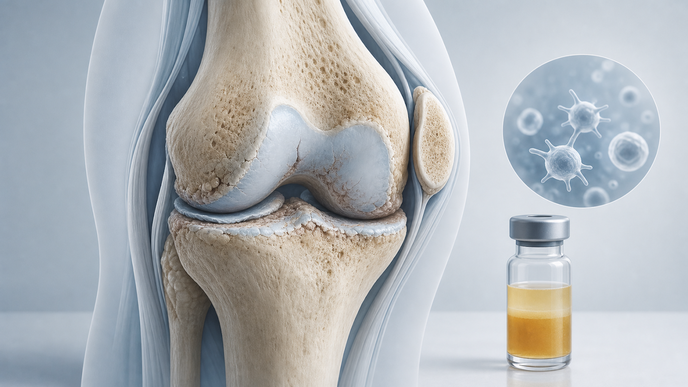
This randomized controlled trial enrolled adults with symptomatic late-stage knee osteoarthritis, defined as KL 3-4 disease, who were on arthroplasty waiting lists. Participants entered one of three groups: two autologous platelet-rich plasma injections given one week apart, one betamethasone injection, or aceclofenac tablets. Investigators assessed VAS pain scores, WOMAC total and subscale scores, opioid use, and serum biomarkers at baseline, 3 months, and 6 months. Eighty-two patients completed 6-month follow-up, and baseline VAS and WOMAC characteristics were comparable across groups.
Between-group pain differences favored platelet-rich plasma at both follow-up points, with VAS results at 3 months showing p < 0.001 versus corticosteroid and p < 0.001 versus NSAID treatment. At 6 months, the VAS comparisons remained significant, with p = 0.004 versus corticosteroid and p = 0.002 versus NSAID treatment. WOMAC total and subscale scores improved significantly only in the platelet-rich plasma group at both follow-up assessments, with all p values at or below 0.03 and significant intergroup differences favoring platelet-rich plasma. Opioid consumption was also lower with platelet-rich plasma at 3 months versus corticosteroid and NSAID treatment, with p = 0.002 and p = 0.025, and at 6 months versus corticosteroid, with p = 0.006.
At 3 months, platelet-rich plasma was associated with lower COMP, MMP-3, IL-6, IL-18, TNF-α, and CGRP levels, along with higher sTREM2, sRAGE, and TGF-β1 levels, compared with controls. Some differences persisted at 6 months, including lower COMP, IL-6, and IL-18 versus corticosteroid treatment and lower IL-6 and TNF-α versus NSAID treatment. No significant changes were observed in MCP-1, VEGF, CX3CL1, BDNF, or β-NGF, and adverse events in the platelet-rich plasma group were mild and transient.