
Physiotherapy vs Shockwave Therapy in Proximal Hamstring Tendinopathy
Key Takeaways
- No significant between-group difference was observed in the primary patient-reported outcomes across assessed time points.
- Shockwave therapy was associated with higher satisfaction on some measures and better general health at one later assessment.
- Treatment delivery and 12-month follow-up were largely completed, and the authors concluded future trials appear feasible.
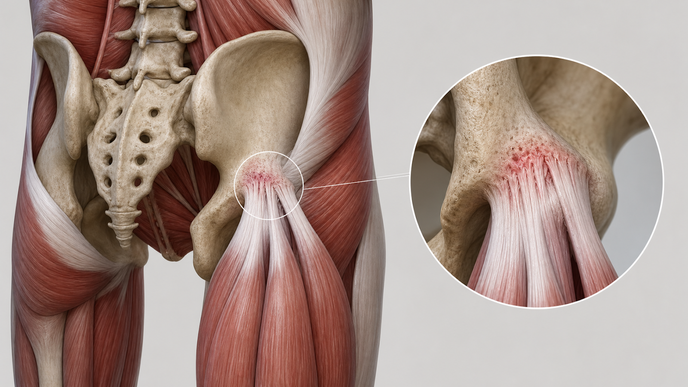
The trial was a prospective parallel-group, assessor-blinded randomized controlled trial conducted in 10 primary care physiotherapy practices in Victoria, Australia. Participants had proximal hamstring tendinopathy, described in the background as localized lower buttock pain with activities such as running and sitting. They received six sessions of individualized physiotherapy or six sessions of shockwave therapy, while both groups also received standardized advice and education. Primary outcomes were global rating of change on a 7-point Likert scale and the Victorian Institute of Sport Assessment Scale for Proximal Hamstring Tendinopathy. Those outcomes were measured at 4, 12, 26, and 52 weeks, and between-group comparisons used intention-to-treat linear mixed models.
No significant between-group differences emerged for either primary outcome at any assessment, and responder analyses of clinically significant improvement also did not separate the approaches. Secondary outcomes showed a narrower contrast. Participants in the shockwave group reported statistically significantly greater satisfaction with treatment at 26 weeks. They also reported statistically significantly greater satisfaction with treatment results at 4 and 26 weeks, and better general health at 52 weeks. These secondary patient-reported differences did not change the unchanged primary comparison.
Trial delivery and retention were largely maintained, with all except one participant receiving the allocated intervention and 88% completing 12-month follow-up. The authors concluded that individualized physiotherapy and shockwave therapy did not differ in effectiveness on global effect or function in proximal hamstring tendinopathy. The abstract does not describe adverse events or safety outcomes. They also suggested future work could examine different sample populations or other intervention and comparison groups, while concluding that additional trials appear feasible.