
Phase 2a Trial of Intrapleural LTI 01 in Pleural Infection
Key Takeaways
- Overall treatment failure within 7 days was not significantly different between LTI-01 and placebo.
- Predetermined sensitivity analyses showed efficacy trends in the 400,000-U group, while pleural opacification changes were strongest at 800,000 U.
- No safety signals of concern were reported, and no intrapleural or pulmonary bleeding episodes occurred among LTI-01-treated patients.
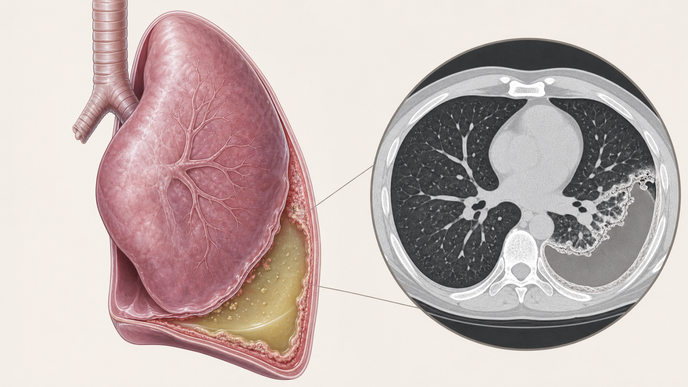
In the randomized, double-blind, placebo-controlled, multicenter phase 2a trial of intrapleural LTI-01, investigators evaluated a dose-ranging regimen in this hospitalized population. LTI-01, described as single chain urokinase, was given at 400,000, 800,000, or 1,200,000 Units, or matched placebo, once daily for up to 3 days. Forty of 43 enrolled patients received study treatment, a shortfall linked to COVID-19-related constraints. The primary efficacy endpoint was treatment failure within 7 days of starting medication, defined as requiring alternative pleural therapy irrespective of subsequent treatment.
Two predetermined sensitivity analyses showed trends toward improved efficacy in the 400,000-U group, with P = 0.052 and P = 0.147. Pleural opacification on CT was measured as relative change in opacified area expressed as a percentage of the ipsilateral hemithorax or as absolute volume change in liters. At 800,000 U versus placebo, absolute and relative change from baseline in opacity volume were -0.28 L, P = 0.035, and -55.8%, P = 0.064. Significant reductions in absolute opacification were also reported in the 400,000-U group and across all LTI-01-treated groups combined, with P < 0.03 for each.
No safety signals of concern were identified during the study period among treated participants. No episodes of intrapleural or pulmonary bleeding were reported among patients who received LTI-01.