
Penicillin Allergy Label Linked to Longer Erysipelas Stay
Key Takeaways
- Among patients admitted for erysipelas at the University Medical Center Regensburg, an anamnestic penicillin allergy label was associated with a longer hospital stay in a retrospective inpatient comparison.
- Mean length of stay was 12.17±7.01 days in patients with the label versus 10.34±4.80 days in those without it, a 1.83-day difference reported with t-test p=0.046.
- The comparison was between patients with versus without the label, antibiotic therapy was among the analyzed variables, and the authors concluded that delabelling should be widely implemented, a point presented as their interpretation rather than as a measured study outcome.
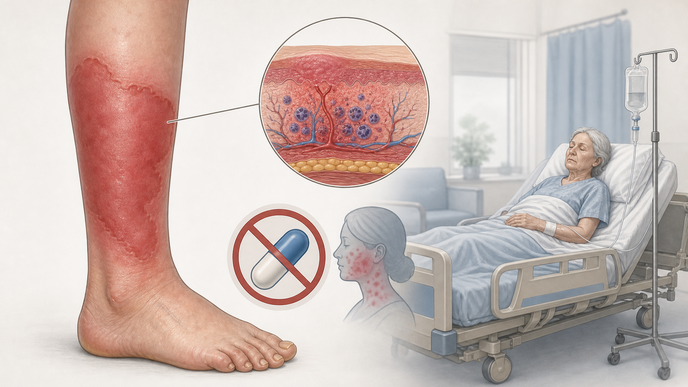
Patients with a reported penicillin allergy are often treated with less effective antibiotics, and the authors describe penicillin as first-line therapy for erysipelas. In that setting, investigators conducted a retrospective analysis of patients admitted to the University Medical Center Regensburg for erysipelas treatment and divided them into 2 groups: with and without the label anamnestic penicillin allergy. The variables analyzed were sex, age at diagnosis, body temperature at admission, C-reactive protein, leucocyte count, procalcitonin, length of hospital stay, Charlson Comorbidity Index, and antibiotic therapy. The study was structured around this 2-group inpatient comparison.
The authors report that patients with an anamnestic penicillin allergy label had a 1.83-day longer mean hospital stay than those without the label (12.17±7.01 vs 10.34±4.80 days; t-test p=0.046). The findings support an association rather than a causal inference. The authors concluded that anamnestic penicillin allergy was associated with prolonged hospital stay and added that delabelling should be widely implemented, presenting that final point as their interpretation rather than as an outcome directly tested in the report.
Clinician Questions
How much longer was hospital stay in erysipelas patients with an anamnestic penicillin allergy label?
In hospitalized patients treated for erysipelas at the University Medical Center Regensburg, multiple regression analysis reported a 1.83-day longer hospital stay for patients with an anamnestic penicillin allergy label, with mean stays of 12.17±7.01 days versus 10.34±4.80 days and a reported t-test p=0.046.
Which variables were analyzed in the University Medical Center Regensburg erysipelas study of anamnestic penicillin allergy?
In this retrospective analysis of patients admitted for erysipelas, the reported variables were sex, age at diagnosis, body temperature at admission, C-reactive protein, leucocyte count, procalcitonin, length of hospital stay, Charlson Comorbidity Index, and antibiotic therapy.
What treatment context did the erysipelas analysis give for reported penicillin allergy?
The erysipelas analysis states that patients with a reported penicillin allergy are often treated with less effective antibiotics, while penicillin is described as first-line therapy for erysipelas in the hospitalized population studied.