
Pediatric GLP-1RA Use Linked to Nutritional Deficiency Claims
Key Takeaways
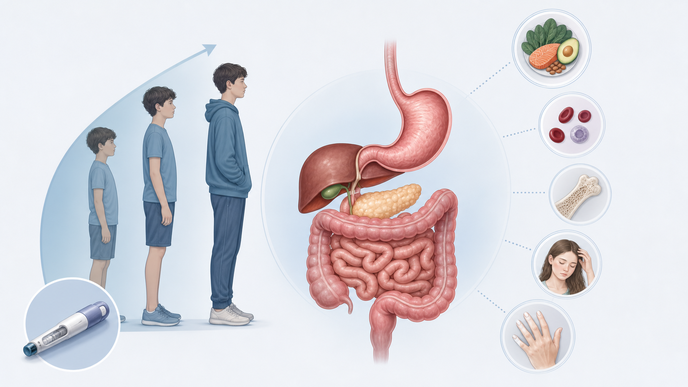
- In a national claims-based cohort of 2,031 pediatric glucagon-like peptide-1 receptor agonist users aged 10 to 17 years, 17% were diagnosed with at least one nutritional deficiency or deficiency-related complication within 1 year.
- Vitamin D deficiency was the dominant nutrition-related diagnosis at 12.4% within 1 year, while anemia-related diagnoses were much less common.
- Nutrition therapy or counseling reached only 23.3% of patients within 180 days after treatment initiation, with a mean time to first visit of 149 days.
- Diagnosed nutritional deficiencies or deficiency-related complications were more common among patients who had nutrition consultations than among those who did not, and the difference was statistically significant.
The pediatric GLP-1RA nutritional deficiency analysis used Inovalon administrative claims data from 2017 to 2022 to identify 2,031 glucagon-like peptide-1 receptor agonist users (GLP-1RAs) aged 10 to 17 years who met continuous-enrollment criteria and had no prior diagnosis of nutritional deficiency. International Classification of Diseases, 10th edition (ICD-10)-coded nutritional deficiencies were tracked for up to 1 year after GLP-1RA initiation, and nutrition therapy/counseling (NT/C) visits plus time to first visit were also assessed. The cohort was an adolescent population that was predominantly female, had obesity in 62.6% of cases, and was weighted toward liraglutide use.
Diagnosed deficiencies were not rare after GLP-1RA initiation, and vitamin D deficiency was the leading nutrition-related diagnosis, while nutritional anemia and iron-deficiency anemia were much less common. In the nutrition consultation comparison in pediatric GLP-1RA users, patients with NT/C consultations had higher diagnosed rates of nutritional deficiencies or deficiency-related complications than those without consultations (23.2% vs 14.8%).
The analysis captures diagnosed events and deficiency-related complications through ICD-10-coded claims rather than direct laboratory testing or dietary assessment. The higher diagnosed rate among patients who had nutrition consultations is an observational association in routine-care data and should not be interpreted as evidence that counseling increased harm.
The authors described nutritional deficiencies as a meaningful and under-recognized risk among pediatric patients receiving GLP-1RA therapy, and current care patterns suggested missed opportunities for earlier nutrition support. These findings reflect claims-based diagnosis and counseling patterns after GLP-1RA initiation rather than proof of causation.
Clinician Questions
Which pediatric patients were represented in this GLP-1RA nutritional deficiency analysis?
The cohort consisted of claims-identified adolescent GLP-1RA users in national Inovalon data who met continuous-enrollment criteria and had no prior nutritional deficiency diagnosis, so the findings apply most directly to similar routinely captured patients rather than to all children receiving these drugs.
How were nutritional deficiencies measured after pediatric GLP-1RA initiation?
Nutritional deficiencies and deficiency-related complications were identified through ICD-10 diagnosis codes in administrative claims after GLP-1RA initiation. That approach captures recognized and recorded events rather than direct laboratory values or detailed dietary assessment.
Which GLP-1 receptor agonists accounted for most prescribing in the pediatric cohort?
Prescribing in the cohort was dominated by liraglutide, with much smaller use of dulaglutide and semaglutide. That exposure mix matters when considering how closely the results reflect current pediatric GLP-1RA use.
What does the higher deficiency rate among patients who had nutrition counseling mean?
The higher diagnosed deficiency rate among patients who had NT/C visits is a descriptive claims-based association, not evidence that counseling caused deficiencies or harm. Referral patterns, closer follow-up, or greater clinical concern could all contribute to more coded diagnoses in that subgroup.