
Pancreatic Ductal Adenocarcinoma with Autoimmune Pancreatitis
Key Takeaways
- Type 1 autoimmune pancreatitis in a 50-year-old man was followed over six months by recognition of a pancreatic head mass.
- EUS-guided fine-needle aspiration of the mass showed pancreatic ductal adenocarcinoma with IgG4-positive plasma cells, and the resected specimen lacked autoimmune pancreatitis features.
- Autoimmune pancreatitis did not recur after pancreatoduodenectomy, and the authors said the development of autoimmune pancreatitis in this case could be related to paraneoplastic syndrome.
In the PubMed abstract, investigators described diffuse pancreatic enlargement at presentation and diagnosed type 1 autoimmune pancreatitis after endoscopic ultrasound-guided fine-needle aspiration and histopathological examination. Those findings established the starting point before untreated follow-up. From there, the case proceeded over six months without treatment.
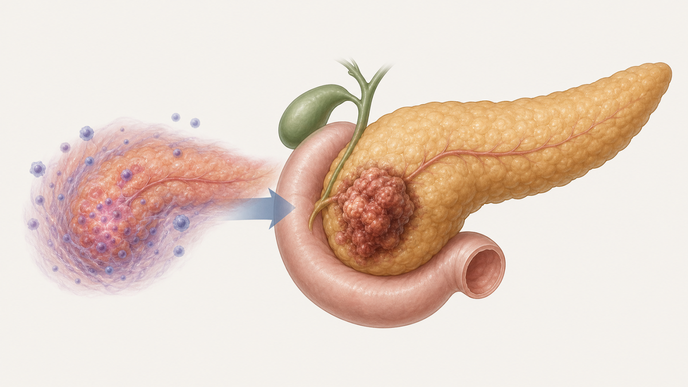
After six months of untreated follow-up, serum IgG4 decreased and the diffuse pancreatic enlargement improved. As those autoimmune pancreatitis features receded, a pancreatic head mass became apparent. The interval course showed improvement in one part of the presentation alongside emergence of a new focal lesion. That newly recognized lesion prompted repeat tissue assessment.
Endoscopic ultrasound-guided fine-needle aspiration of the pancreatic head mass revealed pancreatic ductal adenocarcinoma with IgG4-positive plasma cells. The resected specimen likewise showed pancreatic ductal adenocarcinoma, but without features of autoimmune pancreatitis. Together, the biopsy and resection findings showed pancreatic ductal adenocarcinoma on both the preoperative biopsy and the resected specimen. The surgical specimen confirmed the malignancy without residual morphologic features of autoimmune pancreatitis.
After pancreatoduodenectomy, autoimmune pancreatitis did not recur. The authors considered the autoimmune pancreatitis in this case potentially related to paraneoplastic syndrome. That interpretation remained limited to this postoperative and pathologic sequence in a single patient.