
Pan-Cancer PRMT Dysregulation Points to CRC PRMT1 Biomarker
Key Takeaways
- In a pan-cancer The Cancer Genome Atlas (TCGA)/Genotype-Tissue Expression (GTEx) analysis with colorectal cancer validation, protein arginine methyltransferase (PRMT) family genes showed widespread dysregulation, with PRMT1 and PRMT3 through PRMT7 broadly overexpressed and PRMT2 and PRMT9 reduced in selected tumors.
- Copy number variation tracked PRMT messenger RNA expression across tumors more consistently than promoter methylation, suggesting copy number variation may be the more recurrent regulatory correlate.
- Higher PRMT1, PRMT3, PRMT4, and PRMT5 expression was linked across cancers to stronger stemness-related features, while genomic heterogeneity associations were reported for PRMT1, PRMT3, and PRMT5.
- In colorectal cancer, PRMT1, PRMT3, and PRMT5 were consistently upregulated, and PRMT1 was further associated with adverse clinicopathologic features and reduced proliferation after silencing.
This full primary research article integrated transcriptomic, clinical, somatic mutation, copy number variation, and DNA methylation data from The Cancer Genome Atlas (TCGA) and Genotype-Tissue Expression (GTEx) through UCSC Xena, then validated colorectal cancer findings in 6 independent Gene Expression Omnibus (GEO) cohorts. Prognostic analyses spanned 33 TCGA cancer types using overall survival (OS), disease-specific survival (DSS), disease-free interval (DFI), and progression-free interval (PFI), while pathway analyses compared top and bottom 30% expression groups after applying a |log2 fold change| threshold of at least 1.0 before Gene Set Enrichment Analysis (GSEA). Additional CRC layers included single-cell datasets from TISCH2, a Cancer Dependency Map (DepMap) clustered regularly interspaced short palindromic repeats (CRISPR) dependency review, a tissue microarray with 120 CRC tissues and 51 control tissues, and PRMT1 small interfering RNA (siRNA) experiments in HCT8 cells using Cell Counting Kit-8 (CCK-8), colony formation, and 5-ethynyl-2′-deoxyuridine (EdU) assays.
In the pan-cancer and colorectal cancer PRMT analysis, PRMT1 and PRMT3 through PRMT7 were broadly overexpressed across many tumors, whereas PRMT2 and PRMT9 were downregulated in selected cancers. Copy number variation emerged as the more consistent regulatory correlate, with PRMT genes showing copy number variation alterations in ≥5% of samples in most cancer types and copy number levels generally rising with PRMT messenger RNA expression, while promoter methylation rarely tracked with expression. Single-nucleotide variant frequency was otherwise low outside selected tumors and did not show a clear pattern of domain enrichment.
Survival associations varied by malignancy rather than moving in one direction across the PRMT family, with higher PRMT1 through PRMT5 expression tending to align with worse outcomes in adrenocortical carcinoma and lower PRMT2, PRMT5, PRMT6, PRMT7, and PRMT9 expression correlating with poorer survival in kidney renal clear cell carcinoma. Across cancers, the authors report that PRMT1, PRMT3, PRMT4, and PRMT5 correlated with homologous recombination deficiency, loss of heterozygosity, ploidy, and stemness, while tumor mutational burden and neoantigen associations were described for PRMT1, PRMT4, and PRMT5, and mutant-allele tumor heterogeneity associations for PRMT1, PRMT3, and PRMT5. Most PRMTs were negatively associated with immune and stromal scores and positively associated with tumor purity; PRMT2 showed the opposite immune-linked pattern and checkpoint associations. PRMT1 also aligned with DNA repair, E2F targets, G2M checkpoint, mechanistic target of rapamycin complex 1 signaling, MYC targets, oxidative phosphorylation, phosphatidylinositol 3-kinase/protein kinase B/mechanistic target of rapamycin (PI3K/AKT/mTOR), and Wnt/β-catenin programs, alongside inverse correlations with immune-signature pathways.
When the analysis narrowed to CRC, PRMT1, PRMT3, and PRMT5 remained consistently upregulated across the 6 independent GEO datasets, whereas transcript levels showed only limited associations with fluoropyrimidine-based chemotherapy or bevacizumab response in a few cohorts. Single-cell profiling placed PRMT1 and PRMT2 across immune, stromal, and malignant cell populations rather than within one compartment alone. In the clinical validation cohort, PRMT1 immunohistochemical positivity was higher in tumor tissue than in normal controls, staining was predominantly nuclear, and higher expression was associated with larger tumor size, advanced T stage, and lymph node metastasis; PRMT1 knockdown in HCT8 cells also impaired proliferation across CCK-8, colony formation, and EdU assays, with DepMap findings qualitatively supporting PRMT1 and PRMT5 as broader growth-linked dependencies.
Most of the evidence came from public datasets, so differences in sequencing methods and cohort sizes across TCGA, GTEx, and GEO may affect robustness. Functional validation was largely restricted to PRMT1 in CRC, leaving equivalent roles for other PRMT family members or for other tumor types unresolved within this dataset. Tumor-microenvironment findings remained associative and still require mechanistic confirmation, and the translational relevance proposed by the authors was not established clinically.
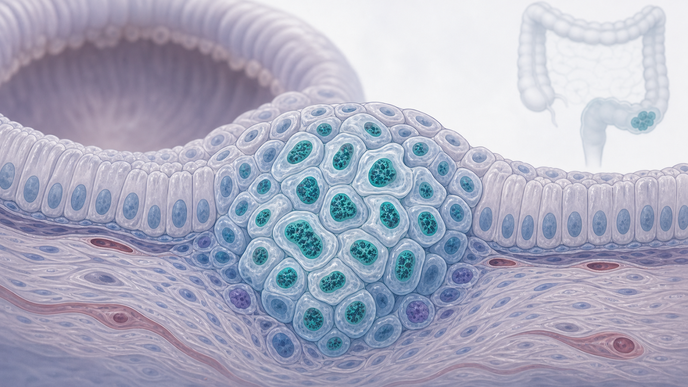
The authors present PRMT dysregulation as a recurrent pan-cancer pattern tied to genomic heterogeneity, stemness, immune context, and proliferative signaling. Within CRC, that broader signal narrowed most clearly to PRMT1. The reported throughline was consistent PRMT1 overexpression in colorectal tumors, association with adverse clinicopathologic features in human tissues, and reduced HCT8 cell growth after silencing.
Clinician Questions
How were prognostic associations for PRMT genes evaluated across cancers?
Investigators used univariate Cox proportional hazards models across 33 TCGA cancer types and assessed overall survival, disease-specific survival, disease-free interval, and progression-free interval, with the reported prognostic patterns varying by tumor type.
Did PRMT expression predict chemotherapy or bevacizumab response in colorectal cancer?
In colorectal cancer, PRMT transcript levels were not reported as robust predictors of treatment response overall. The authors observed significant expression differences for PRMT3, PRMT4, and PRMT5 only in a few fluoropyrimidine-based chemotherapy or bevacizumab-linked datasets, which they framed as limited rather than consistent response associations.
Which colorectal cancer cell populations expressed PRMT1 and PRMT2 in the single-cell analysis?
TISCH2 colorectal cancer datasets showed PRMT1 and PRMT2 broadly distributed across immune, stromal, and malignant cell populations, supporting a mixed tumor-microenvironment presence rather than restriction to one compartment.
What unresolved questions remain after the PRMT1 colorectal cancer validation?
Most findings remained association-based and repository-derived, functional experiments were largely limited to PRMT1 in HCT8 colorectal cancer cells, and the immune-microenvironment correlations were described as needing further mechanistic confirmation.